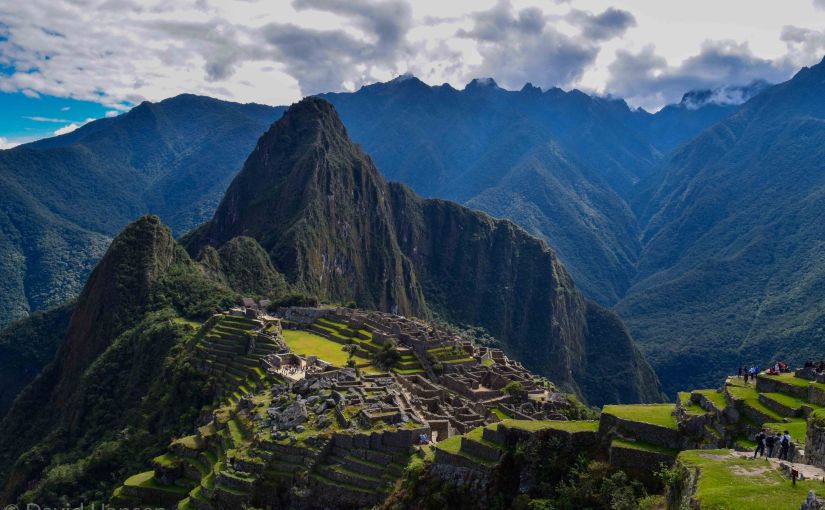
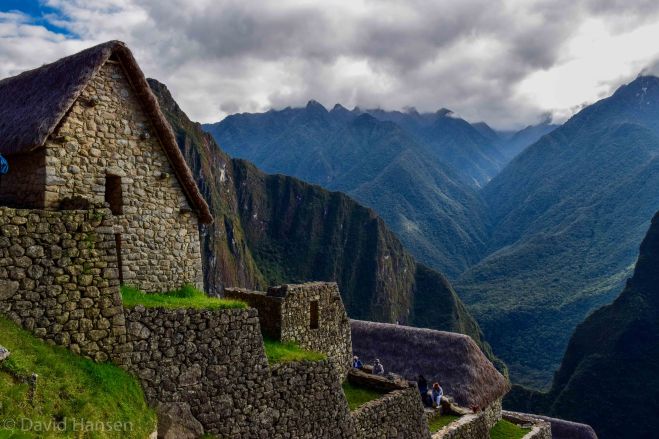
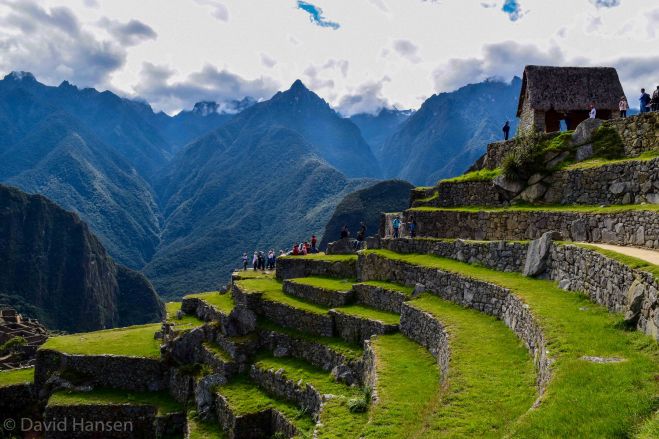
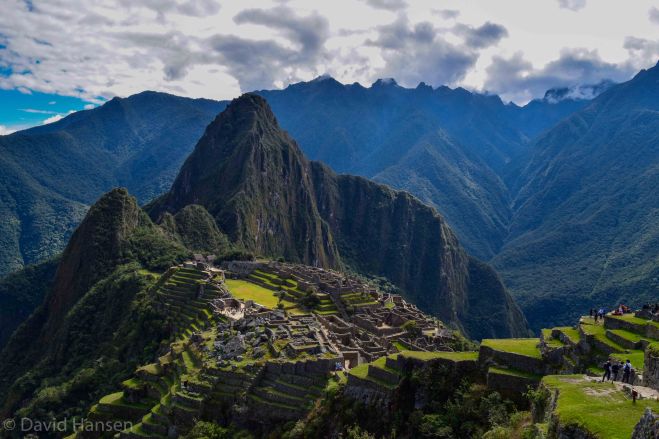
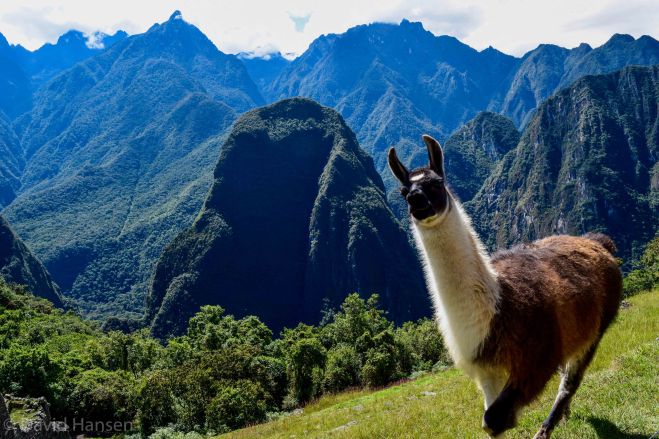
Having neither the time nor the money to do a trek to Machu Picchu, we opted for the cheapest available train to Aguas Calientes from Ollantaytambo. Unfortunately, this meant leaving at 6 AM to get to the train station. The train itself was nice and provided a basic breakfast. We arrived in Aguas Calientes around 8:30 AM and were at Machu Picchu an hour later. This was my second visit to the site, but it was still just as amazing as the first time. We began by hiking toward the Sun Gate, but turned around about half way as Kirsten wasn’t feeling well. We hiked around the normal tourist route for a few hours, checking out all the old buildings and terraces along the sides. We encountered a llama in one of the paths on the way out, which was posing for the cameras for a while before running up a narrow set of stairs toward a group of people. A few other llamas held up the sidewalk by standing in the middle and eating a nearby bush. We left soon after the llama incidents and went back to the town to check into our hostel.
Your first view of the site from the entranceSome of the hundreds of terraces around the complexThe famous shot of Machu Picchu
We checked into Ecopackers Hostel (highly recommended) and grabbed a far too expensive lunch before heading out of town to the Machu Picchu museum, interestingly enough named after my archaeology advisor’s father, who was a Peruvian archaeologist. The museum holds interesting artifacts from the excavations and describes how much of the site was built and used. It’s definitely useful for more context as to what the purpose of the site was. It’s not a very large museum, and visiting shouldn’t take more than an hour. The walk to and from the museum is very pleasant, and there are a few other things available to do along the way, including a butterfly garden. We ate dinner at a French bakery in town before heading to bed early, as our train back to Ollantaytambo was again at dawn. Thankfully the hostel was quiet and comfortable after a long day of hiking. We headed back to Cuzco from Ollantaytambo for a couple days before continuing south to Bolivia. Tips for Machu Picchu:
If you are a student, get an ISIC card before coming, it will save you 50% on the entry fee for this and many other attractions in Cuzco
Take the train from Ollantaytambo instead of Cuzco, it’s substantially less money and the ride to Ollantaytambo is only a few dollars and takes just 1.5 hours
Aguas Calientes is an awful and expensive town, don’t stay if you can help it.
Restaurants in Aguas Calientes add a service charge to the bill, unlike the rest of Peru where it’s included – be aware so you aren’t surprised like we were
Visit the museum located at the bottom of the mountain, as well as Casa Concha in Cuzco to get a better history of the site
NOTE: There is a cheap way to get to Machu Picchu without taking the train, I did it on my first visit. HOWEVER, it is not a pleasant experience for those who get carsick, and this route takes substantially longer each way than the train. So, its up to you whether time > money and comfort. I personally prefer the latter, and that’s from a guy who’ll take a 27 hour bus ride because its $20 less than a flight.
The llamas here love to pose for photos and harass tourists
We arrived in Arequipa early in the morning after a long overnight bus from Huacachina. Most of the bus got dropped off at the Flying Dog hostel, which thankfully allowed us to use their lobby area to rest and charge our phones and cameras. Since many of us were booked there for the following day, we were able to have our backpacks stored before our two day one night tour of Colca Canyon. We left for Colca Canyon a little after 9 AM with a number of our friends from the bus and made our way toward Chivay.
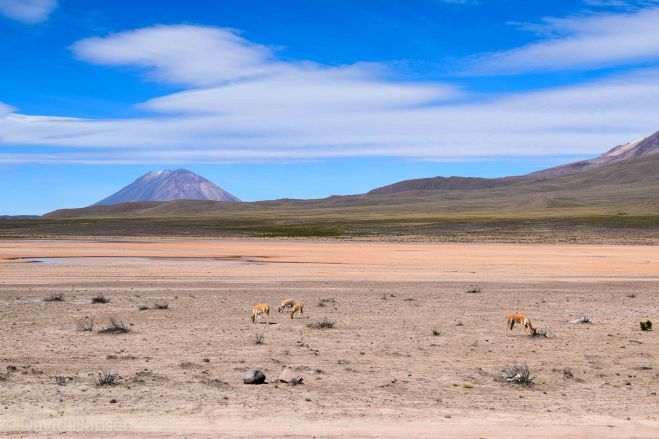
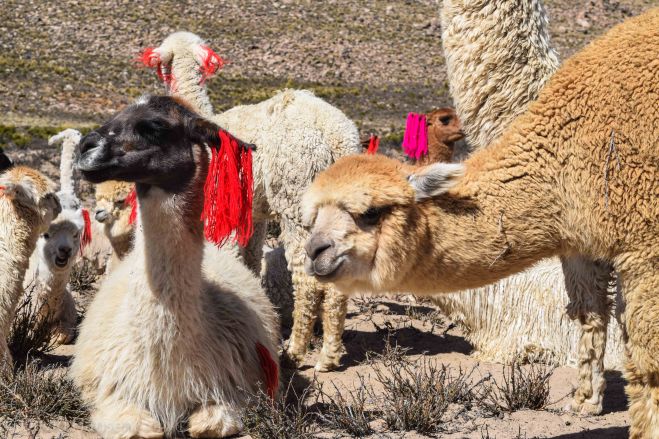
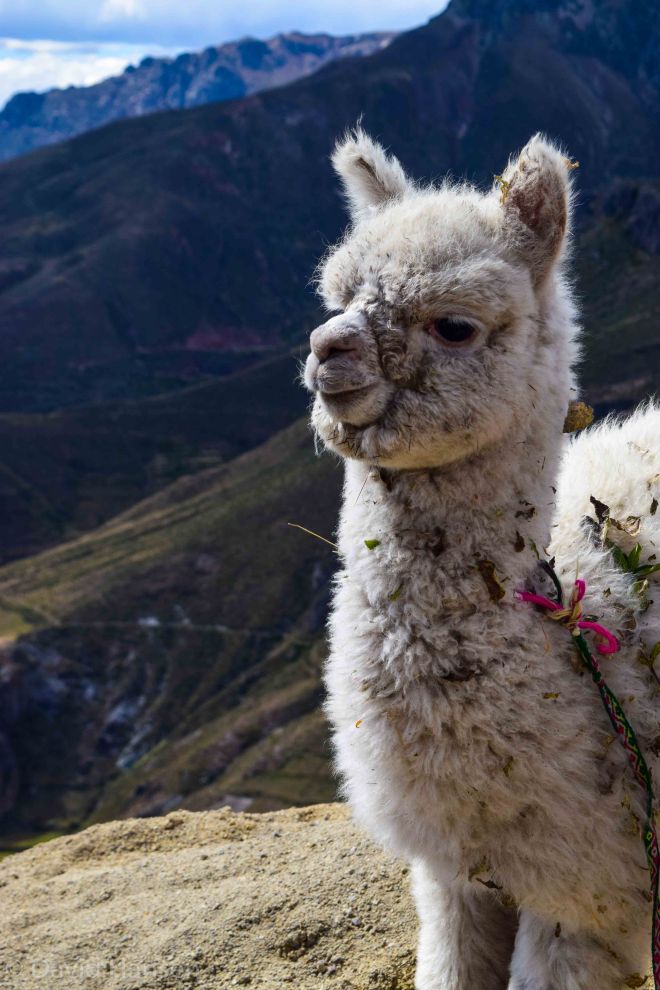
We made a couple of stops along the way, first at Salinas National Park, which was home to herds of vicuña (llama relatives) and stunning mountain landscapes. We made a few stops in the park, one of which was a for a herd of llamas grazing along the road. The landscapes in this area were absolutely amazing, especially for fans of the barren and desolate. The bus continued higher and higher in altitude before our next stop, Mirador de Los Andes, a viewpoint located at 4,910 meters (16,017 ft) above sea level. Since this was our first day at high altitude, a few of our friends had some difficulty with the low oxygen content, though Kirsten and I had no troubles. After taking a few pictures of the surrounding volcanoes and mountains, the tour descended into Chivay, the base town for Colca Canyon treks and tours. There was one last overlook where we took a number of pictures of the town and were able to pet and take photos with a baby alpaca (who later tried to push a small boy off a cliff).
Salineras National ParkSassy llamas in the parkHomicidal baby alpaca -don’t let his cuteness deceive you
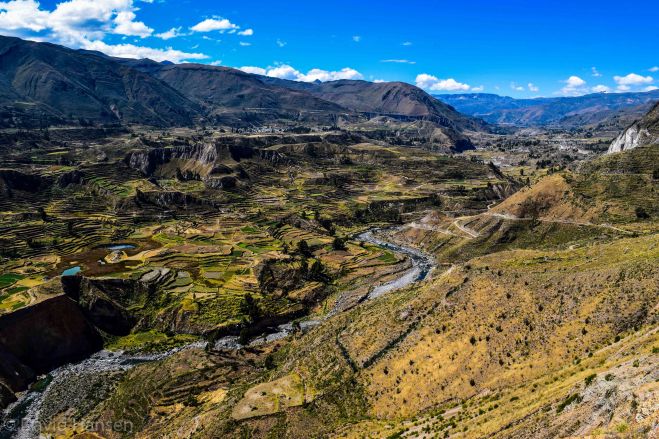
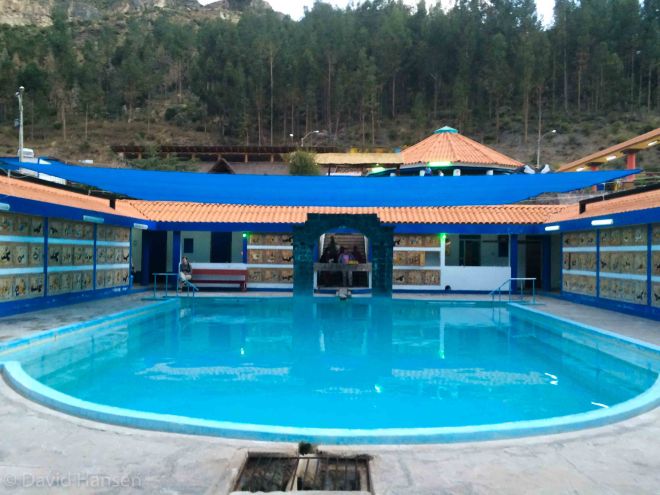
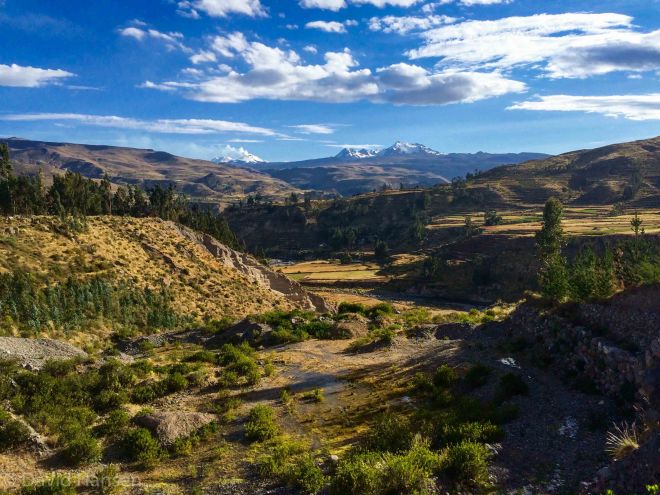
We finally arrived in Chivay around 2:30 PM, when we went to a tourist restaurant with an all-you-can-eat buffet of Peruvian food, which was actually pretty decent. After lunch our guide drove us to the beginning of the canyon where we took a short hike through into the canyon with absolutely stunning views of the valleys and snow capped mountains. The hike probably lasted for an hour or so, after which we headed to the volcanic hot springs located outside of the town. A friend and I managed to get separated from the group and ended up in a thermal pool by ourselves, which was really relaxing. The waters were filtered to get rid of the sulfuric smell but retain the minerals and heat, which felt wonderful after long bus rides and the earlier hike. We had dinner at a crappy tourist place that had terribly slow service and filled with smoke from the pizza oven inside, which made it really hard to breathe. Once that ordeal was finished, we checked into our hotel and went to bed early for our early morning trip into Colca Canyon.
First view of Colca CanyonGeothermal pool
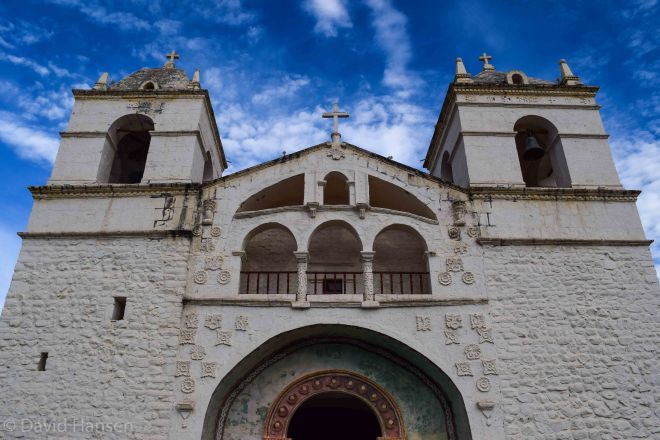
We began the trip into Colca around 7 AM, which felt way too early but the morning light made the landscape brilliantly colored. We stopped in a small village with a church about an hour later to use the bathrooms and buy snacks and souvenirs. At one point a friend of ours had a large bird perch on her head for photos, which was hilarious. The stop was fairly brief, and afterward we continued on into the canyon.
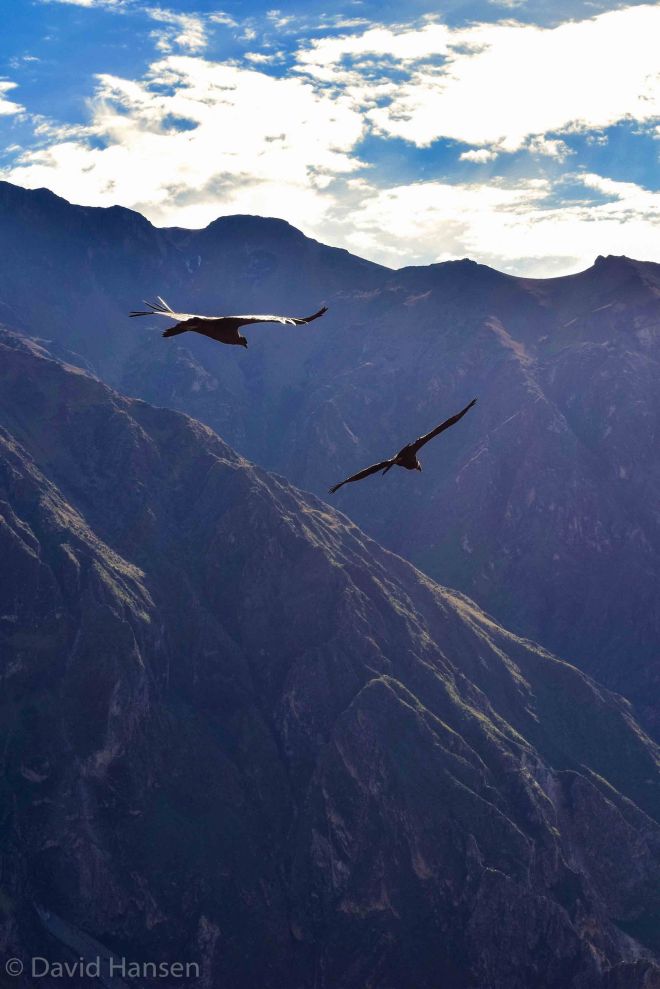
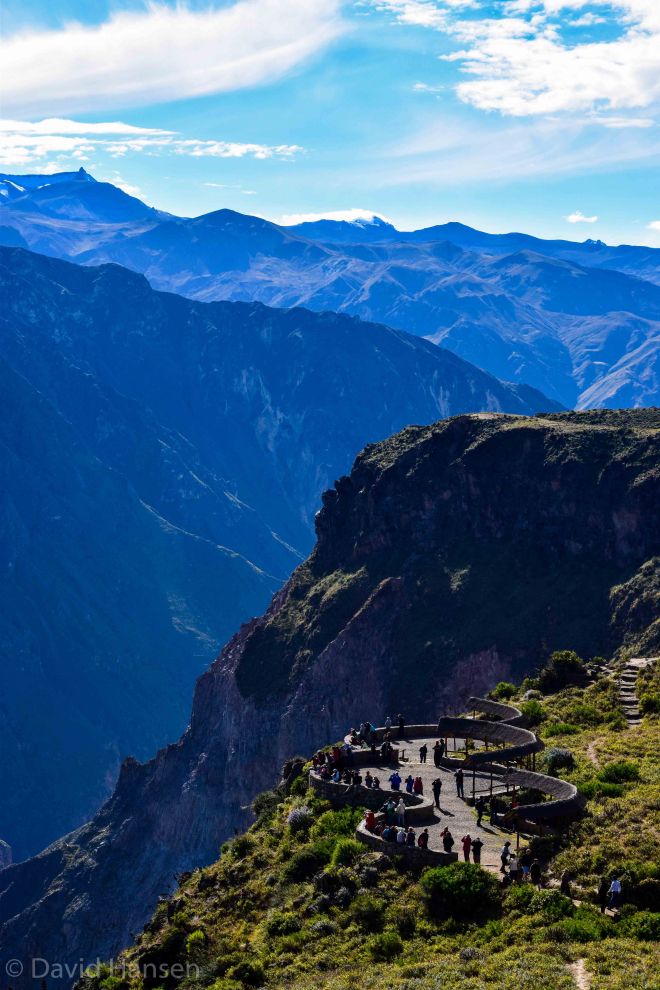
We arrived at the condor viewpoint around 9:15 AM, which at first was pretty but underwhelming, especially since we had a couple hours to kill there. At first there were only a few condors flying around, but after about 30 minutes at least a dozen began flying around the canyon near where we were standing. There were a couple of viewing platforms available to watch from, so we hiked all over them to see the birds from all the different angles. After about an hour and a half our guide gathered the group up and we took a moderate hike along the valley to see the landscapes and various local plants that grew in the area. We finished the hike around noon and continued toward another viewpoint before heading back to Chivay for lunch and then onward to Arequipa before nightfall. Bonus: at the last stop we got to eat cactus ice cream, which was amazing.
Condors at Cruz del CondorViewpoints for condor watchingColca Canyon
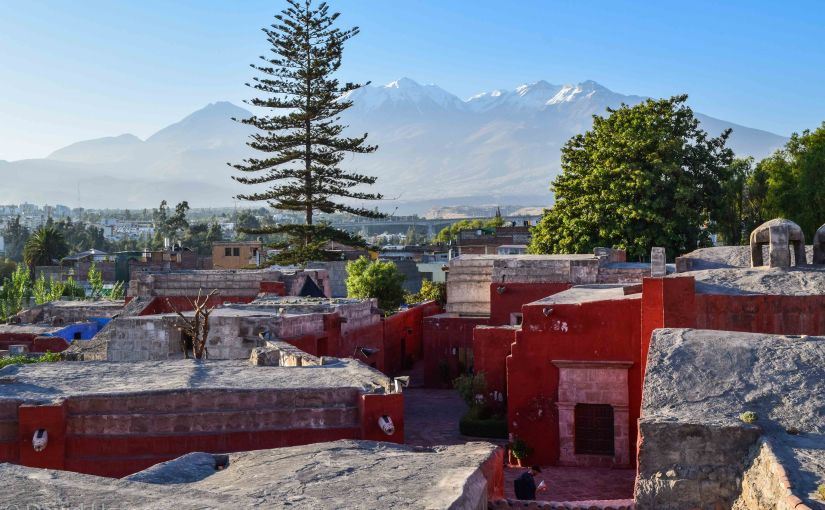
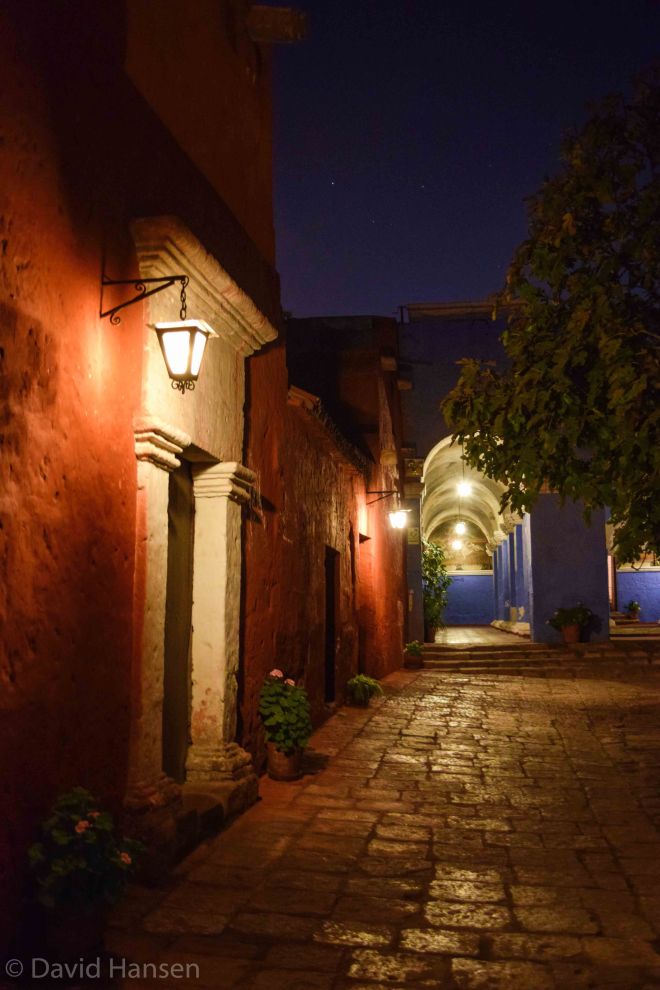
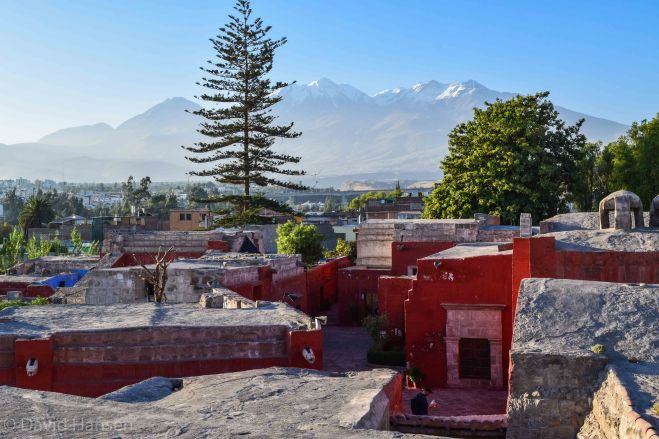
We got back to Arequipa around 6 PM and checked into our hostel, and then visited the Santa Catalina Monastery with a group of friends from the bus. On certain nights of the week the monastery is open at night, and that night happened to be one of them, which was convenient as most of our friends were leaving for Cuzco in the early morning. We all toured the various streets and buildings of the monastery — which is essentially a walled off town within the center of Arequipa — for an hour or so before heading to the main plaza to see the cathedral and other colonial architecture.
Santa Catalina Monastery at night
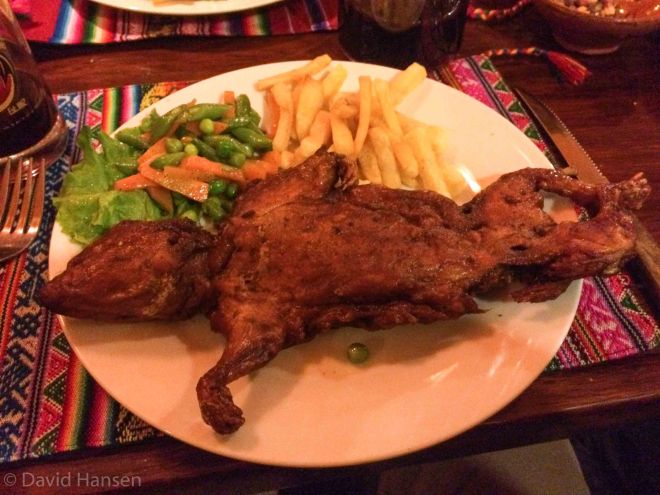
After wandering through town for a bit, we went out in search of a restaurant that served cuy, otherwise known as guinea pig. We got a great recommendation from the hostel for a good local place that served it and all but two of us ordered it for dinner (the other two were mortified at the thought and could barely watch – though one did manage to try a bite). Everyone seemed to enjoy the meal, and the owner of the restaurant even made an earring for one of our friends out of the tooth of the guinea pig she ate. Unfortunately we had to say goodbye to many of them in Arequipa as we were staying an extra day to see the city.
Mmhmm, deep fried guinea pig
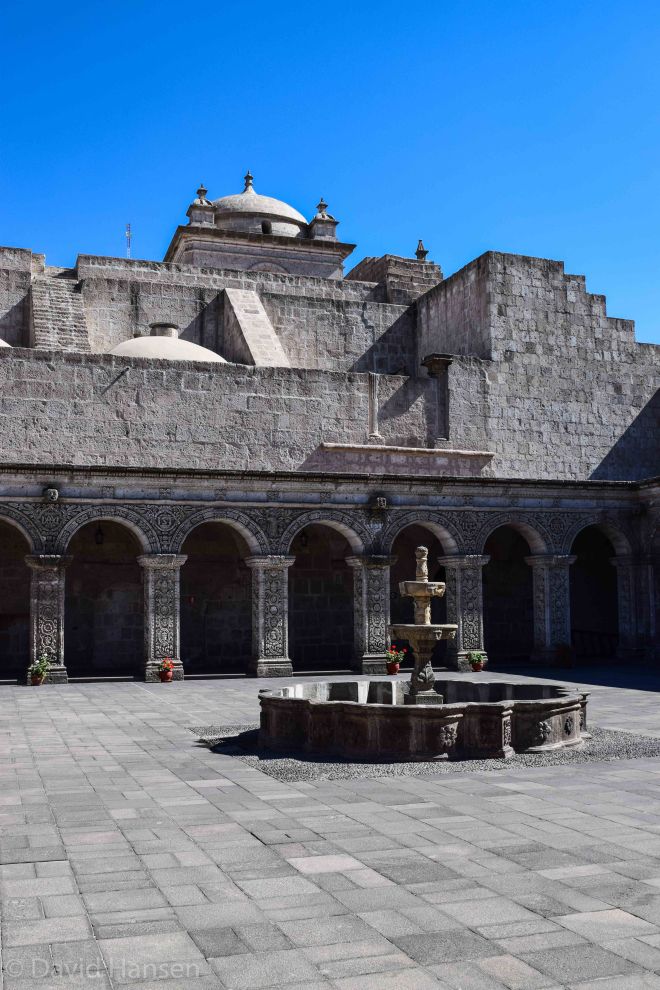
The next day we spent wandering the old city of Arequipa. First we visited the Jesuit church, which had stunning architecture and intricate murals on the domed ceiling in one of the side rooms. After the church we visited the Museo Santuario Andino, which houses the Juanita mummy, and perfectly preserved mummy of a child sacrifice which was found frozen on top of a local mountain. The features of the body are incredibly preserved and the associated artifacts were explained well by our guide, who was an archaeology student at the university which runs the museum. Unfortunately you aren’t allowed to take photos, and cameras must be checked at the entrance to make sure the rule is followed.
Colonial architecture near the Jesuit church
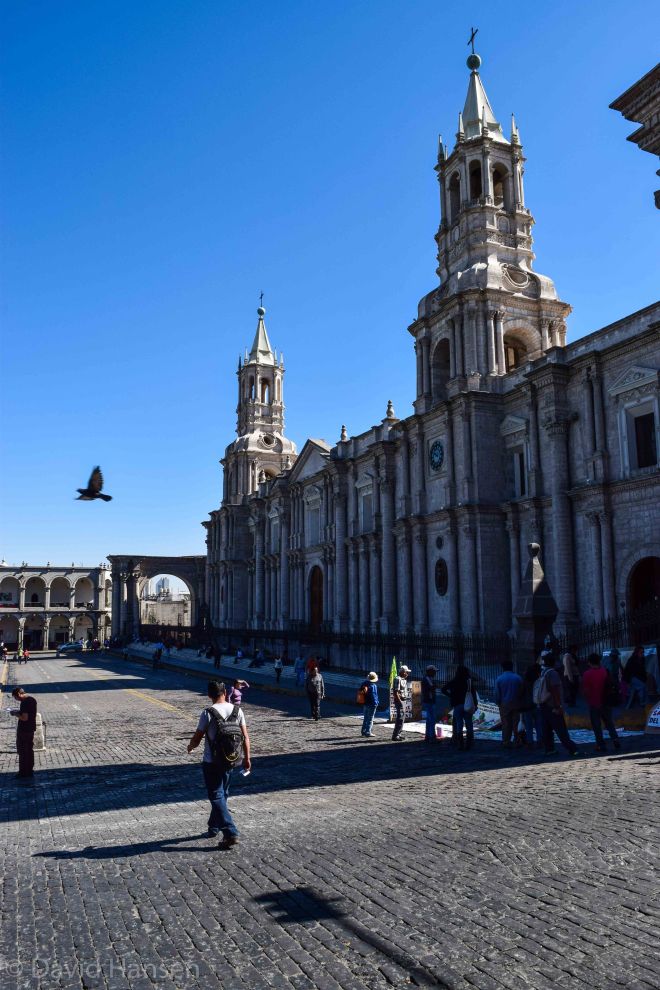
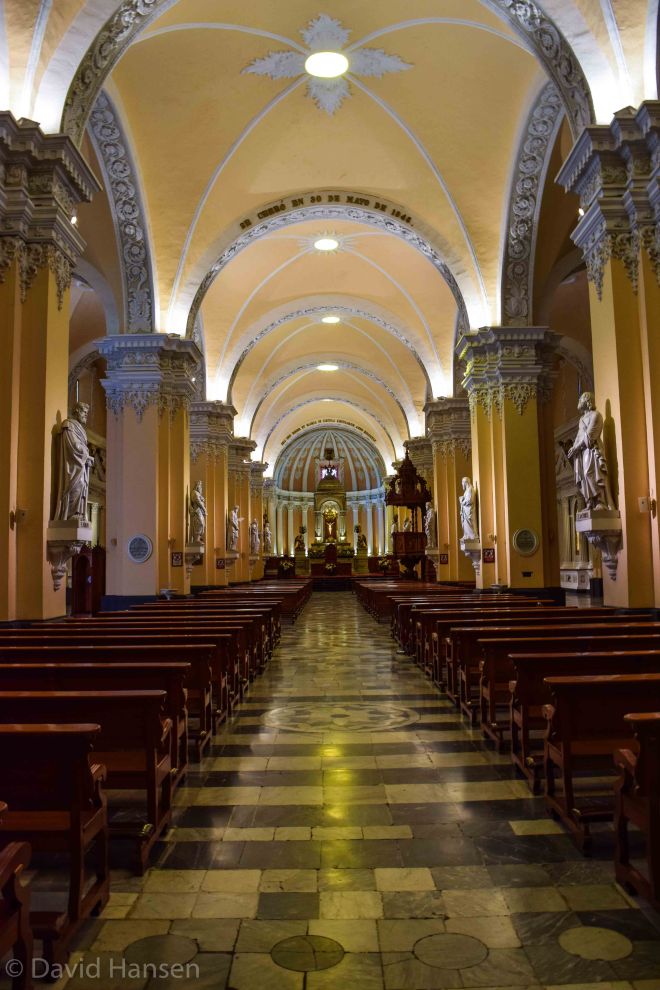
We left the museum and grabbed lunch before heading to the Basilica of Arequipa, which also required a tour guide. Thankfully the service was included in the ticket price and the two of us were the only ones on the tour. The guide was knowledgeable about the history of the church and the former priests, and I ended up being glad we had to hire her for a tour. There were a number of rooms available to tour which held various relics from the church’s history. Toward the end of the tour the guide took us on the roof of the church to show us the bells and the view of the main plaza, the monastery, and the volcanoes in the distance. The views from the top were great and the tour was absolutely worth taking.
The basilica from La Plaza de ArmasInside the basilicaView from the roof of the basilica
Once we finished at the church we returned to the Santa Catalina Monastery to take more pictures during the day, since it was so impressive during the night prior. The difference between night and day is striking, as the colors were much more vibrant than I had expected after seeing them the day before. We stayed much longer on the second visit in order to see everything we missed the night before. I would recommend visiting during the day and the night if possible, as both experiences are fascinating and worth the price. Once we finished in the monastery, we wandered through the town centre again before grabbing dinner and going to bed before our early morning bus to Cuzco.
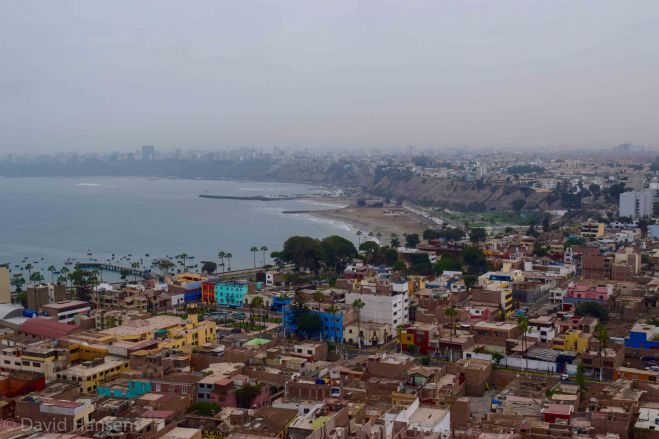
We and a few other backpackers were picked up from our hostel in Lima before dawn by the PeruHop bus to Paracas. We were the first group to be picked up, and we spent about an hour drive around the city and picking up other passengers before heading south. Once everyone was on the bus, we began to head out of town, but stopped along the way at the Pacific War Memorial and Christ of the Pacific, located on top of a mountain south of the city. The PeruHop guide gave us an introduction to the War of the Pacific, which occurred in the 1800s between Peru, Chile, and Bolivia. Essentially Chile took Bolivia’s coastline and did a lot of damage to Peru, including marching all the way up to Lima (Bolivia and Peru are still bitter). There was also a giant statue of Jesus, in a similar style to Christo Redentor in Rio de Janeiro, Brazil, which was built in the late 2000’s. The hilltop location provided an excellent panoramic view of the sprawling city and Pacific coast.
View of Lima from the Pacific War Memorial
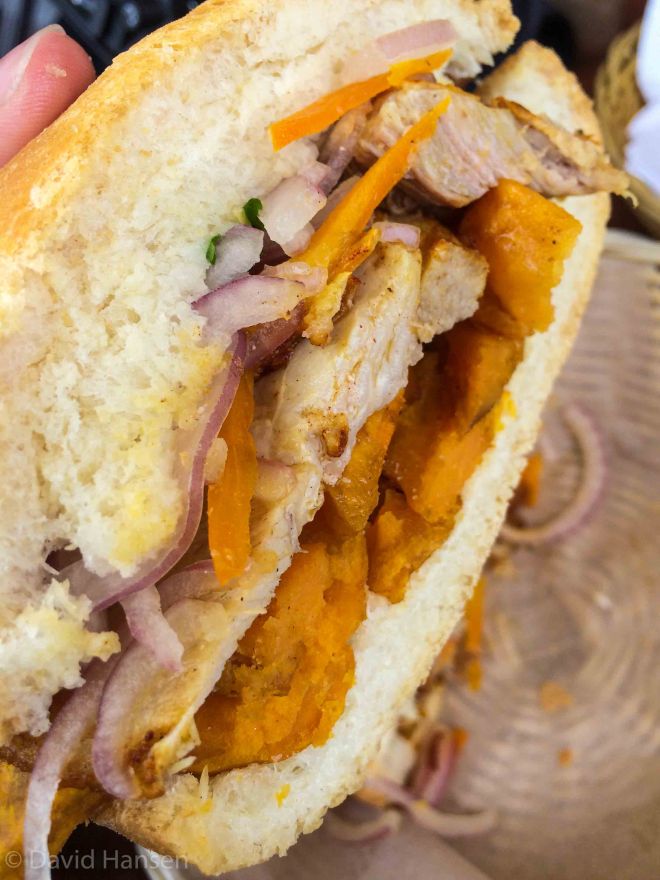
After the stop we continued south down the highway until we reached a bakery/restaurant where we stopped for breakfast. This place had amazing homemade breads stuffed with cheese and a chicharrón (pork fried in its own fat) sandwich which I’ve been craving ever since. The bus then continued on to Chincha, where we stopped at an old Spanish hacienda.
Chicharron breakfast sandwich
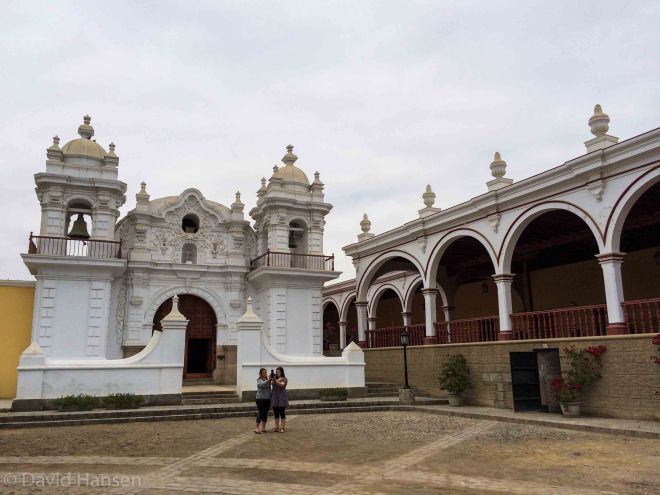
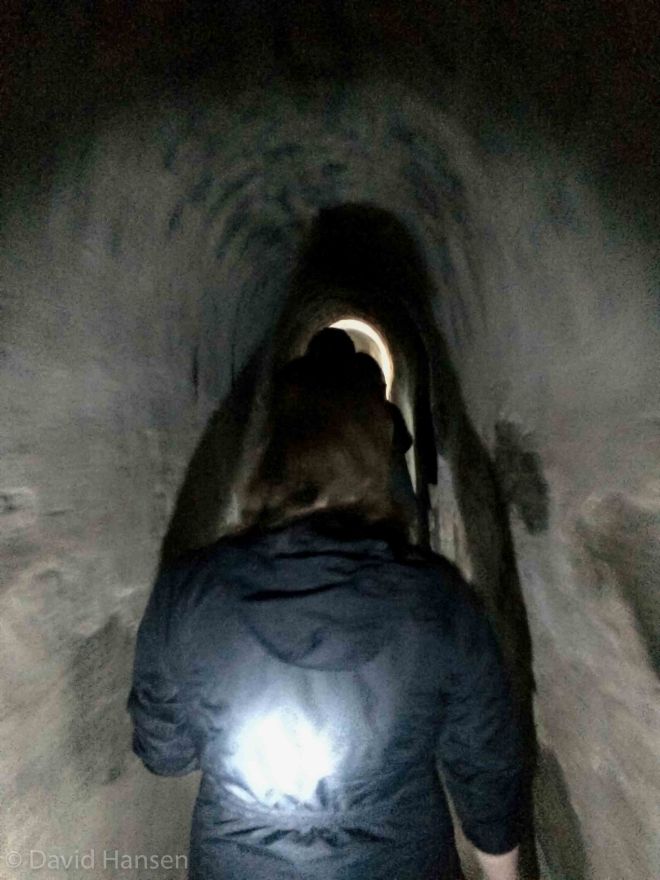
The Chincha hacienda was a beautiful old house with an old church almost attached. This old home had slave tunnels hidden beneath the floor, where the owners would hide their slaves so they wouldn’t be taxed on them. The tunnels were extremely dark, narrow, short, and maze-like. Absolutely horrible conditions for human beings to live in. Afterwards we visited the adjoining church which was only for the owners family.
Chincha church and haciendaChincha slave tunnels
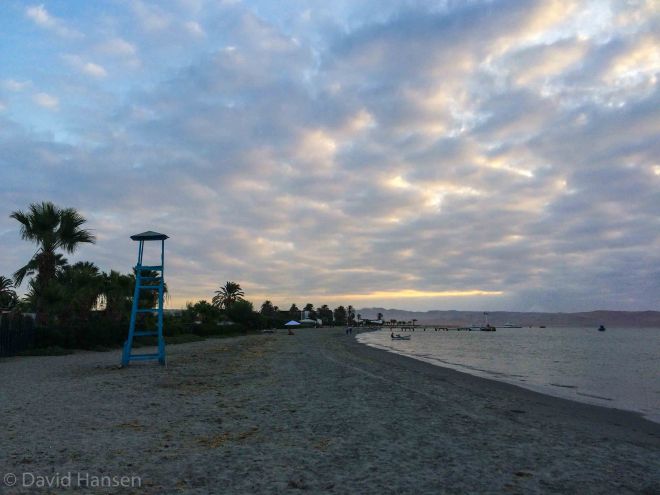
We continued on the bus toward the small town of Paracas. There’s not much to do in the town itself other than walk on the beach and shop. All the beachfront restaurants will try to lure you in with drink specials and happy hours, which gets annoying quickly. Our hostel was nice, and we ended up with two other PeruHop people (who we ended up spending most of the trip with).
Beach in Paracas
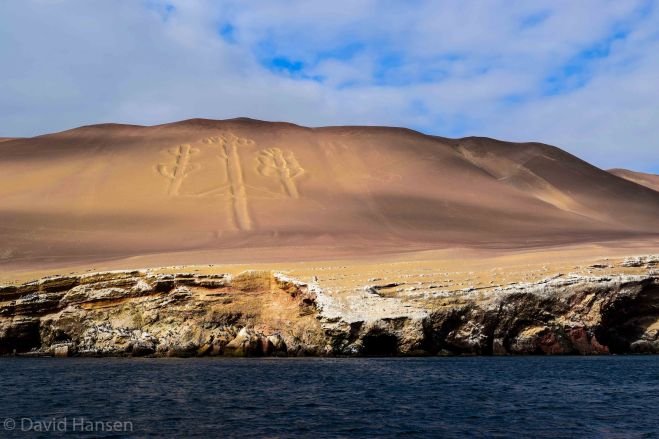
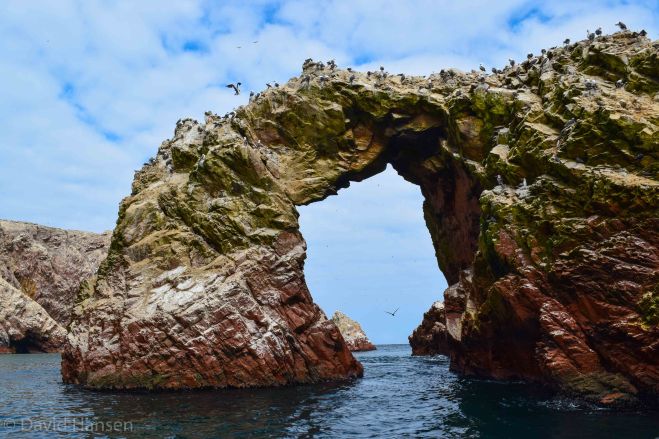
The following morning we took a boat to the Ballestas Islands, also known as the Poor Man’s Galapagos. The boat ride there was nauseating, and Kirsten flew out of her seat at one point, but we made it there intact. Along the way to the islands we passed by the Paracas Candelabra, a large candelabra shaped figure dug out of the sand along the coast. It has survived hundreds of years due to the lack of rain in the area.
Paracas Candelabra
Once we got to the island itself, we encountered tons of animals I would have never expected in Peru, such as sea lions, dolphins, blue footed boobies, and PENGUINS! The scenery of the islands was stunning, and the sheer number of birds flying around them was impressive. People used to collect the bird guano from platforms on the island, but since the islands have been designated a wildlife preserve this practice has decreased significantly. The tour somewhere between 1-2 hours and was fantastic.
Baby sea lion feeding
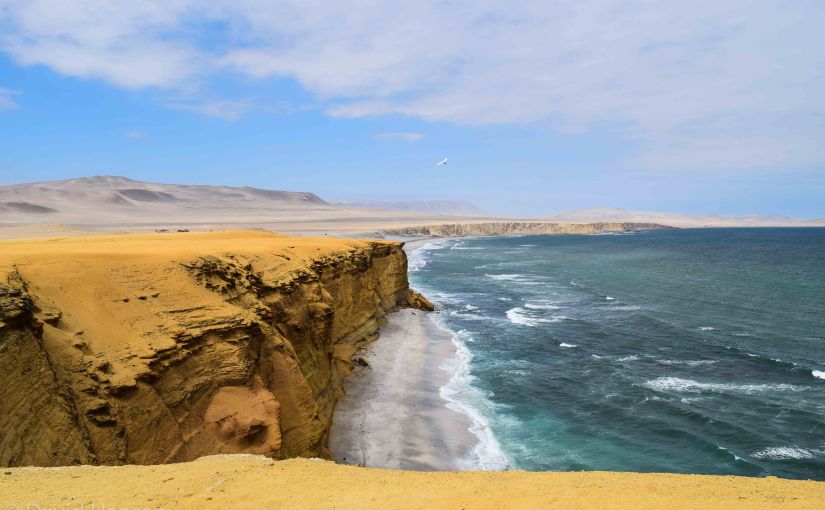
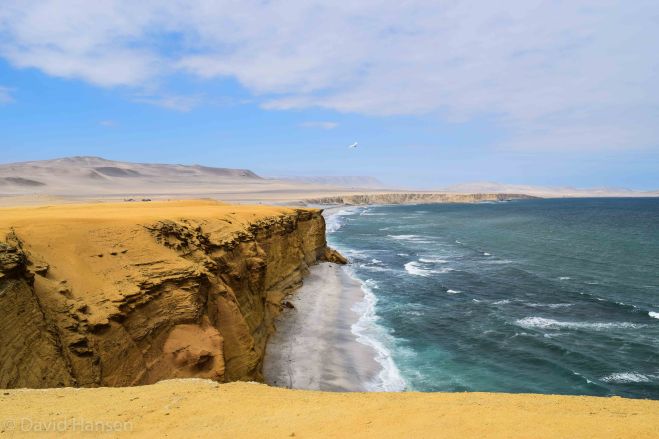
When we arrived back in Paracas, we soon left on the bus to go to Paracas Natural Reserve, just outside of town. I wasn’t expecting much as it was a free stop along the way, but it was absolutely gorgeous. The park is a barren desert landscape that looks more like it should be in Star Wars than central Peru. The colors of the Pacific coast were unreal in combination with the steep golden yellow cliffs adjacent. The place was magical and one of the most beautiful things I’ve ever seen.
Paracas Natural Reserve
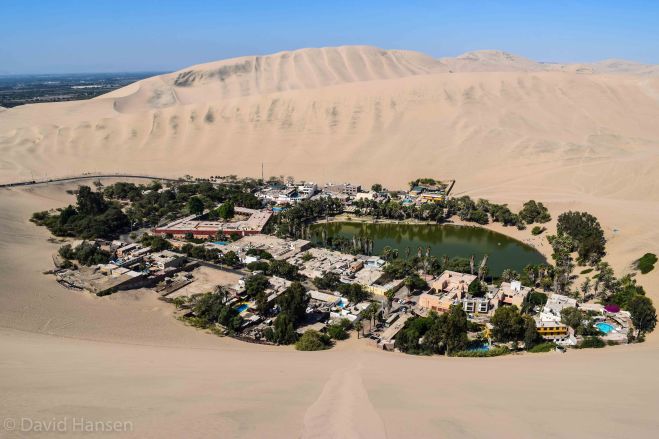
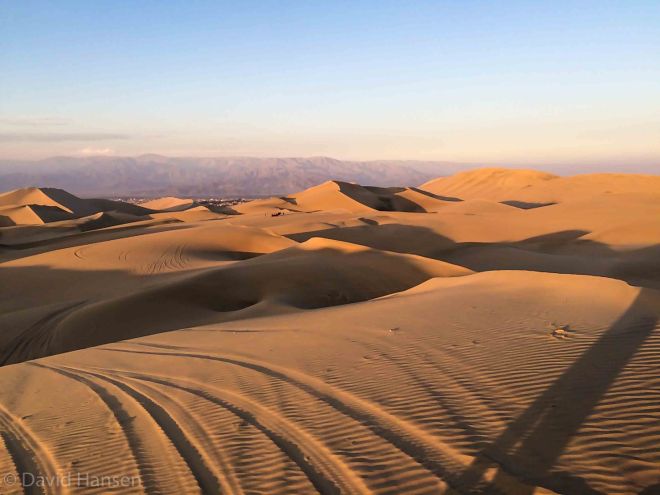
We left the park and continued south to Huacachina, a small desert oasis outside of Ica. The village of Huacachina is located in the center of massive sand dunes, which I didn’t know existed in Peru until we arrived. There is a small green pool in the center which used to be the only source of water for the town. We checked into our hotel, Casa de Arenas (House of Sand in English, very fitting name), and grabbed lunch before our next activity – sand boarding and dune buggying.
Huacachina Oasis
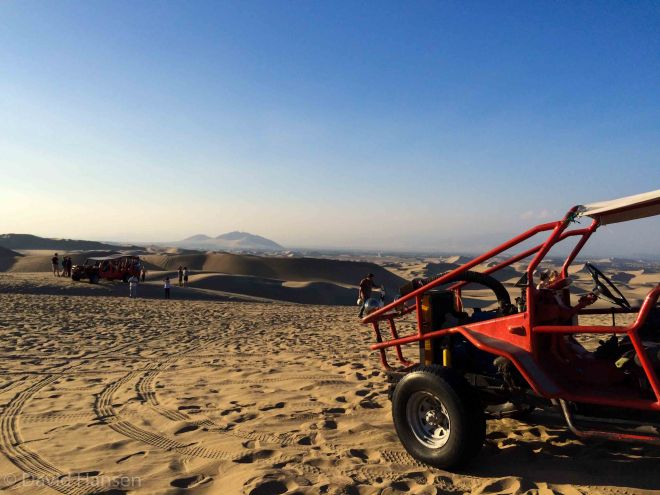
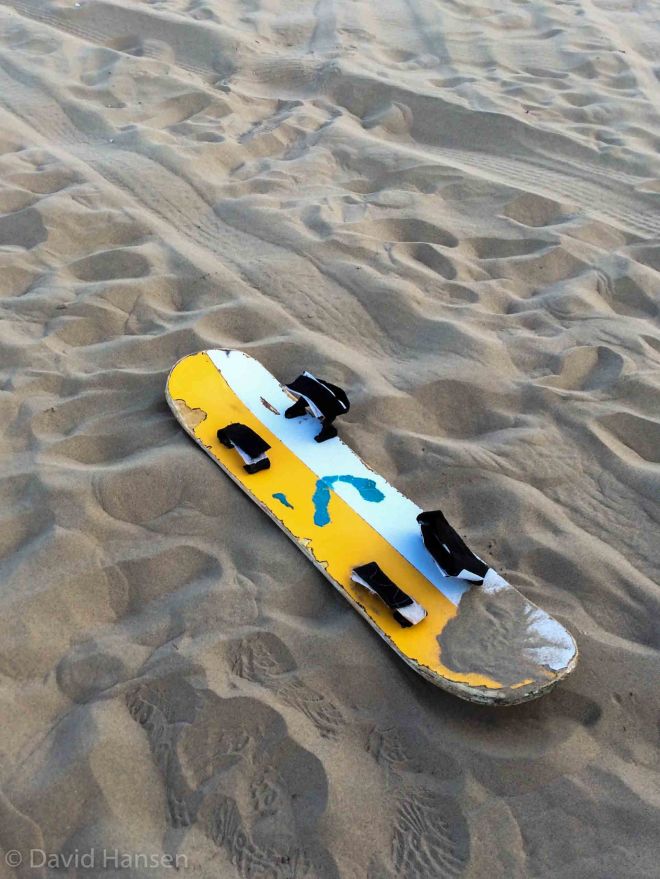
The dune buggy ride was probably one of the most exhilarating experiences of my life. The driver would speed up dunes like a madman and drive down steep cliffs of sand at high speeds. After a good deal of crazy dune jumps we stopped to start the second part – sandboarding. Essentially it’s the same premise of snowboarding – first you wax the board with a candle and then slide down, either on your stomach or standing up. I always laid on my stomach since I have terrible balancing skills on flat surfaces, let alone giant dunes. The only downside to laying down is punching the screws which hold the straps in place, which left me with some nice scars on my knuckles. We slid down three different hills or various sizes before continuing with the crazy dune buggying. Toward the end of the trip we stopped on top of one of the highest dunes to take pictures of the sunset over the desert, which was amazing, and then went back into town.
Sunsets and sand
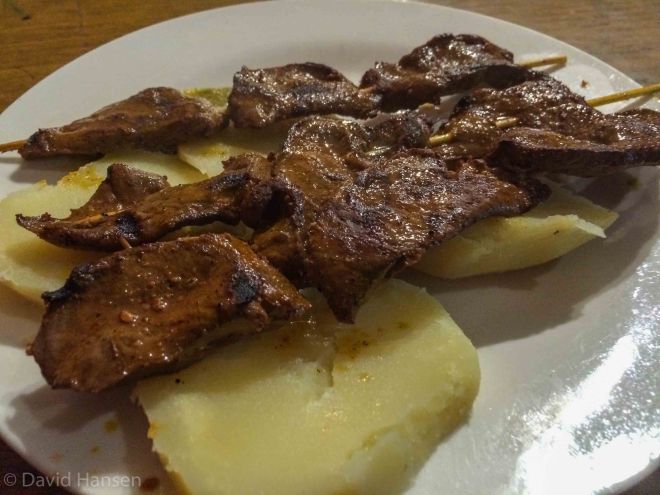
We went to a restaurant a few doors down from the hotel with the entire PeruHop group and had a great time chatting with everyone we’d met the day before. I had a lovely meal of anticuchos (grilled cow heart skewers), which I hadn’t eaten since my previous visit to Peru two years ago. I even managed to convince some others to order them as well, and they were well received. We were pretty exhausted from all the activities that day in Paracas and Huacachina, but it was Saturday night and our hotel was connected to a large nightclub, so sleep didn’t come very easily. I think the club turned off the music sometime around 5 AM, which was a relief.
Anticuchos
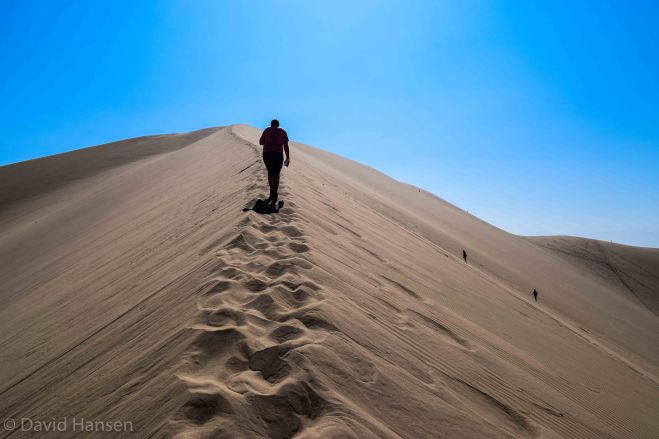
The following morning Kirsten and I decided to climb the large dune behind the hotel before the bus left to Arequipa. These dunes make Sleeping Bear Dunes in Traverse City look like anthills. It took about 45 minutes to climb to the top, but the views were spectacular. There was sand as far as the eye could see. After resting on top of the dune, I decided to run down it, which took surprisingly long (1-2 minutes) even at full speed. It was almost as much of an adrenaline rush as the dune buggying the day before. When we got back down we grabbed lunch with some others from the bus before our long overnight bus to Arequipa.
Climbing the sand dunes
We left Huacachina in the mid-afternoon and stopped at a vineyard just off the highway for a tour of the facilities. The wine making process was interesting, but the tour was quite short and most of the time was spent giving samples and trying to sell stuff. I wasn’t especially interested in this part and was much more excited for the next stop, Nazca.
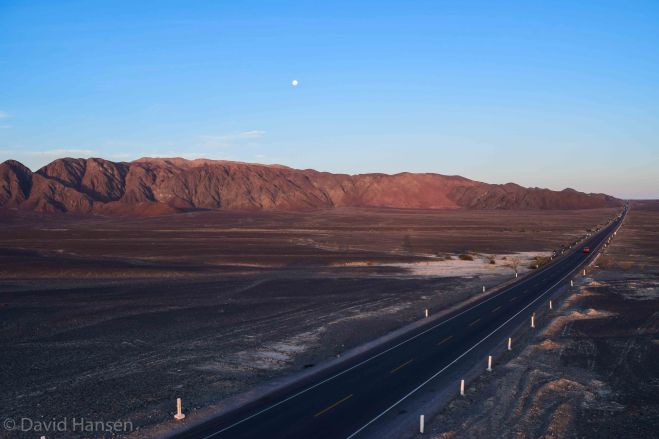
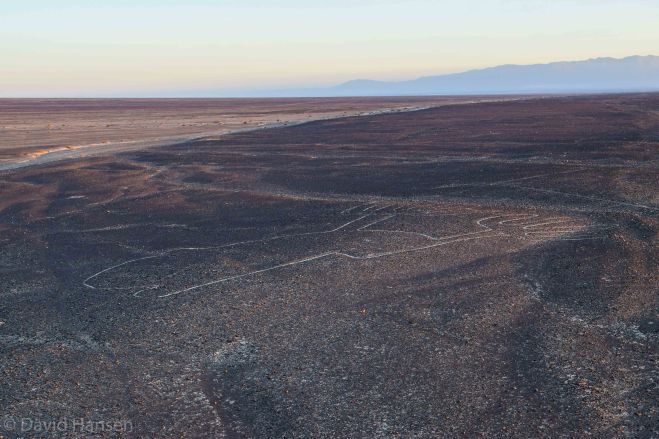
The Nazca landscape“The Frog” lines
We arrived at the Nazca Lines viewing platform just before sunset, which left a beautiful array of colors on the mountainous desert landscape. The platform allowed for the viewing of 3 of the smaller figures, the rest are only visible from a plane. Nonetheless, it was still a fascinating stop and the sunset was stunning over the flat desert landscape. Once we finished here we continued overnight to the next destination, Arequipa.
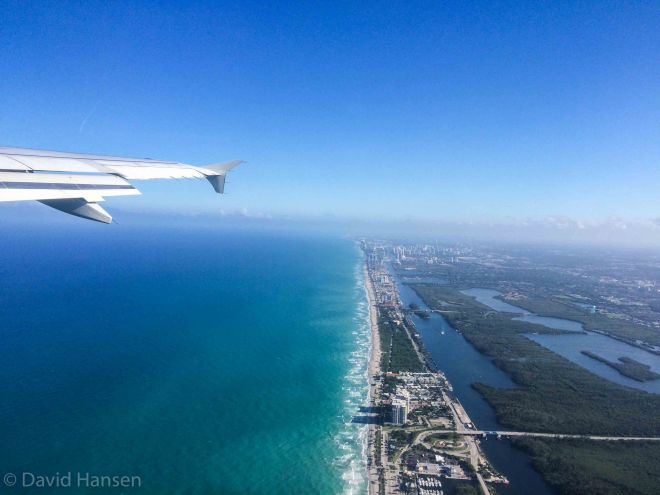
After two years away, I finally made it back to South America. The trip began early in the morning at Detroit Wayne Metropolitan Airport, where the first of three flights departed. The flight route was convoluted, Detroit -> Boston -> Fort Lauderdale -> Lima, but flying with JetBlue made the ordeal much less painful than it could have been. We arrived in Lima after 11 PM local time and cleared passport control and customs relatively quickly along with a fellow bioarchaeology student who happened to be sitting next to me on the last leg of the flight. We found our hostel pick up in the arrival halls and had a butchered conversation in Spanish with the driver on the way to our hostel.
The hostel, 1900 Backpackers, was a lovely old hostel located in a colonial mansion designed by Gustav Eiffel. It was definitely one of the nicest hostels I’ve stayed in and I would highly recommend it to anyone heading to Lima. The hostel offered two free walking tours the morning after we arrived, and being the cheap person that I am, we decided to take both tours that day.
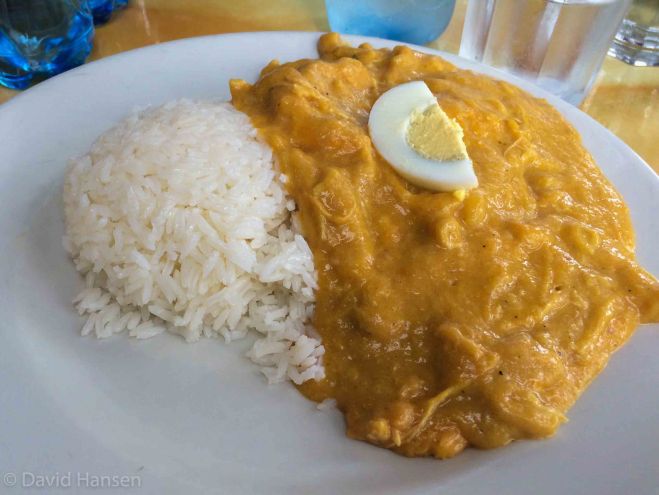
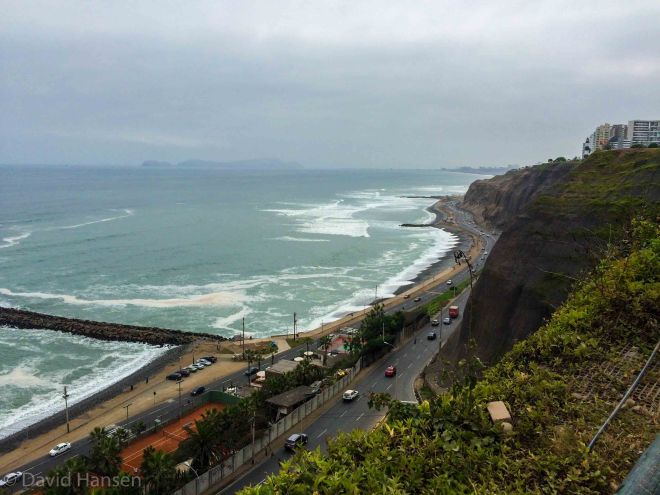
The first tour took us to Miraflores, the wealthy and very Western part of the city. This district was very much like any city in the U.S., complete with TGI Fridays and Starbucks on seemingly every corner. The first order of business was eating lunch, and since there were only three of us and the guide, we were able to have a nice conversation with him over plates of wonderful Peruvian food. I had Aji de Gallina (one of the best Peruvian dishes, hands down) and Kirsten had Lomo Saltado (the first of many). Once we finished with lunch we walked down to Parque Kennedy, a small park named after JFK which was teeming with hundreds of stray cats (it did not smell pretty). From here we walked down to the coastline and El Parque del Amor (Love Park), which had spectacular views of the Pacific coast and the cliffs of Lima. We left Miraflores from here as the guide had to get back to the hostel to prepare for the second tour.
Aji de GallinaCliffs of Miraflores
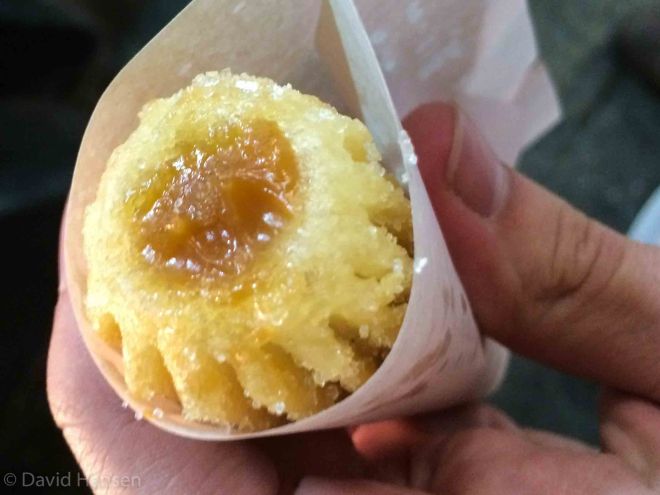
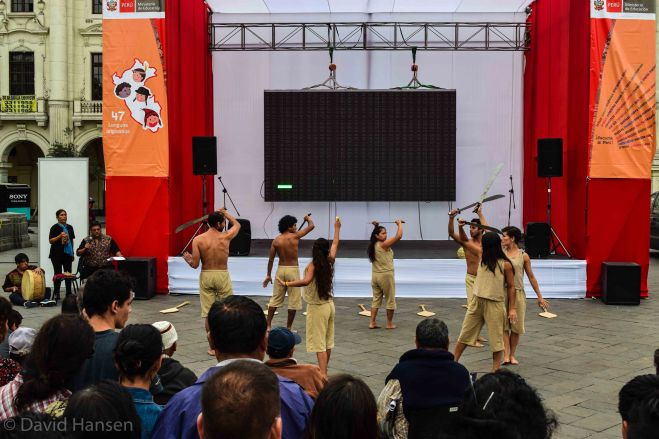
The second walking tour went to the Historic Centre of Lima, about a 15 minute walk from the hostel. The architecture in this area could have been in any old European city. We walked along the pedestrian only shopping street to Plaza San Martin, where there was a festival for Indigenous Languages of Peru taking place. We stopped to watch a dance performance from the Amazon region of Peru and check out some of the displays (and I got a really great free poster of the languages of Peru). From here we continued up toward the Plaza de Armas and the river, our guide discussing the history of the buildings along the way. The walking tours gave us some grounding as to the orientation of the city, which we needed for the following day of site seeing. On the way back to the hostel we stopped at every churro stand along the street (it’s a disgrace to visit Lima and not eat at least 5).
One of the many churros eaten in LimaAmazonian dance during the Language Festival
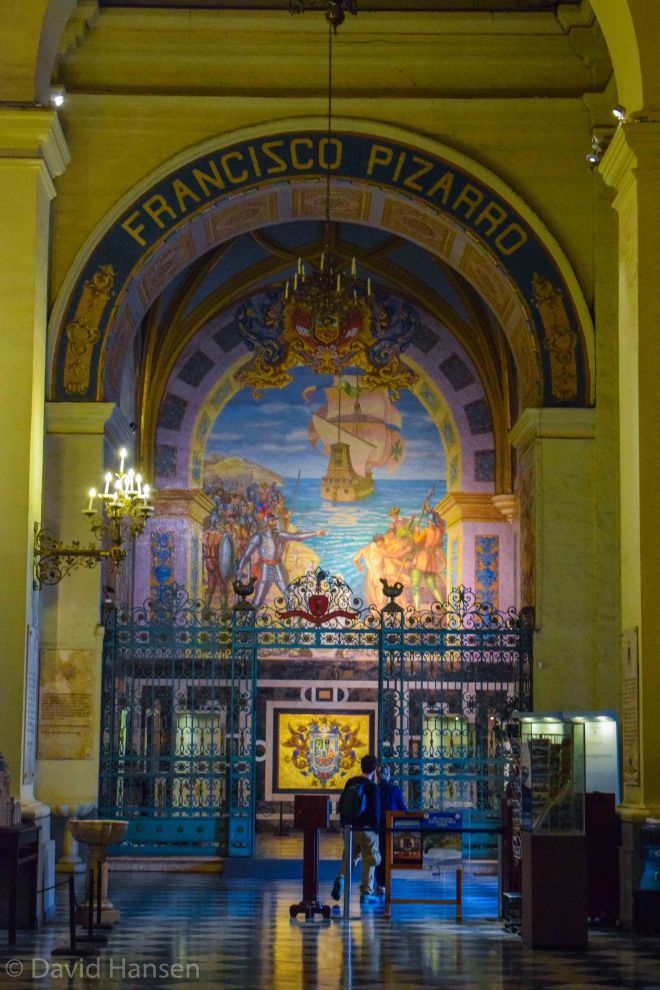
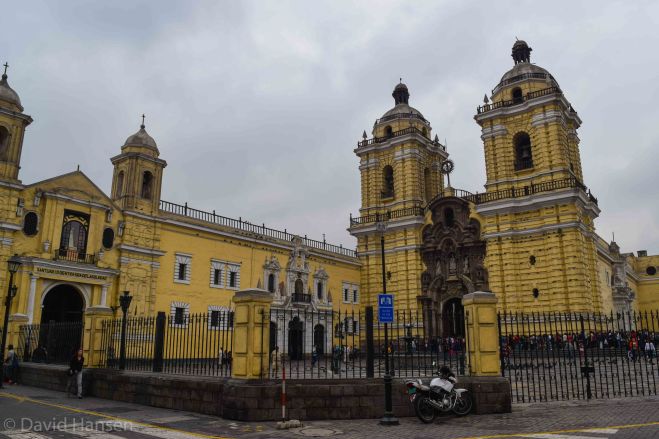
Our second and last day in Lima was packed with all the sites the walking tours didn’t hit. We started by heading to the Cathedral of Lima, which housed the grave of Francisco Pizarro and some really cool crypts with glass flooring which allowed you to see the skeletons under the floor. The Pizarro tomb was quite ornate, but the most interesting part was an analysis of his skeleton which was displayed next to the tomb (how often is bioarchaeology so prominent in an exhibit?!). The rest of the cathedral was beautiful, but very similar to other Catholic churches in Europe. From here we continued to another church a few blocks away. The Monastery and Church of San Francisco is the second most important church in Lima. The visit to the monastery required a tour, and no photos were allowed inside (though I managed to get a few that semi-turned out). The monastery houses a large and beautiful old library of antique Spanish books from the 16-18th centuries. In addition, below the monastery and church are an extensive network of catacombs, including a circular pit which holds concentric circles of skulls and long bones (best part of the tour). When the tour ended, we went back to the Plaza de Armas to watch the changing of the guard at the presidential palace. A marching band comes out and plays every day at 12:45 PM to signal the guard change. Once this ended we found a cab and headed to Miraflores for lunch.
Francisco Pizarro’s TombSan Francisco Church and Monastery
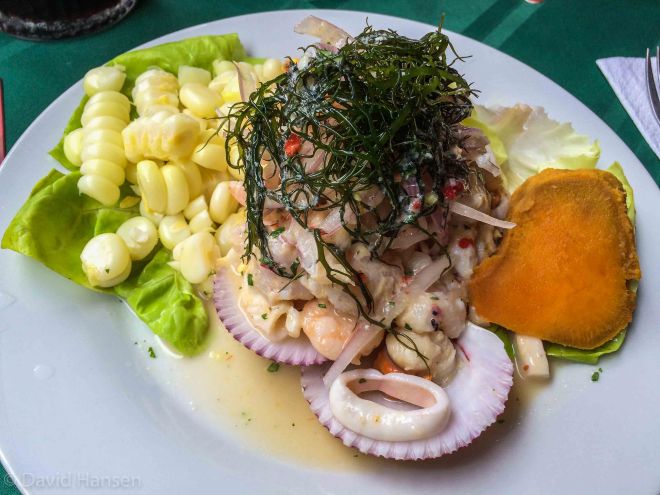
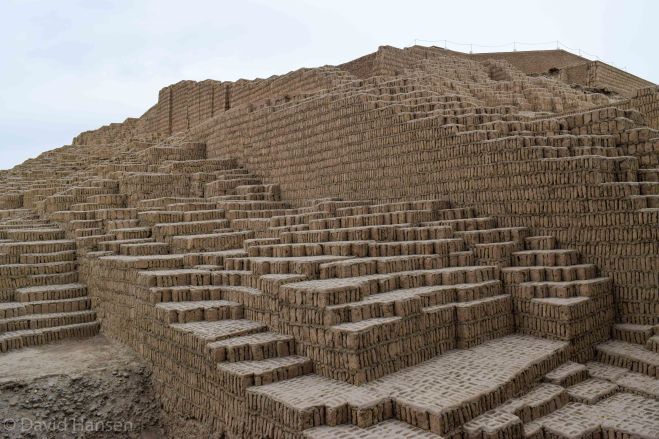
We were dropped off in the cat park and headed straight to find ceviche. Ceviche is probably the best Peruvian dish there is. It consists of seafood cooked only by the acidity of lemon juice and served with a side of sweet potato. When combined with the purple corn drink Chicha Morada, you have a perfect Peruvian meal (which is exactly what we did). Following the delectable meal, we walked the streets of Miraflores to find Huaca Pucllana, a mud brick pyramid located in the city. Huaca Pucllana was built by the Lima Culture, between 200-700 CE, as a religious and administrative center. Because of the lack of rain and the construction patterns, the site was remained largely intact over the centuries. The bricks are not stacked in the traditional way, but rather stacked upright to allow for movement during the frequent seismic events of the region. The site is overall pretty well preserved and restored, and the associated museum houses a few interesting objects from the excavations at the site. When our tour of the site finished, we walked back to the coast and visited a mall built into the side of a cliff. We caught a cab back to our hostel and ran across the street to the Lima Art Museum to visit before it closed. It houses an impressive collection of archaeological specimens and some not-so-impressive modern art pieces. It’s not a very big museum, and can be visited in well under an hour. When we finished touring the museum, we went back to the hostel to pack and get ready for our early morning pick up by the PeruHop bus, a hop-on hop-off bus that we booked to take us to Cuzco for the next week.




 bioarchnomad