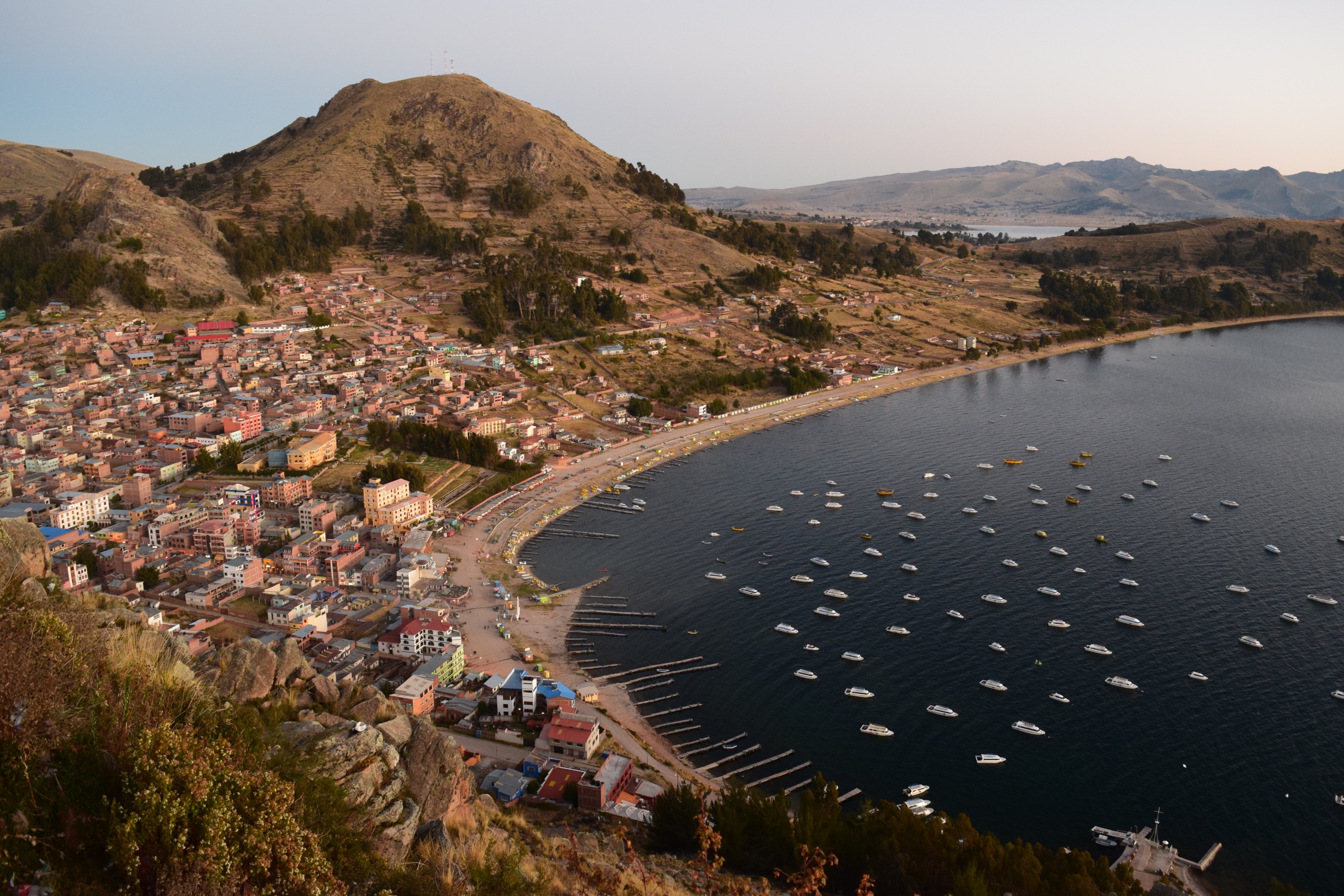
Copacabana, Bolivia – Two months living on Lake Titicaca

Copacabana, Bolivia is like my home away from home. Having lived here for an entire summer two years ago, it felt great to come back for another summer. After a bit of effort at the border to get Kirsten’s visa, we made it to Copacabana around lunchtime and dropped all our stuff off at our home for the summer before wandering around town for a bit. We arrived about a week before our professor, so we had plenty of time to rest and see the sites around town before things got busy. Since we’ve now been here about two months, I’ll list the highlights of our stay here and the general things to do in Copacabana when visiting.

  • First and foremost, El Condor and the Eagle Cafe and La Orilla are two must-try restaurants in town. The former for breakfast and the latter for dinner (especially the pepper steak). We ended up having dinner with a writer for Lonely Planet there a week ago which was pretty awesome.
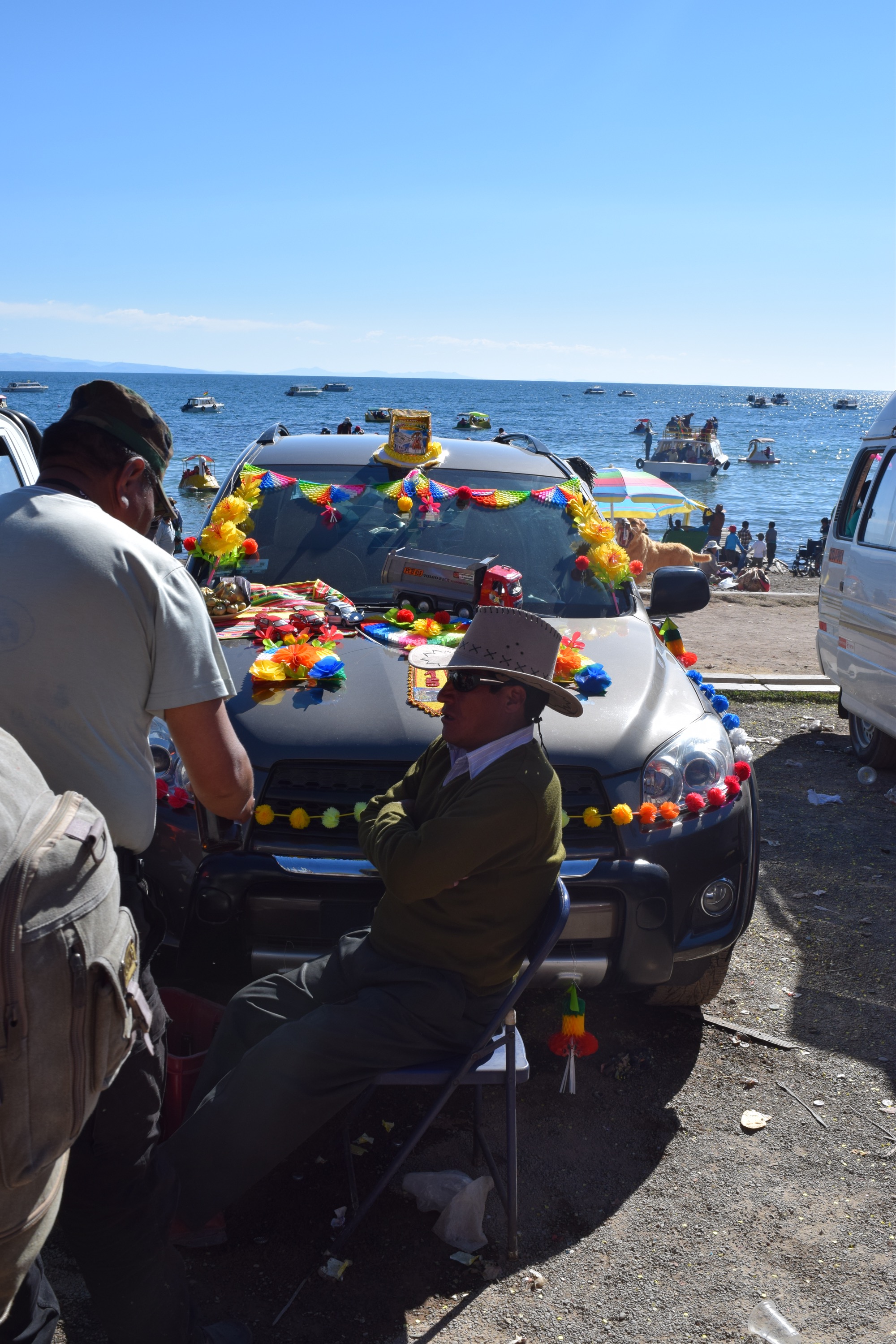
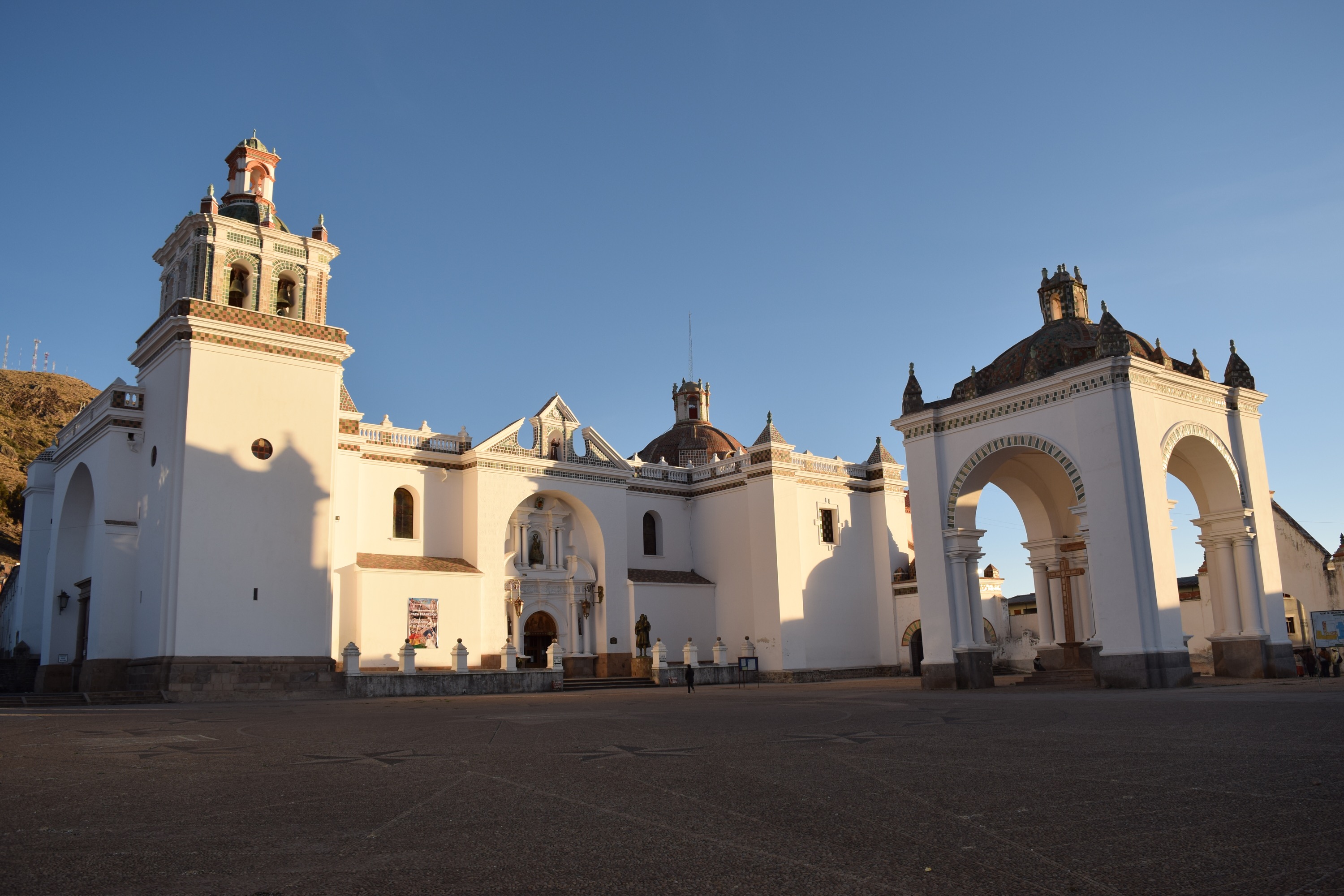
  • The Basilica of Copacabana is a huge pilgrimage site for Peruvians and Bolivians, and you can watch cars get blessed and purchase holy water if you do so desire  
    Basilica of Copacabana
     
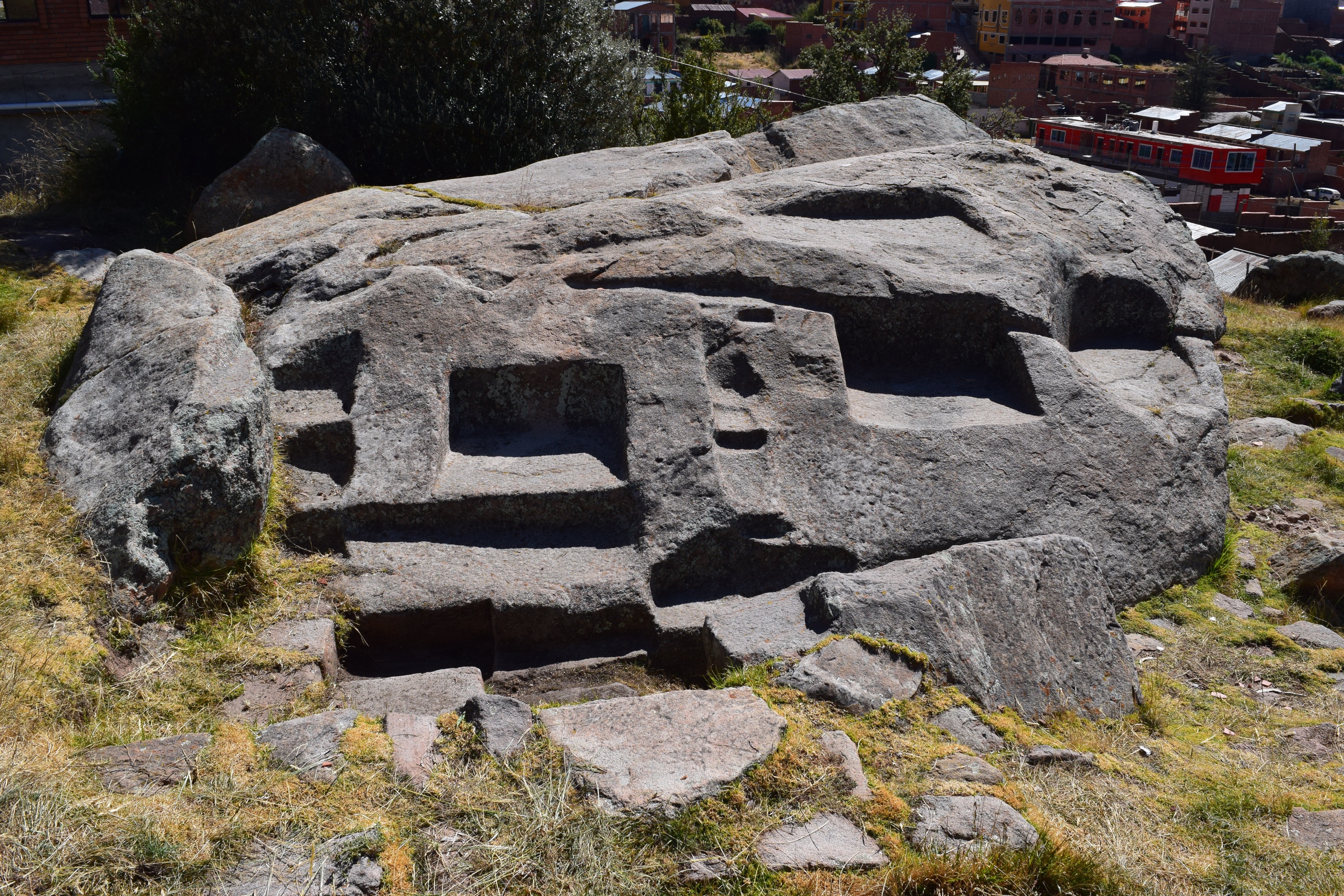
  • Intinkala is an Inca site of unknown purpose located near the center of town. There’s not much information known about it but entry is free so it’s worth checking out for a few minutes. 
    Carved rocks of Intinkala
     
  • The Calvario is the mountain on the edge of town which has a Catholic shrine on top. The climb up the stairs is brutal but climbing up the dirt trails on the side is really nice.   
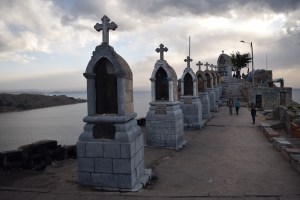
    Stations of the Cross on top of the Calvario
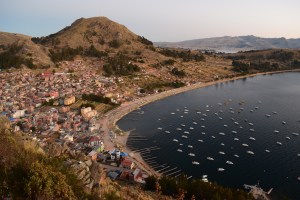
      
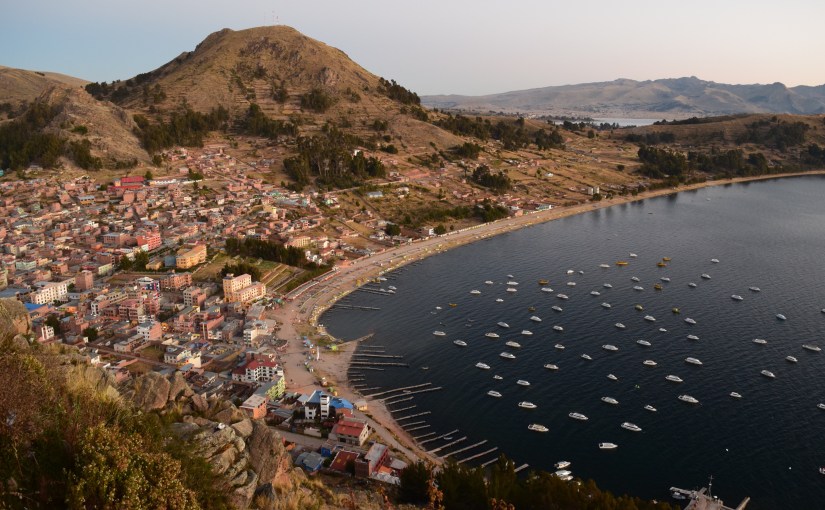
    Copacabana from the Calvario
     
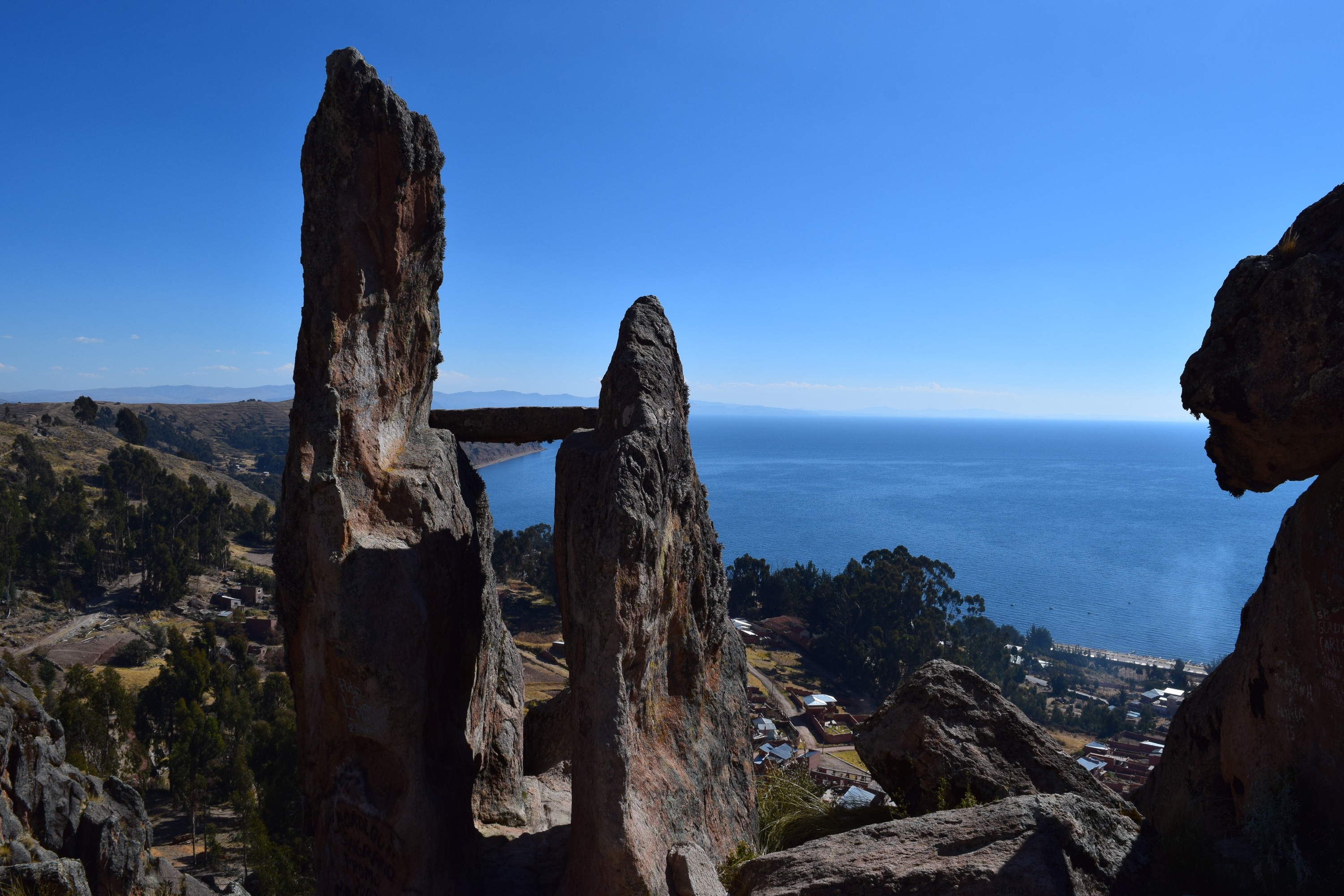
  • Horca del Inca is another Inca site located on the opposite side of town from Calvario. It was an Inca (and probably earlier) astronomical observatory used on the winter solstice (June 21). We met some fellow Americans during our visit here who were great and we ended up hanging out with them in Copa for a few days.   
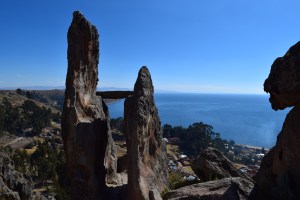
    Horca del Inca
     
  • Baño del Inca is located about 2 km away in Kusijata, and was a former Inca bath there pilgrims would have to purify before being allowed to enter Copacabana. There’s also a natural mummy in the small museum here, though it’s degrading due to water damage in the case.  
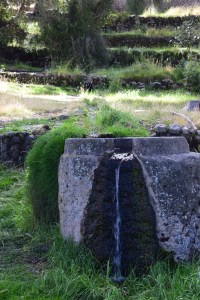
    Baño del Inca
     
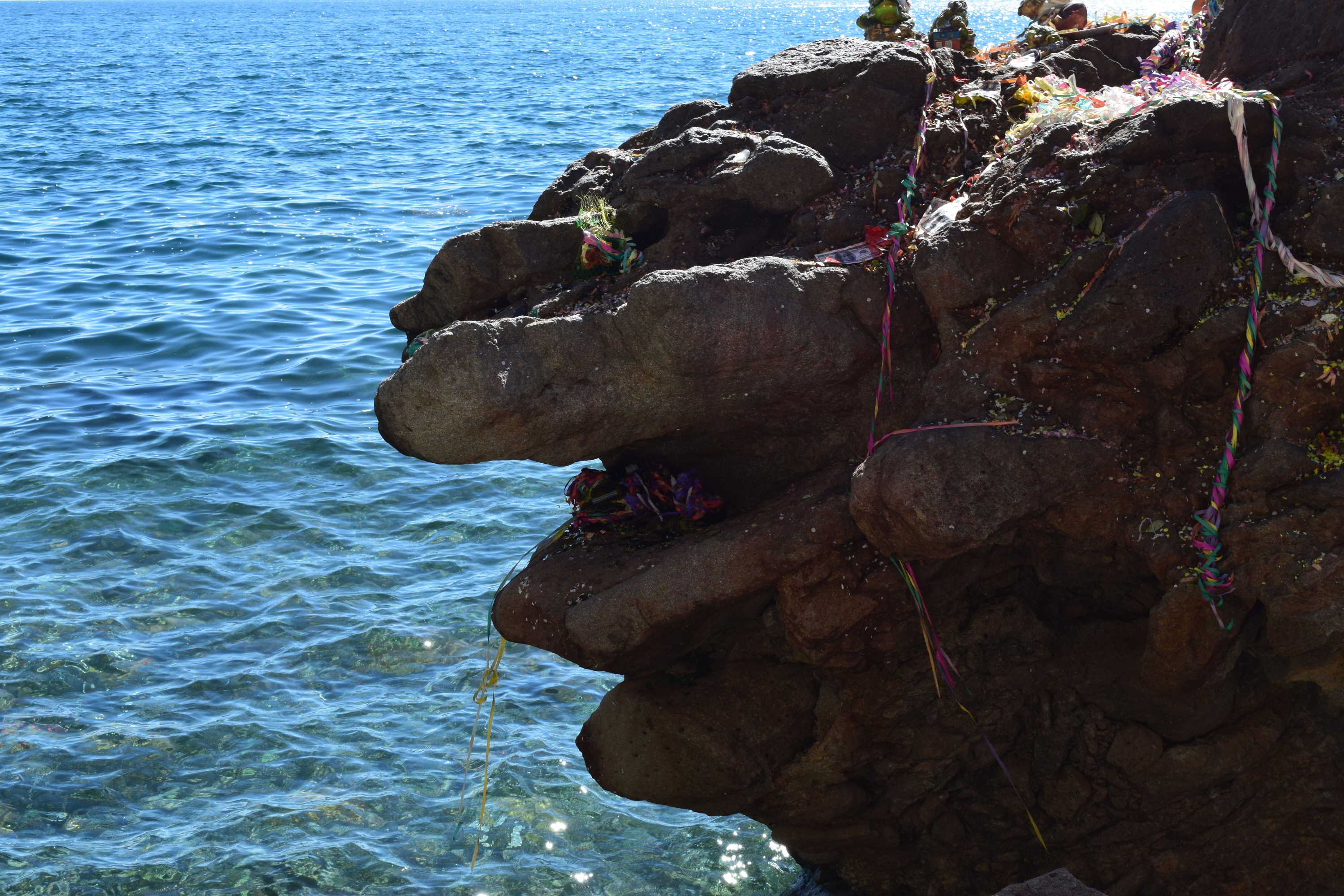
  • Boca del Sapo is another religious site which is in the shape of a frog. People throw champaign bottles at it for good luck.   
    Boca del Sapo
     
  • Salteñas are available in the main plaza for 4 Bs and they are amazing. The only downside is the olive hidden somewhere inside.

Copacabana is quite small and everything can be visited in a few days. The charm of the city is its lakeside town atmosphere and laid back vibe. It’s not just a place to spend a day on a trip between Cuzco and La Paz, it’s a destination in its own right. If in the area, try to spend a few days in town to visit the islands and relax in this chill lakeside town. Take a stroll down the beach or climb one of the surrounding hills. There are lots of options for activities, especially on the weekends when tourists from La Paz also come to visit the town.   
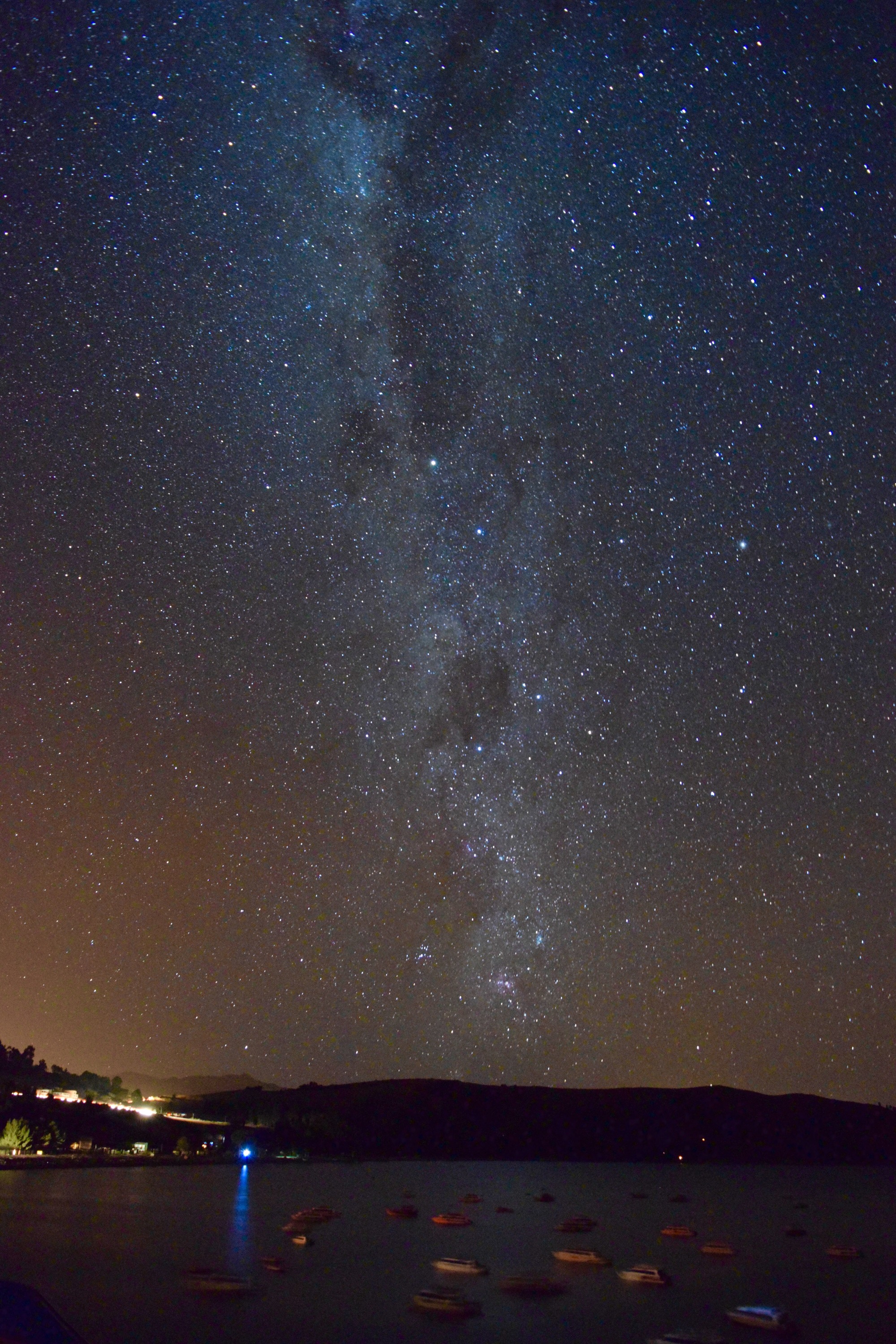
The Milky Way over Copacabana

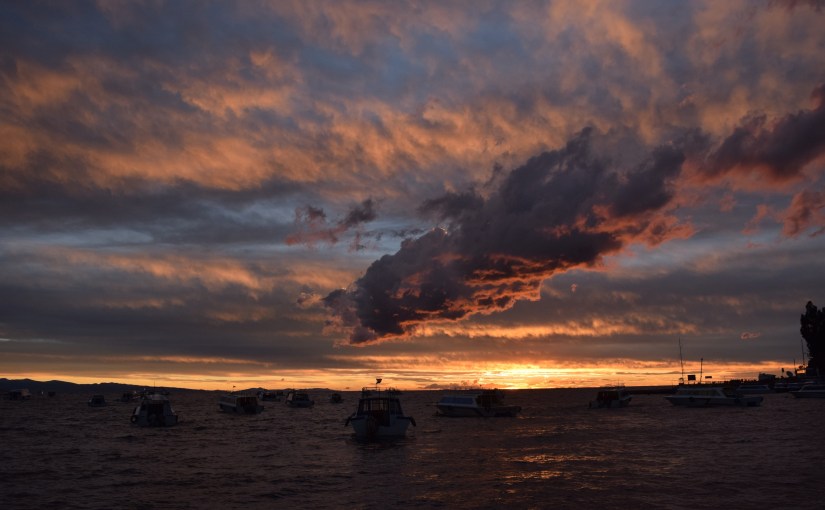
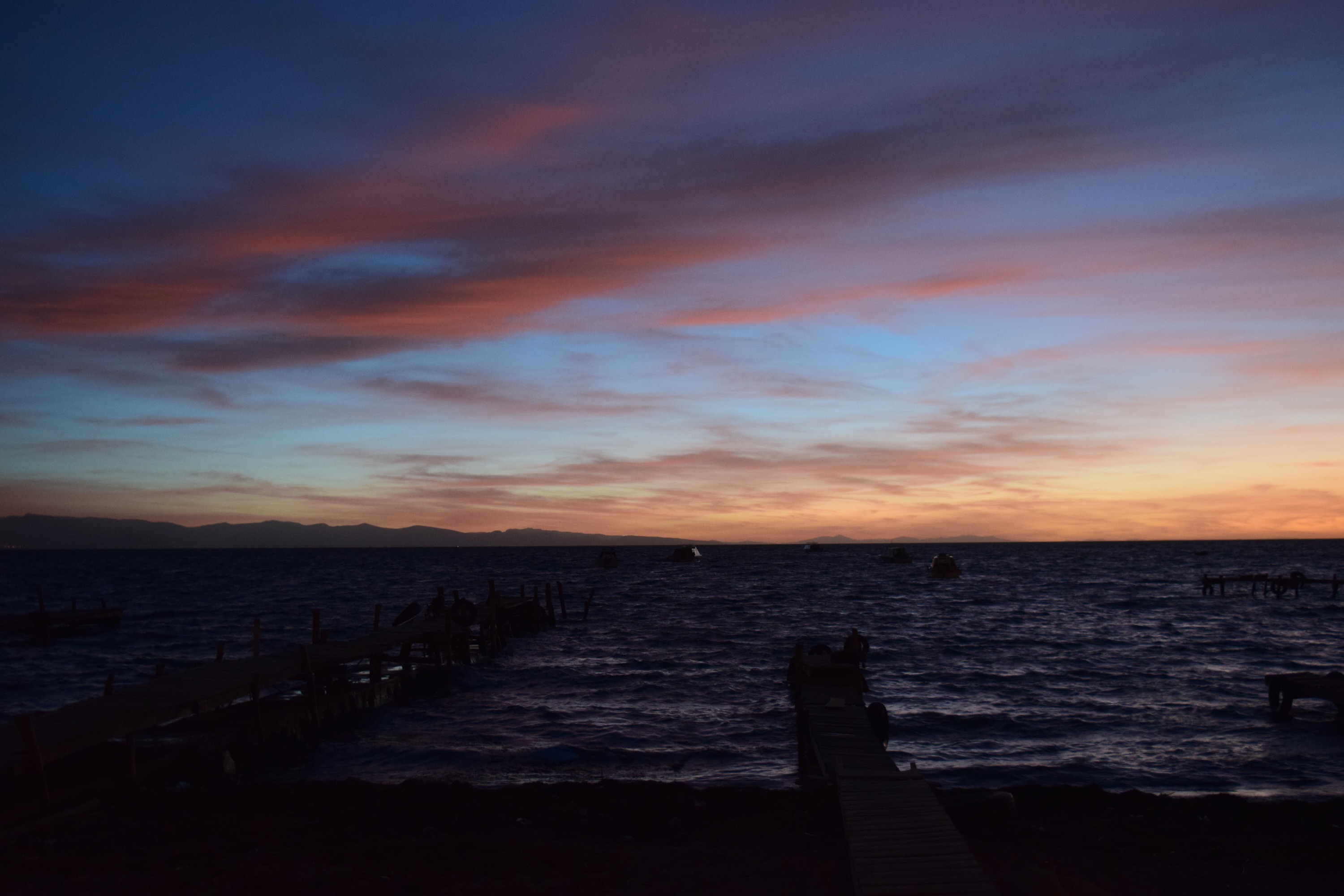
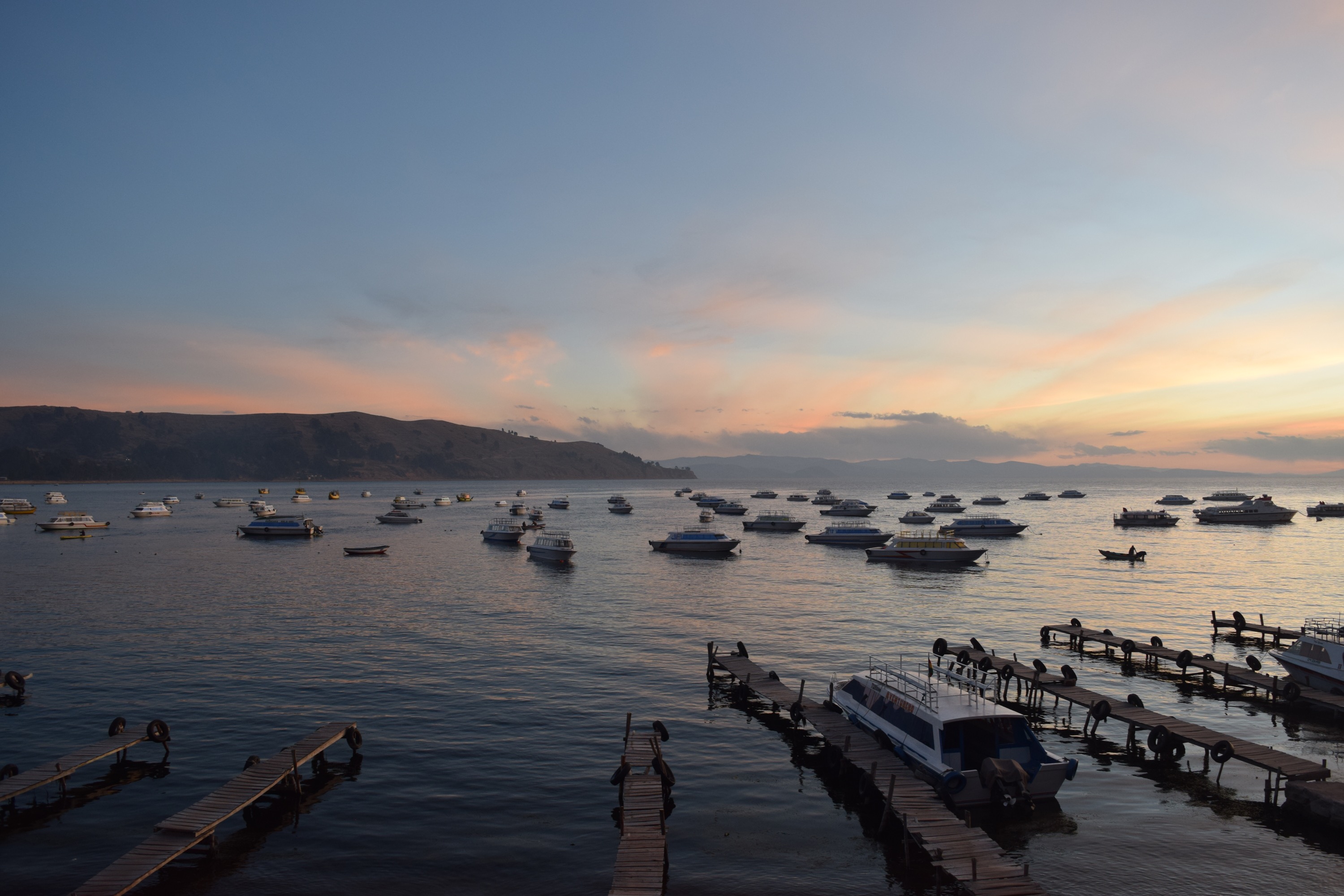
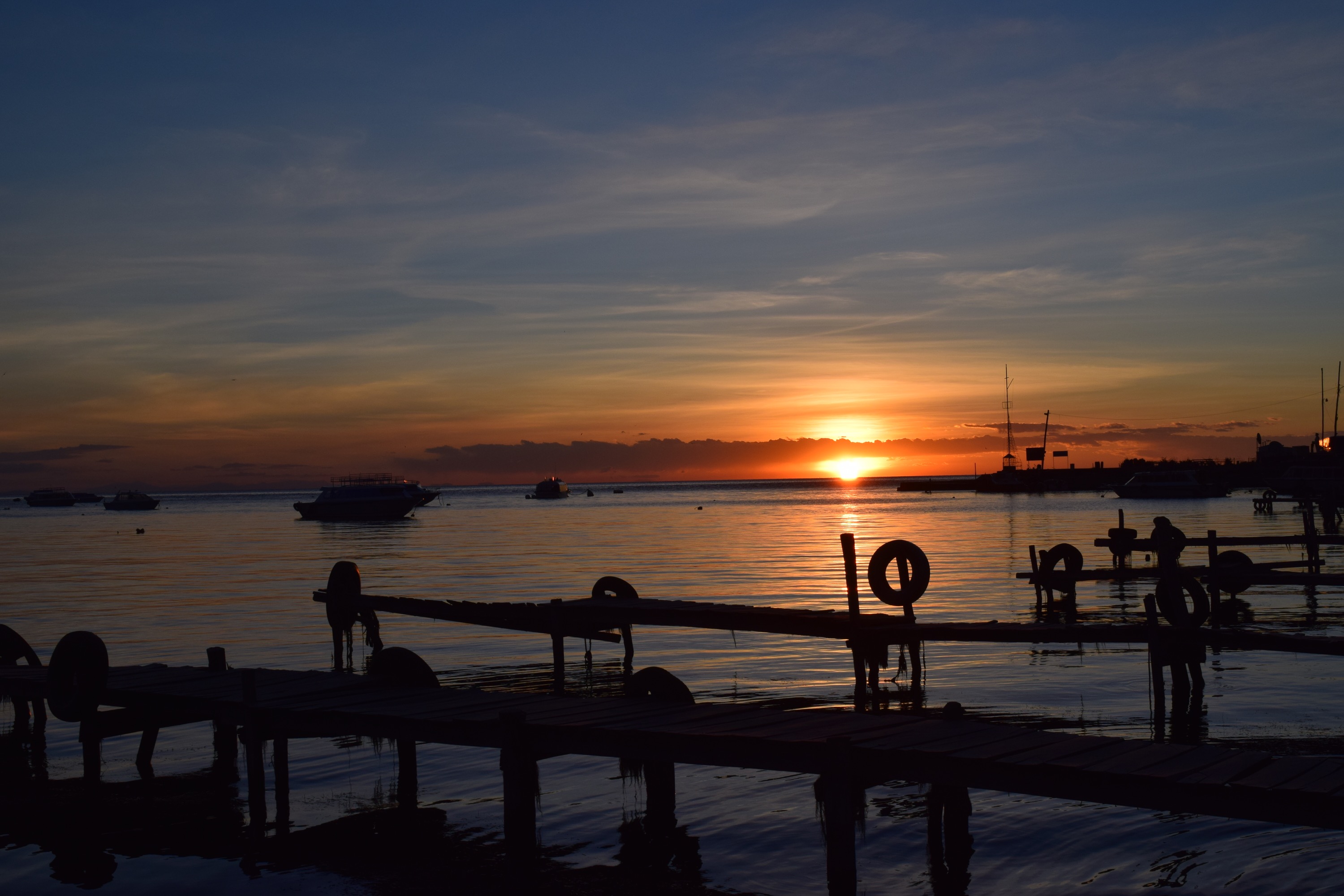
A short post about Copacabana sunsets

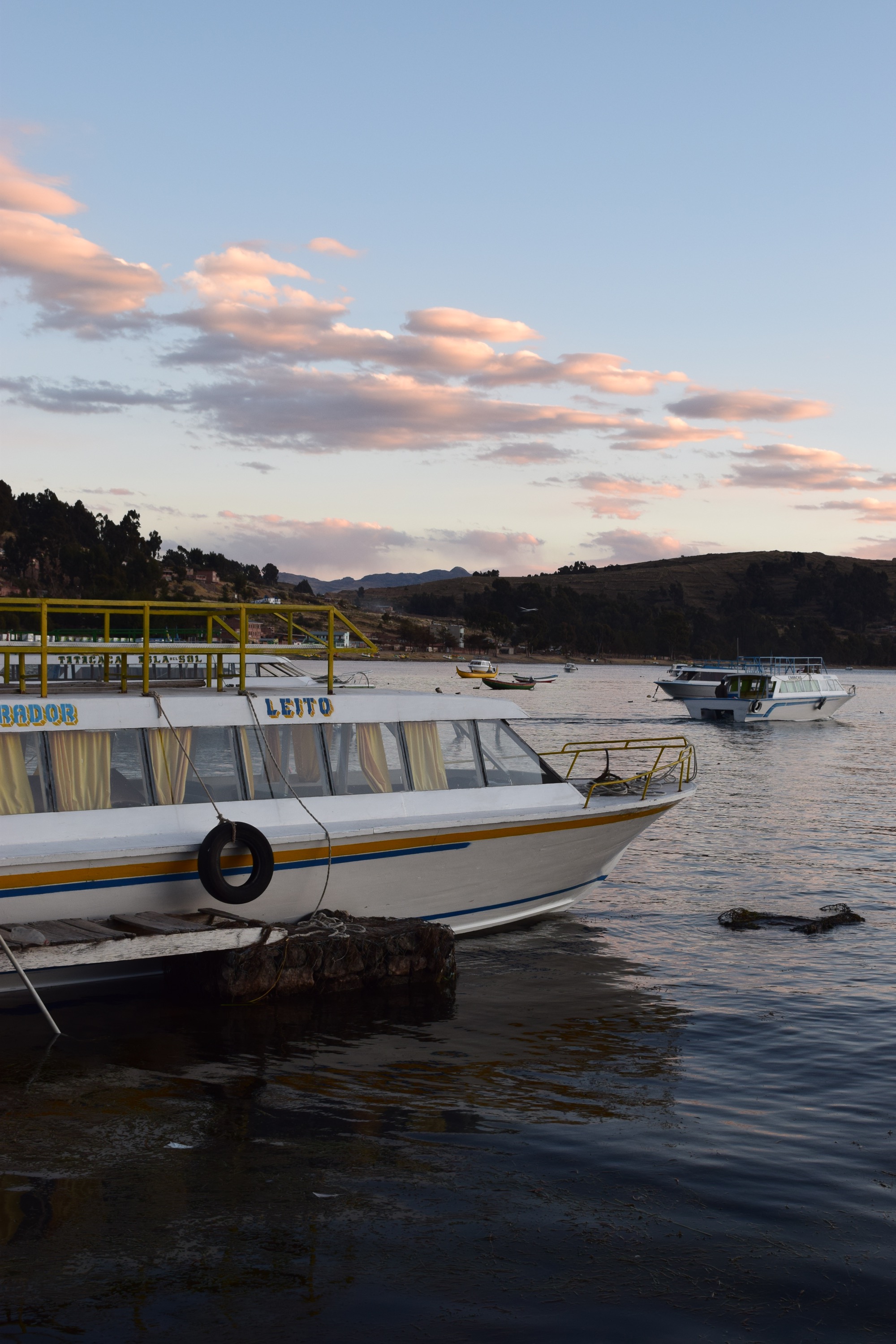
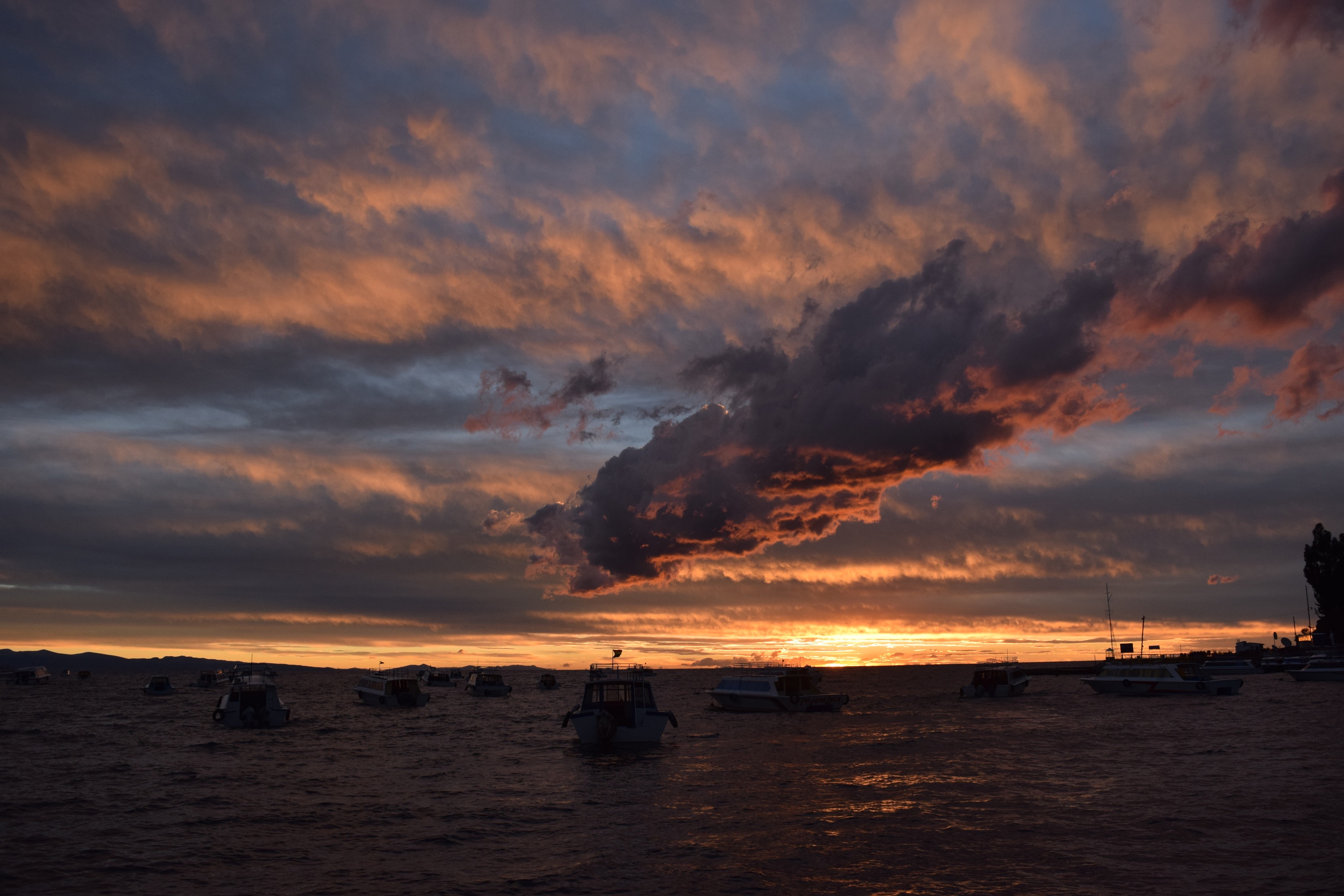
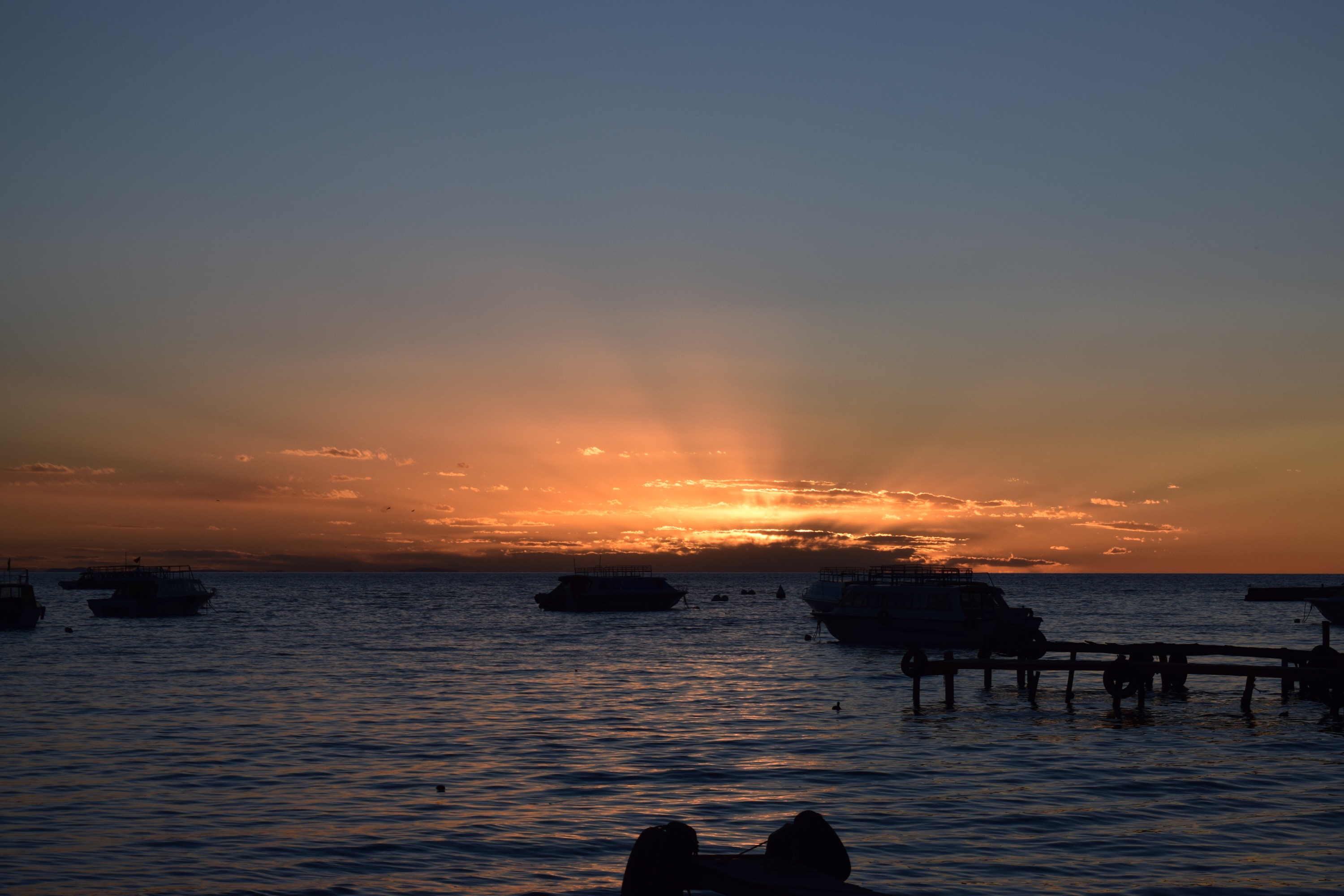
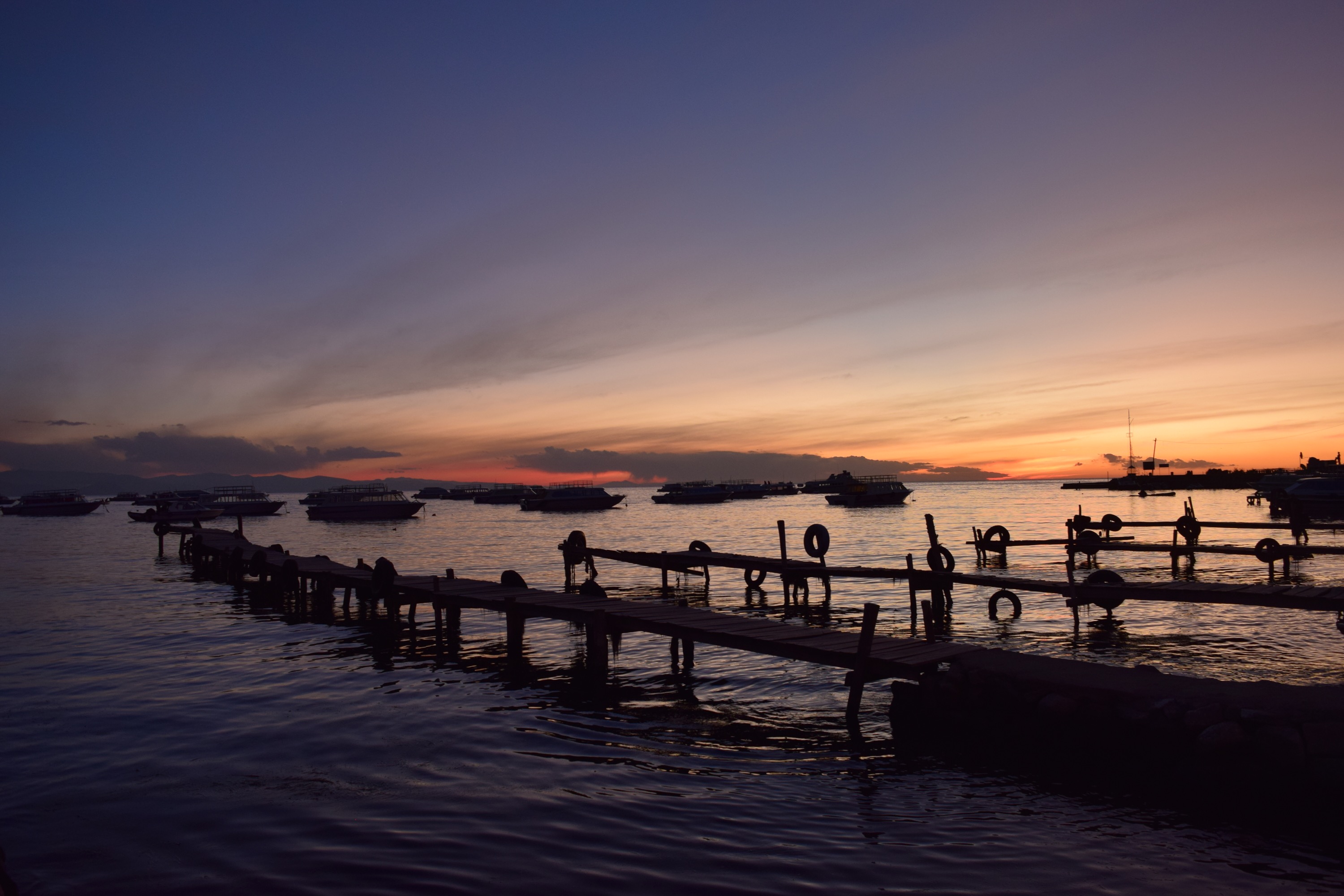
This post diverges from the usual trip report type entries I usually post, but I have to acknowledge the gorgeous sunsets that I’ve seen for the past 2 months in Copacabana. I’m lucky enough to have a stunning view of the lake out of my bedroom window, so I’ve been spoiled with the magnificent array of sunsets that occur every evening. Sunset is probably the most beautiful time of day in Copa, and if you visit you must watch the sun drop below the lake from one of the rickety docks along the shore, but I digress. Anyway, here are some pics of the amazing sunsets over Lake Titicaca!


The fair of Copacabana – Bolivia’s largest Independence Day celebration 

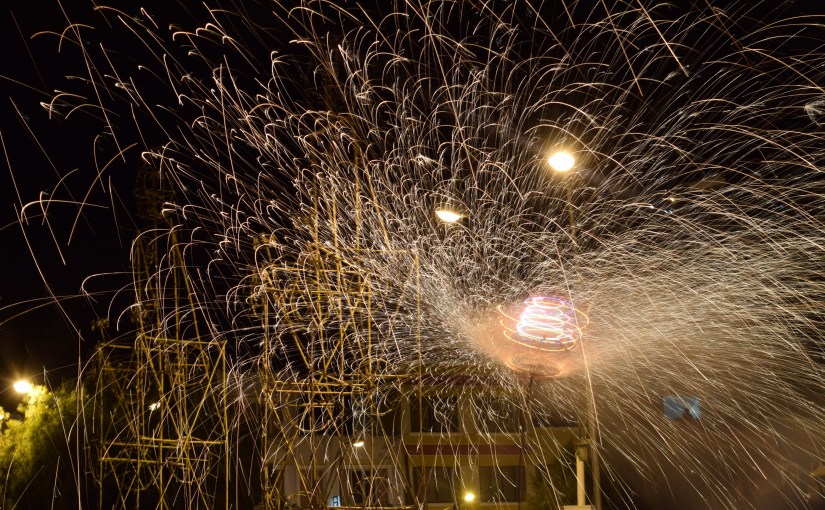
The fair of Copacabana is a week long celebration for Bolivian Independence Day. It occurs during the first week of August and lasts about ten days. During this time, thousands of Peruvians come to town to visit the Virgin of Copacabana in the basilica and get their cars blessed in front of the church. The entire city fills with people and stalls selling random junk appear in every main street and both plazas. Each night, tons of fireworks were shot off and lots of love music was played through the night.  


Blessed car on the beach
 
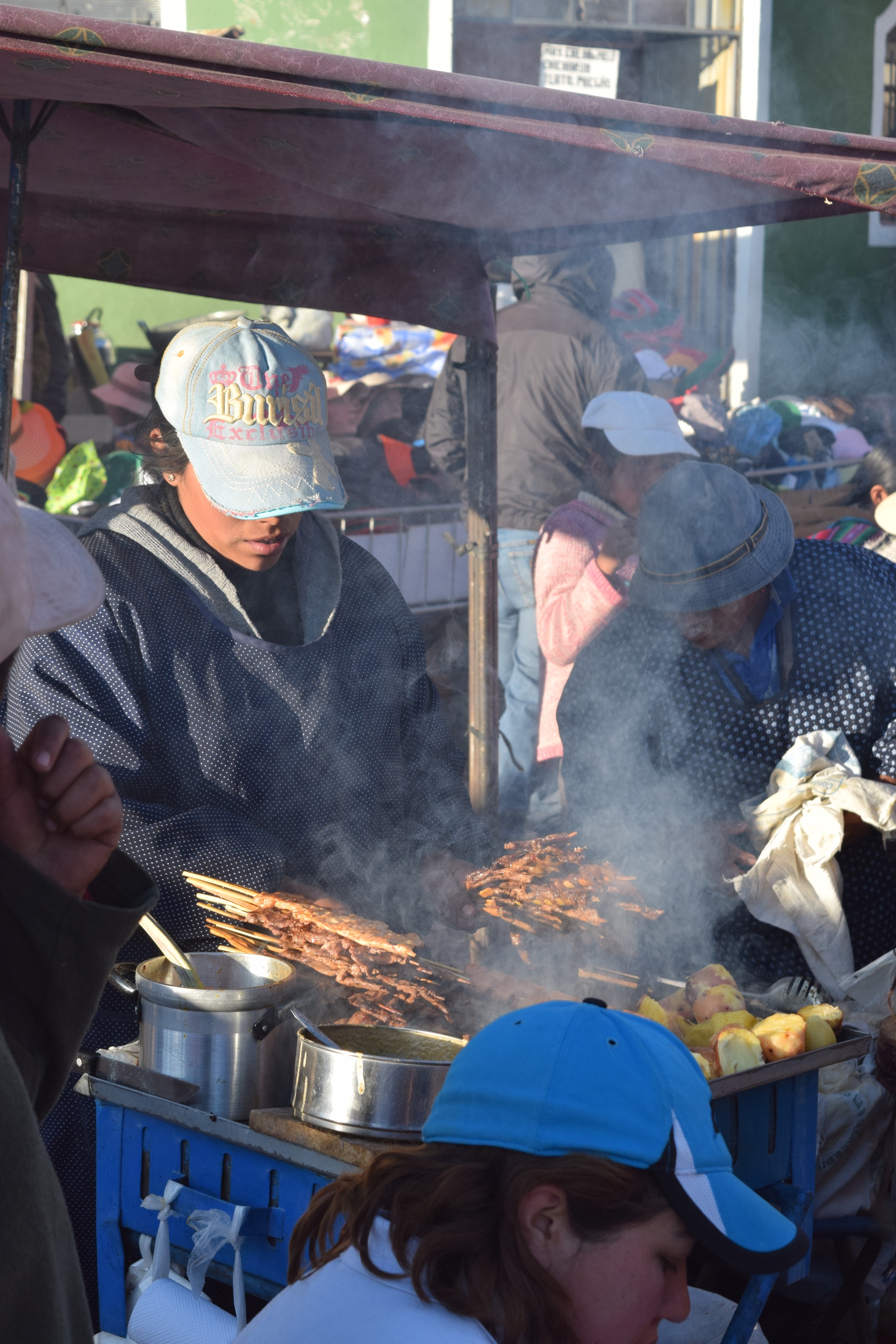
It’s generally a crazy time, considering how quiet the town generally is during the rest of the year. There was street food everywhere, as well as miniature ponies and baby alpacas for people to take photos with in the plazas. It’s almost impossible to drive anywhere at this time due to the large number of cars parked along the streets and on the beach. Many restaurants in town close for the week because of how insane the whole thing is. You can buy almost anything you want in the city during that week, including knock off coats, ceramics, kitchen supplies, Bolivian textiles, and dried llama fetuses.  
The most impressive part of the fair is probably the large firework displays which are attached to giant bamboo structures. The fireworks would shoot in every direction or spin around on a wheel attached to the bamboo thing, often right next to the crowds watching. I personally kept a safe distance as the things were terrifying, but fascinating to watch. Regular giant fireworks were also shot up in the air from the same location and would explode right over our heads.  


Anticucho vendor
 
It’s a great time to visit the city, but it’s a completely different vibe than the usual quaint lakeside town. If visiting during this time, be aware that most prices in town are much higher due to the crowds, and paying in Peruvian Soles gets you terrible rates for everything. Also, avoid the street food in the main plaza, only eat at the stalls in front of the local market, as they don’t reuse oil or cook old/questionable meat.  

Terrifying fireworks

Two days of Dance – La Entrada Universitaria and the Day of the Campesino in Siripaca

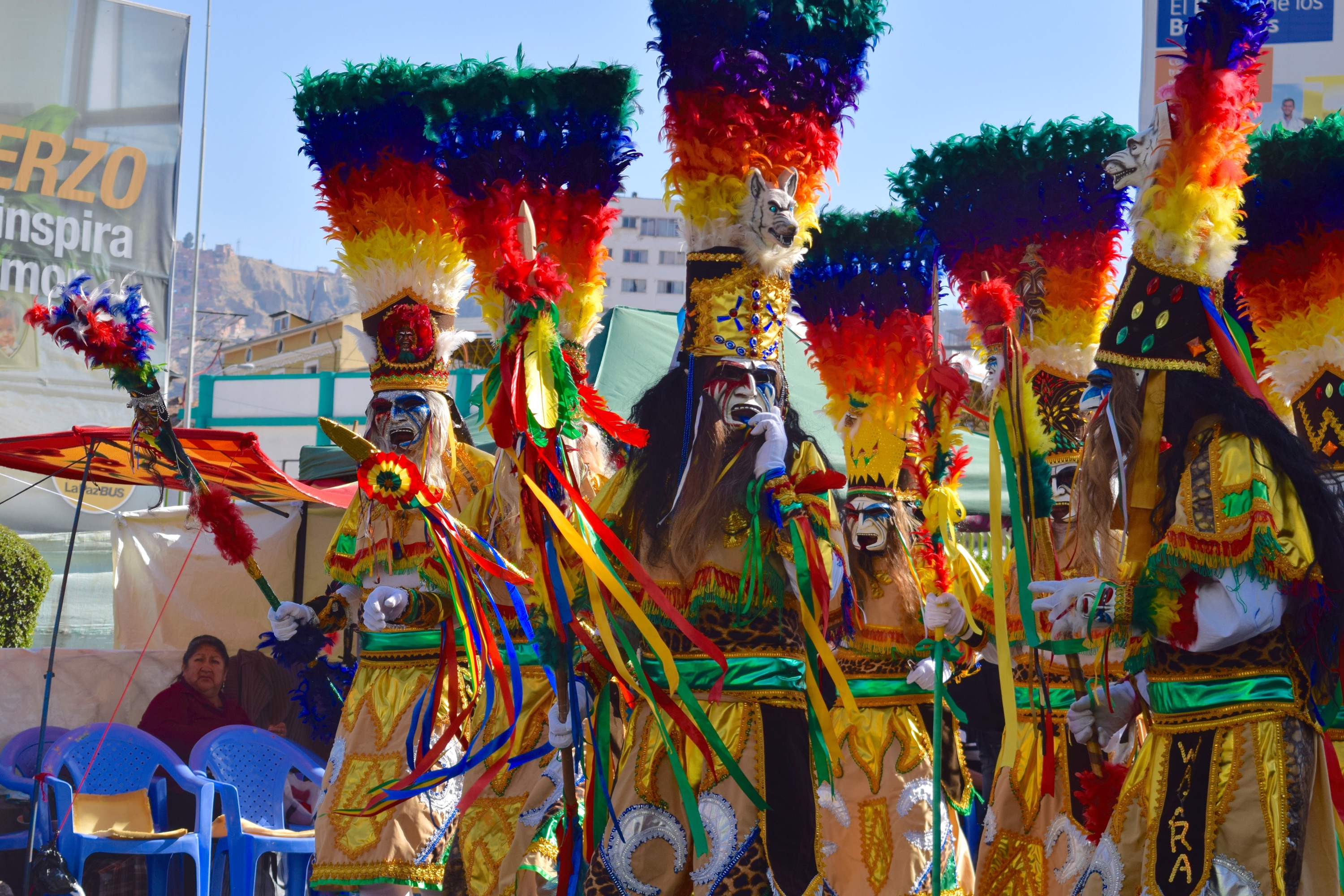
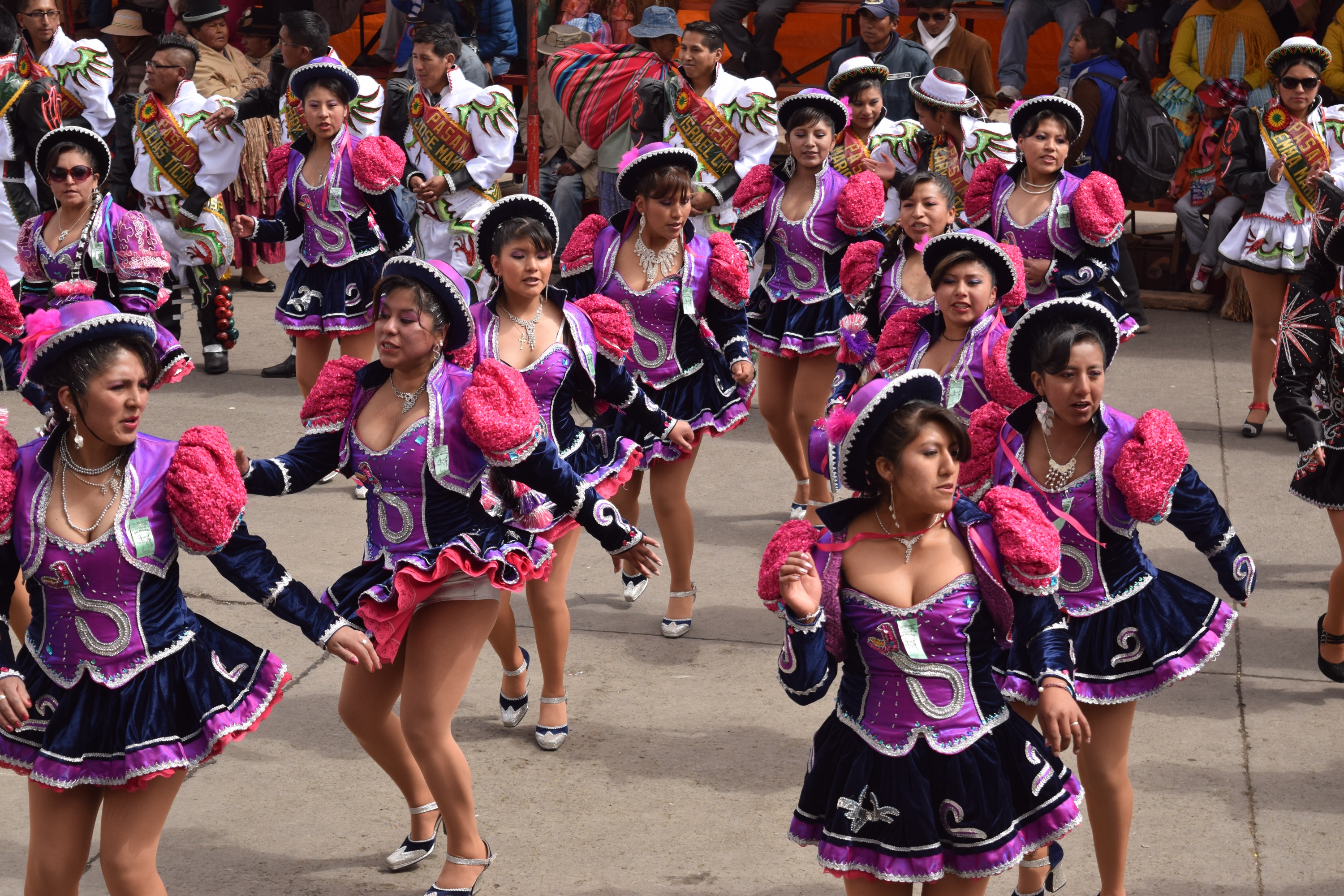
Every year in La Paz there is a large dance festival put together by the local university, called the Entrada Universitaria. This festival includes dances from across Bolivia which are predominately performed by university students. The dances begin near the bus station and continue downtown along El Prado and Camacho streets, and they last the entire day.


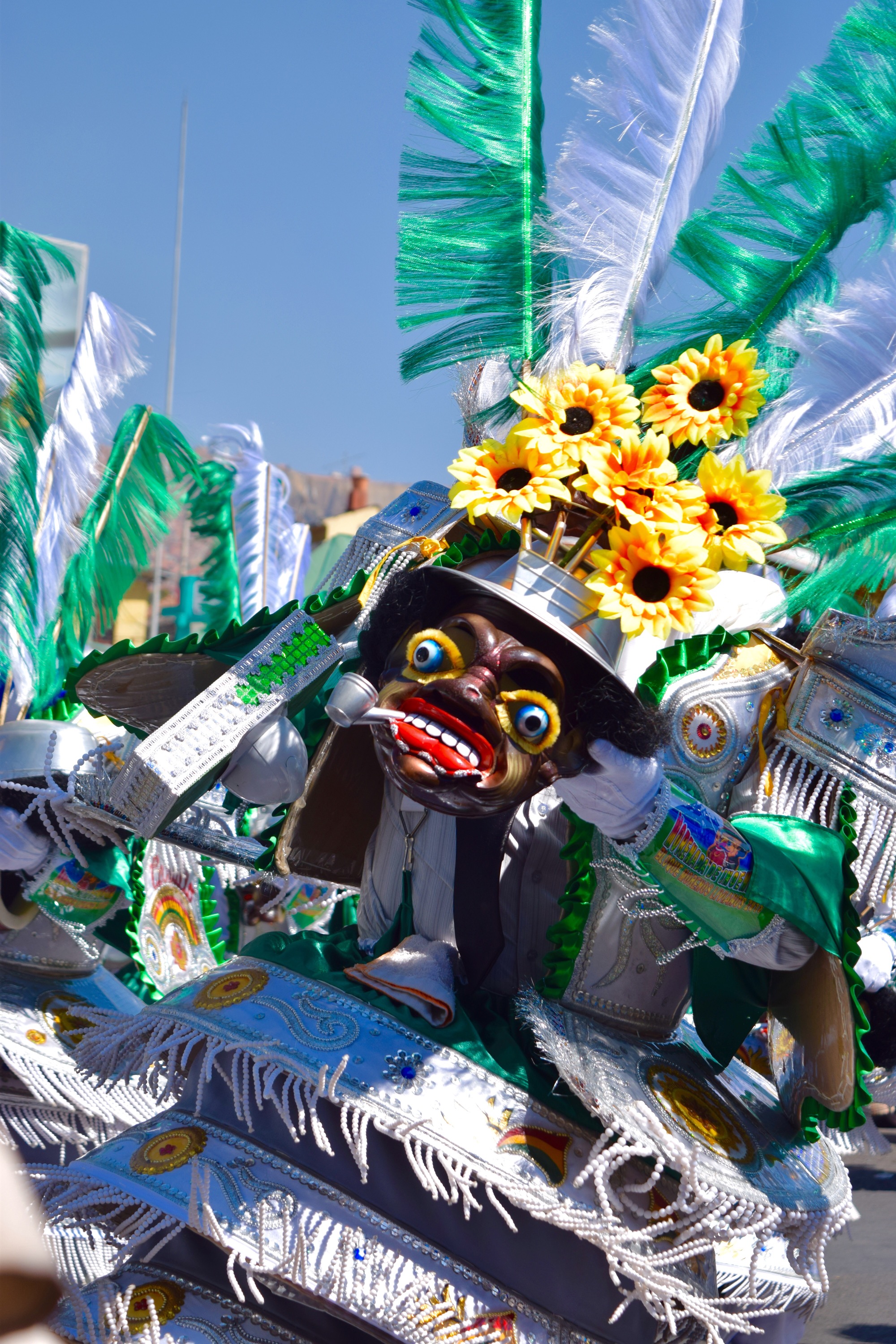
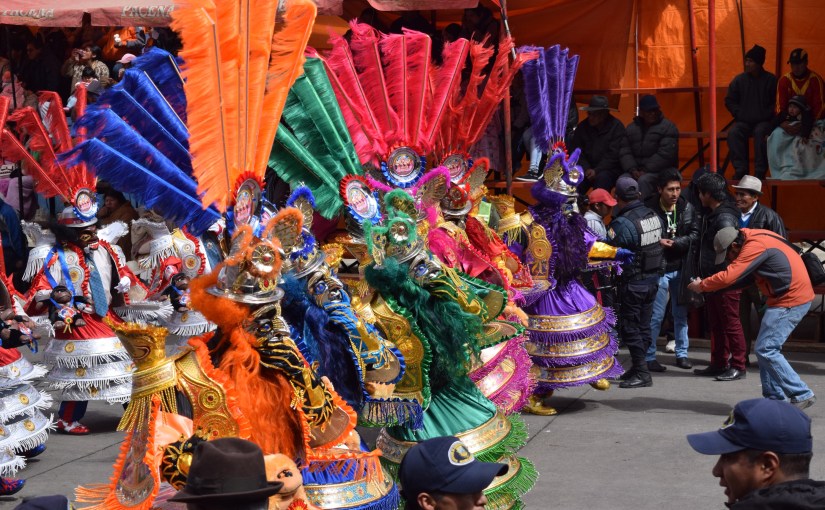
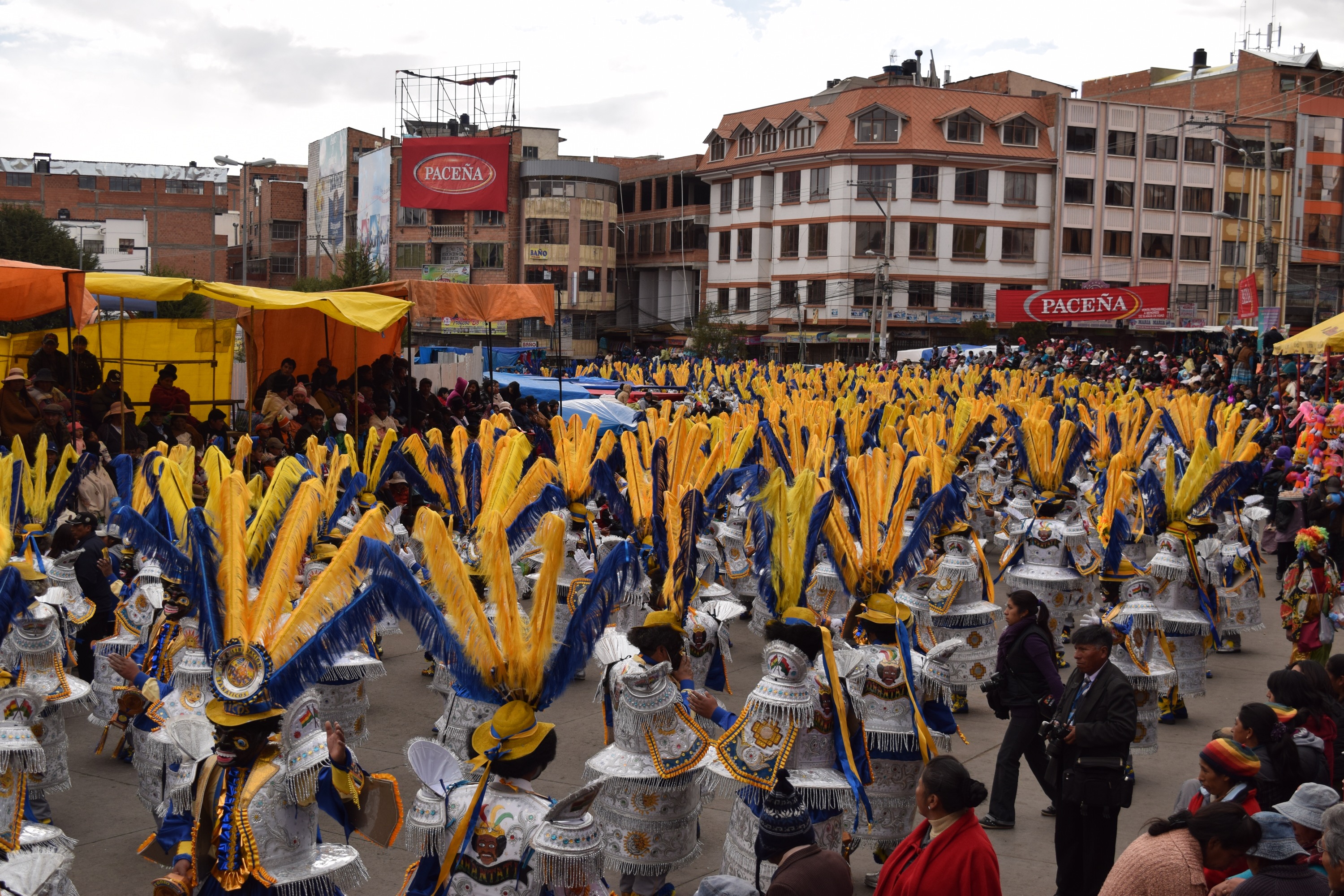
Male Morenada Dancer
 
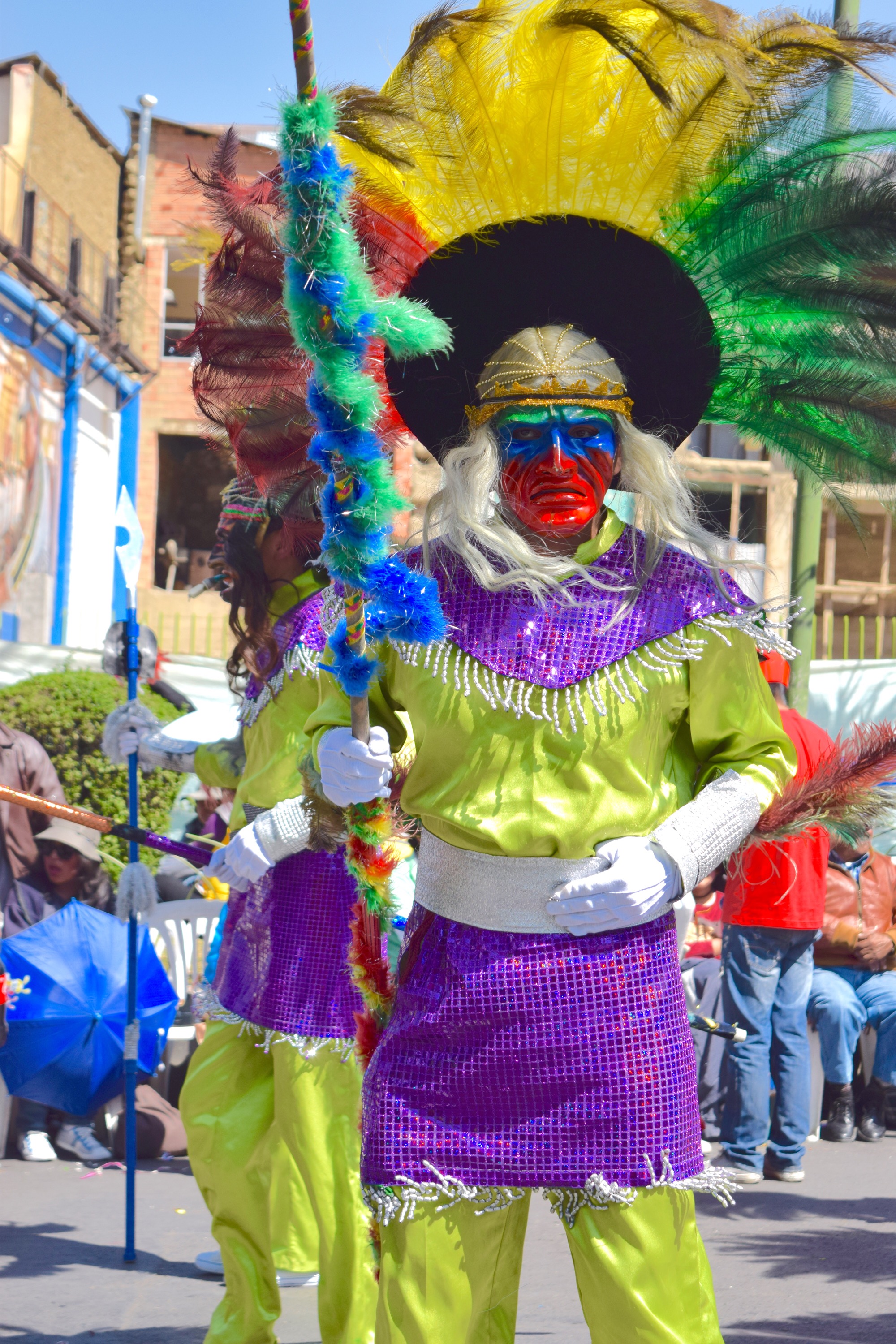
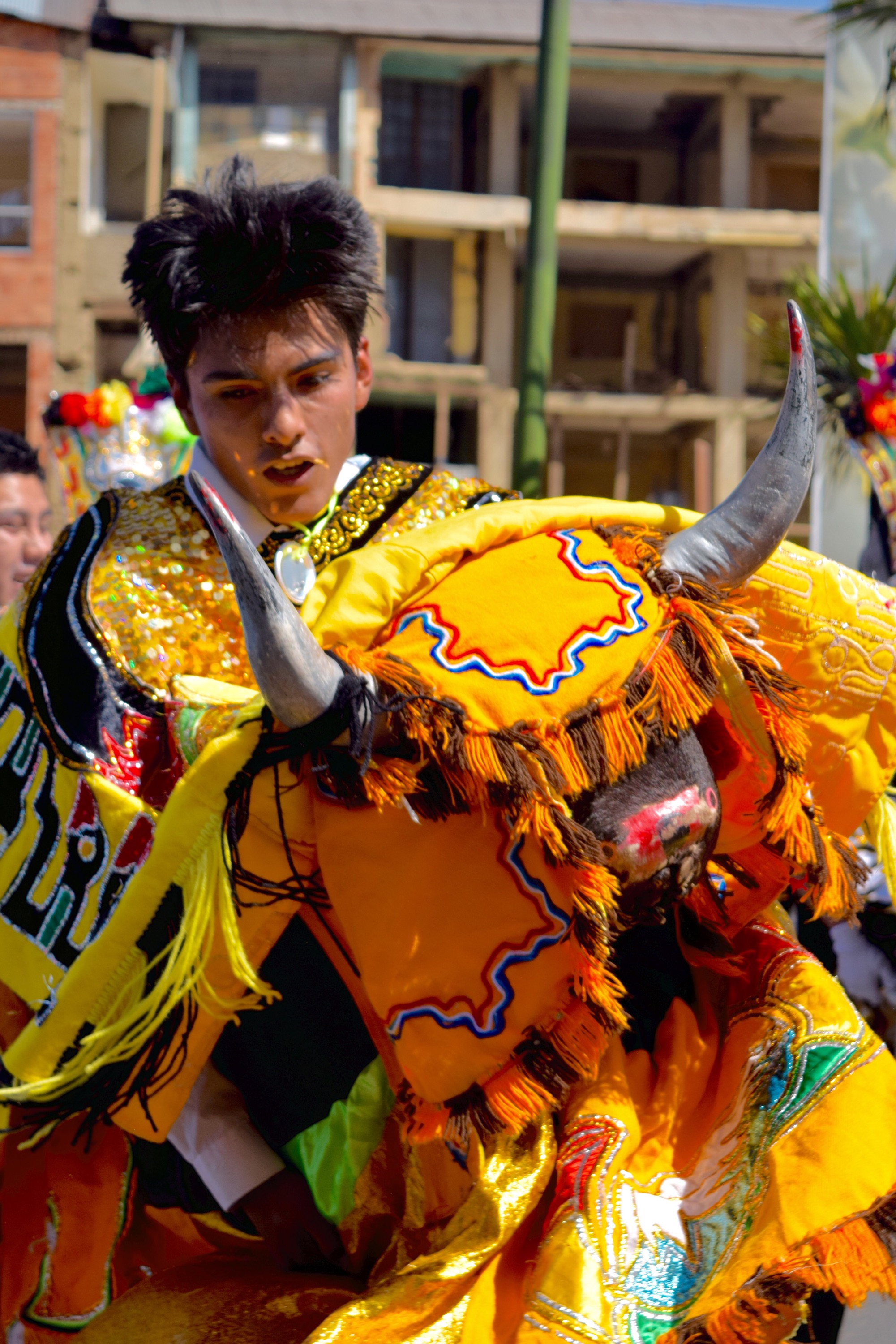
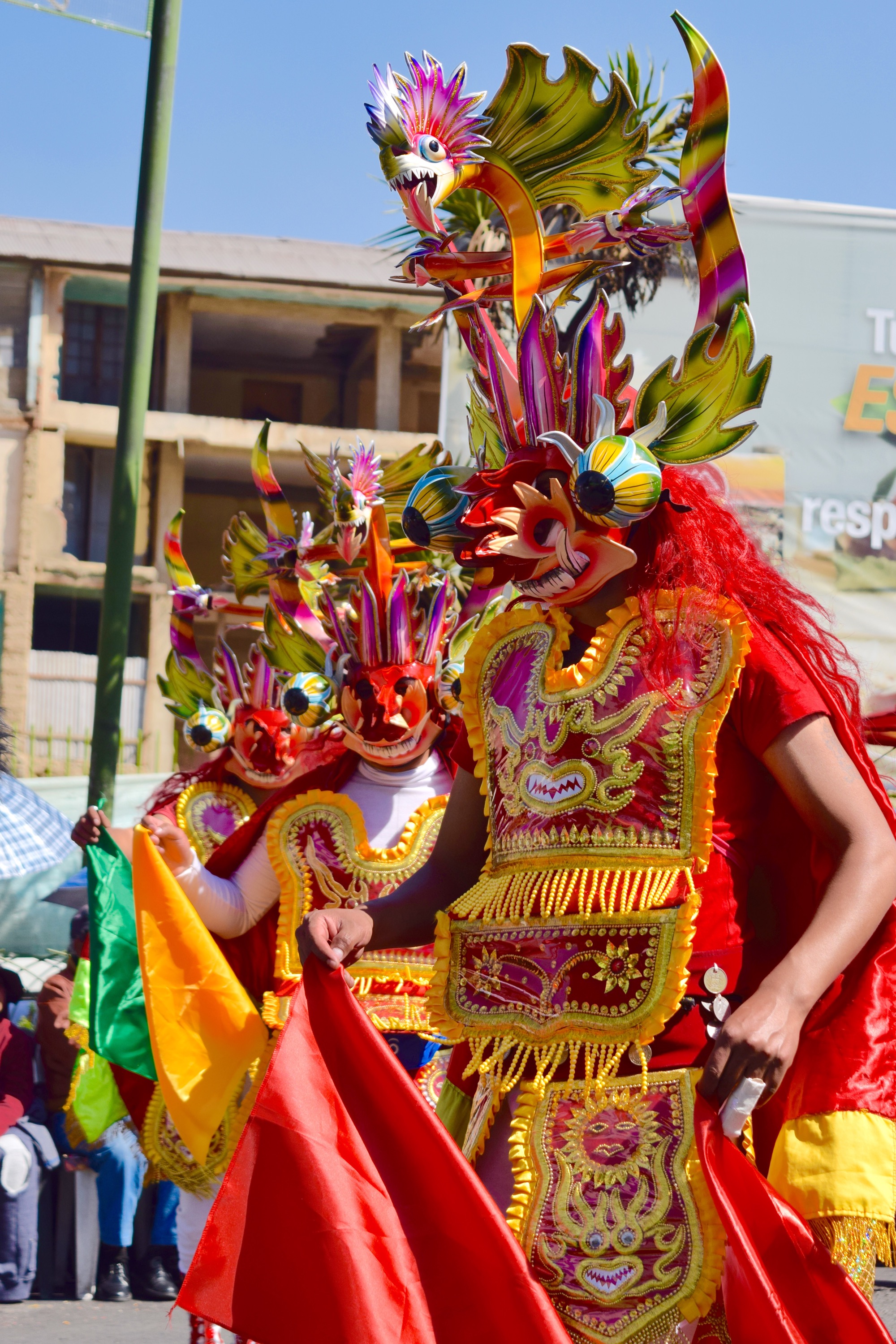
Kirsten and I took the bus to La Paz early in the morning to make it there with enough time to see most of the dances. We got dropped off near the cemetery and had to walk through the cemetery (which was really cool) to get to the teleferico station which went toward the bus station downtown. We made it to the dance around 11 AM and rented a ground level seat in order to get some good pictures of the dancers. The dances are very diverse and come from both the lowland and highland regions of Bolivia. We both much preferred this festival to the Chacaltaya festival we attended a few weeks earlier due to the greater diversity of dances and costumes. The dancers at this festival also seemed to be much more happy to be performimg compared to the other festival. My favorite dance was the Tobas, which comes from the Amazonian part of Bolivia. The dancers carry spears and bows and the costumes feature lots of colorful feathers and skulls. We stayed for a few hours before catching the bus back to Copacabana.  


Tinku
  
Waca Waca Dance
  
Diablada
  
Tinku
 
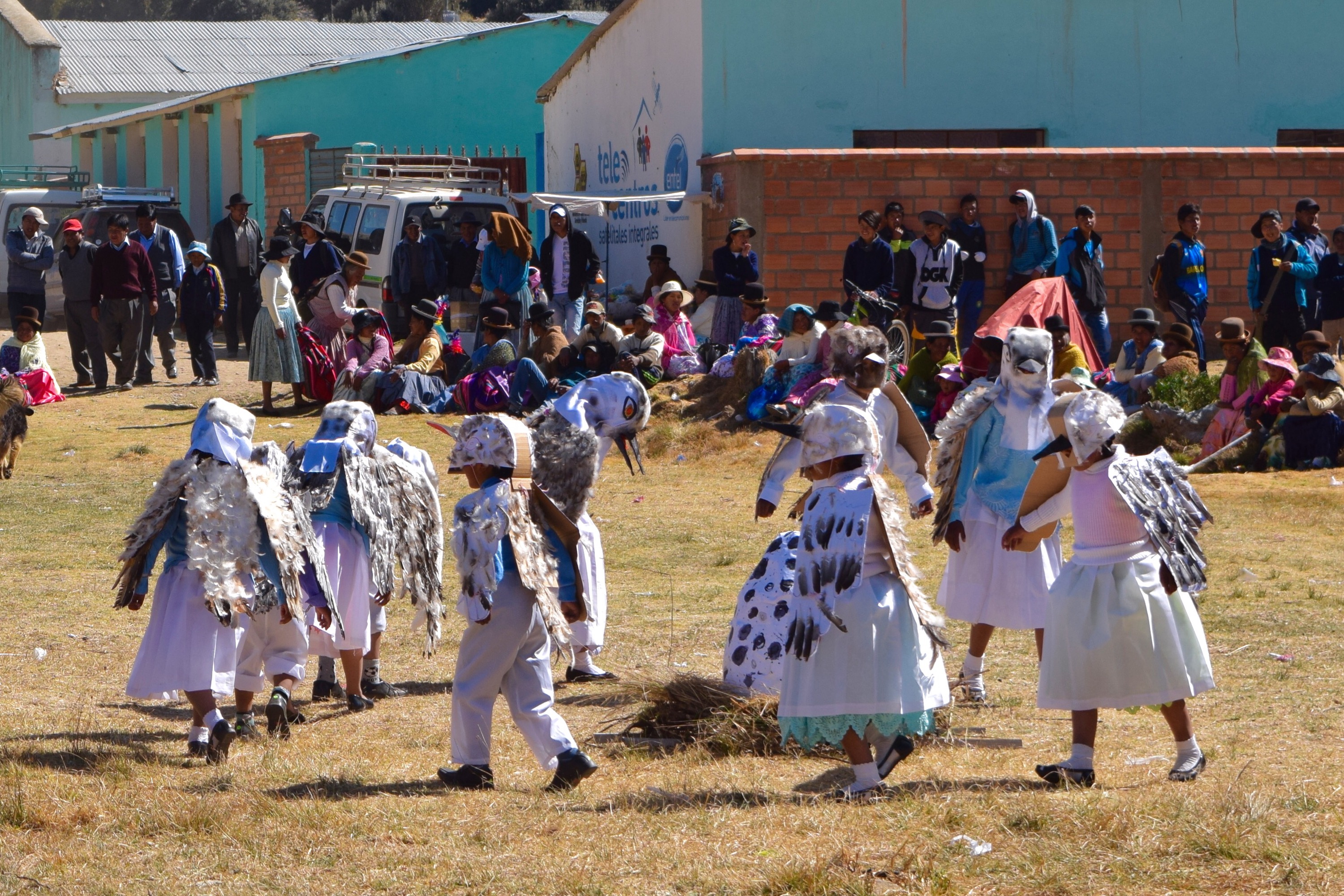
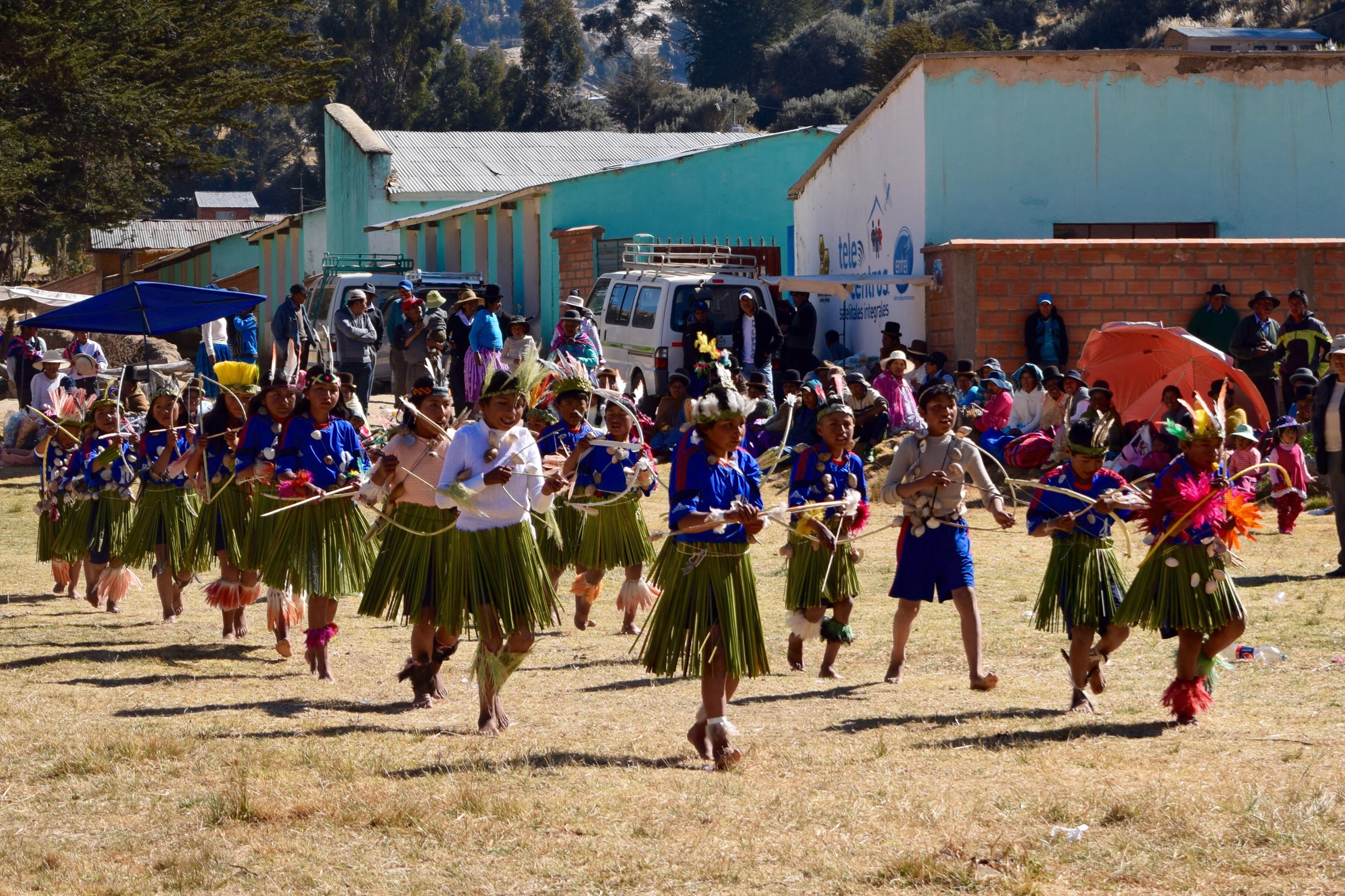
The following day, we were invited to another dance festival in the village of Siripaca, about 30 minutes from Copacabana. This festival was put together by a number of small villages for the school kids to perform various dances for the communities. We arrived just after noon and were treated to a lunch of potatoes, oca, sweet potatoes, and chicken, before the dances began. The kids started dancing about 40 minutes later. One of the first dances involved small children dressed as birds dancing around a large paper egg, out of which an even smaller child popped out of after a few minutes, which was adorable. The dancers got progressively older as the performances went on, and because of that the quality got better. Many of the dances had live bands from their respective villages playing along with the children, though a few just used a CD for the dance track. The dances lasted for about an hour and a half, after which Kirsten and I walked down to the lake to take photos of the mountains and sit in the shade, since the sun was pounding down on us during the dances. We stayed about 2 hours after the dances ended, which was completely unnecessary, but the day was still enjoyable as the children dancing was very entertaining. Overall it was great two days of dance festivals, both urban and rural.  


Kids dressed up like birds
  
Lowland Bolivian dance
 

Archaeology on the Copacabana Peninsula

I’ve spent two summers in Copacabana as part of an archaeological field school offered through my anthropology department. Because of this, I’ve had the opportunity to visit most of the archaeological sites along the Copacabana Peninsula in Bolivia. This area has been populated since the Preceramic period (5000-1500 BCE), and it houses quite a few sites which are still considered sacred to the local population. There are a number of sunken temples in the area which are associated with a pre-Tiwanaku tradition known as the Yaya-Mama. These temples are located in various parts of the peninsula, generally on top of hills outside of modern villages. Three of these sites have been partially excavated, but the fourth, located in the village of Chi’si, has been fully excavated and restored to its original form during the early 1990s (the project was funded by National Geographic and an article can be found in the March 1992 edition in Spanish). This temple is roughy a thousand years older than Tiwanaku, and is definitely a predecessor to the sunken temple found in front of the Kalasasaya temple at that site. Research conducted on the remains found at the site have indicated artificial cranial modification and trepanation occurred at the site for over a thousand years (see this article in Forbes). This site is open for visitors, and a museum should be open sometime in the near future with the items from the excavations. For anyone visiting the area who is really into archaeology, it’s a worthwhile visit, especially once the museum is ready for visitors.  

Sunken temple at Ch’isi

Tiwanaku – Bolivia’s most famous archaeological site

The archaeological site of Tiwanaku is located about an hour and a half outside of La Paz, Bolivia. The city was the center of the Tiwanaku state, which existed during the Middle Horizon (500-1100 CE). At its height, between 20,000-30,000 people lived in the valley, and the temples were visited by populations from around the region who were under the control of the Tiwanaku ruler. A vast majority of the population of Tiwanaku had artificially modified skulls – think Indiana Jones and the Crystal Skull, but real. The culture likely collapsed due to a severe drought in the already desolate region which caused great food shortages and led to the migration of people out of the valley.
Today the site is home to two museums and two separate archaeological sites, Tiwanaku and Puma Punku. The museums are fairly small and pretty run down, though they are in better condition that they were when I visited two years ago. The Lithic Museum contains many stone pieces which were brought inside to prevent further damage from the weather, including a large stone monolith called Bennett which was displayed along El Prado in La Paz before being returned to the site. The second museum describes the history of the region (for the most part), and includes pottery and artifacts which range from the Preceramic Period to the Inka. The only truly unique thing in the museum is a local Aymara mummy which is housed in a wicker basket like container.  
The archaeological sites themselves also leave much to be desired. Many of the earliest excavations were no better than looting, and the artifacts and stones have almost entirely been moved out of place. Also, due to a long history of bureaucratic nightmares with the Bolivian government, few archaeologists have ever excavated at the site for more than a season, so much of the research has been fragmentary at best. Now, local people conduct “excavations” at the site and further disrupt any possible means of understanding what happened at the site at its height.  


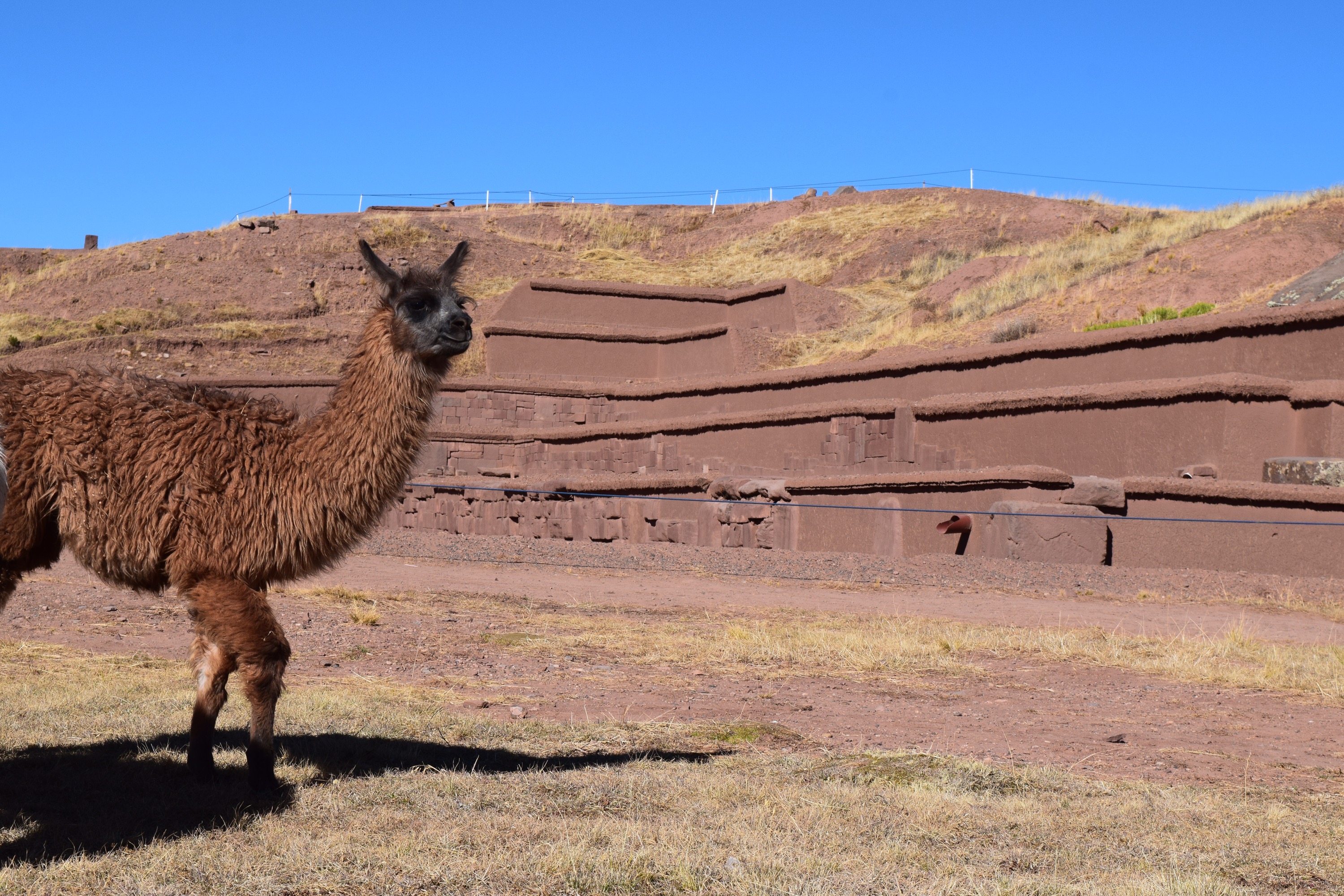
Llama chilling in front of Akapana
 
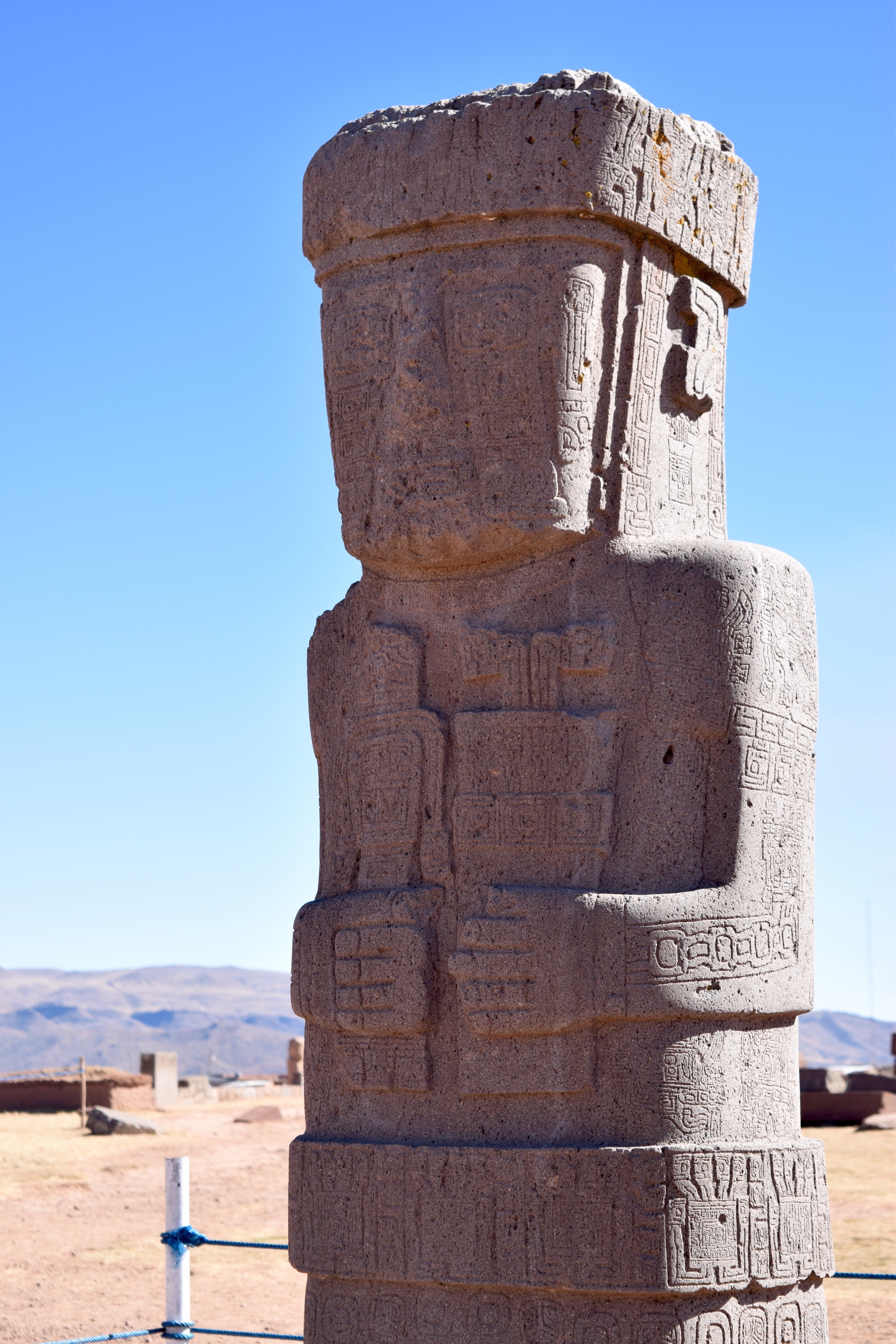
Tiwanaku itself is made up of a couple of different parts, primarily the Akapana pyramid and the Kalasasaya temple. The Akapana pyramid has been heavily reconstructed, but not with the original blocks, which are laying to the side. Most of the structure is still under a mound of dirt, so only bits and pieces are visible. The most important part of the site is the Kalasasaya temple and sunken temple located just in front of it. The sunken temple follows a long history of similar temples which can be found on the Copacabana peninsula. Inside this temple, however, are stone faces which jut out of the walls and two stone monoliths. The Kalasasaya temple, which is a raised platform just behind the sunken court, includes two monoliths, Ponce and Fraile, as well as Puerto del Sol. While these pieces are currently in this court, no one actually knows where they were originally located due to the lack of documentation by the first archaeologists at the site.  


Sunken temple in front of Kalasasaya
  
Monolith Ponce
 
The second site at the Tiwanaku complex is Puma Punku, which has been featured on Ancient Aliens for being built by aliens (news flash: it wasn’t). This site is characterized by large H shaped stone blocks which look perfectly straight, though in reality they aren’t (they’re still impressive though). Unfortunately, this site is even more damaged than the main Tiwanaku site, and even less information is known about it. However, the most impressive stonework in the area is located at this part of the site. Overall, the entire Tiwanaku complex is fairly underwhelming when compared to any archaeological sites in Peru, however, it is definitely still worth visiting when in Bolivia, as it was the center of one of South America’s largest civilizations over a thousand years ago.  

H blocks at Puma Punku

Chacaltaya – El Alto’s impressive dance festival 

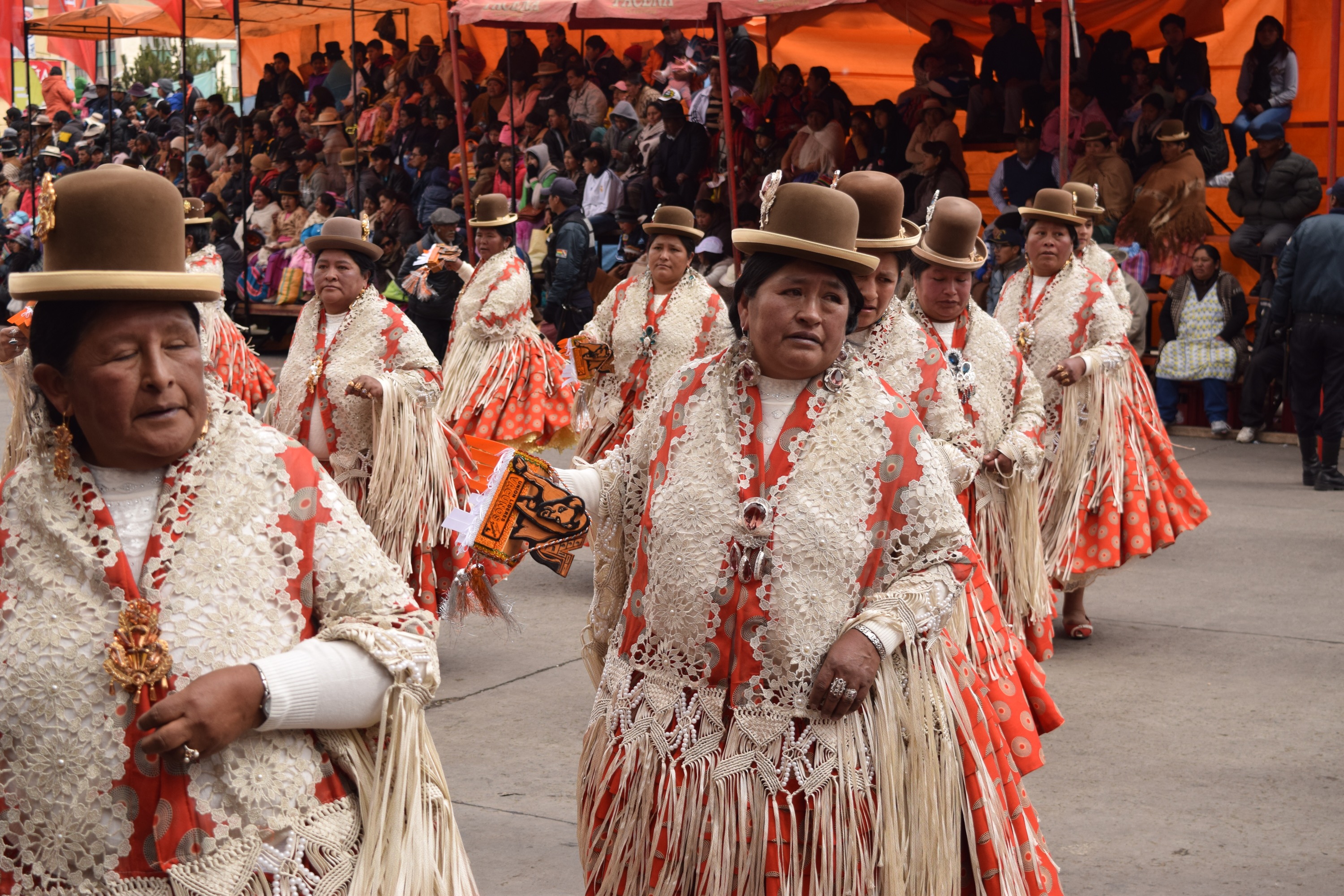
Chacaltaya is a giant multi-day dance festival which occurs in El Alto, Bolivia, the sprawling expanse of city just outside of La Paz. Thousands of Bolivians participate in the dances, which are sponsored by a series of wealthy locals each year. The dancers practice the dances for weeks before the official day, and the bands play new songs written especially for that year’s festival.  
We arrived at the festival around 10 AM and rented some top row seats for a good view of the dances. A majority of the dances performed were Morenada, which is a Bolivian dance which imitates the African slaves in chain-gang which were brought by the Spanish during the colonial period. Each group of performers were huge, many with a couple hundred dancers and a large band which marched in between two large groups of dancers so they could all hear the music. Most of the musicians weren’t especially great, and had serious problems keeping a steady beat/tempo. There were occasionally non-Morenada dances, but they were few and far between. The crowds got progressively larger as the day went on, and the bench seating (similar to bleachers at a sporting event) got more crowded and uncomfortable as the day went on. If we weren’t there with other people I would have left soon after the bleachers filled due to the crowding, but we stayed for a few more hours.  
The festival is absolutely worth seeing if you’re in La Paz at the time, but probably not for an entire day like we were since a majority of the dances are the same. We saw very few other tourists visiting the festival, which is a shame since it’s a true Bolivian experience in a very accessible location for visitors to La Paz. I’d recommend staying for at least 1-2 hours if you want to see the gist of what’s happening, but no more than half a day is really necessary. 


Isla del Sol and Isla de la Luna

Isla del Sol and Isla de la Luna (also known as Coati) are two islands located in Lake Titicaca, not far from Copacabana. Isla del Sol is the most popular with backpackers as it has great trails for day hikes, however both islands are great to visit. Isla del Sol is the larger of the two, at about 8 kilometers long. Isla de la Luna is much smaller, and only consists of one village and an Inca ruin on the other side of the large hill that splits the island in two.  
Kirsten and I visited Isla del Sol on Aymara New Year in hopes of seeing the festival which we had heard would be going on that day. Unfortunately we did not make it on time, as it had apparently started at 5 AM and the boats don’t leave Copa until 8:30 AM. However, it was still a lovely day for a hike, so we began at the north end of the island and began the 4 hour hike to the village of Yumani at the south end. There’s a small museum at the town on the north end, which includes a couple sets of (commingled) human remains. You have to buy a 5 Bs ticket here to continue along the trail toward the Inca ruins. Once you leave the museum, it’s about a 45 minute hike to the Inca ruins located at the far north of the island. These ruins are pretty pathetic compared to those in Peru, but they still make for nice photos.  


Inca ruins on Isla del Sol
 
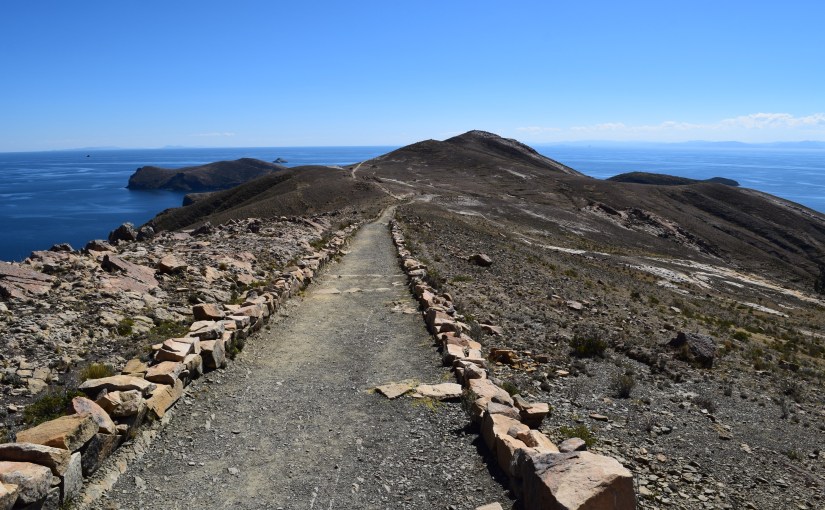
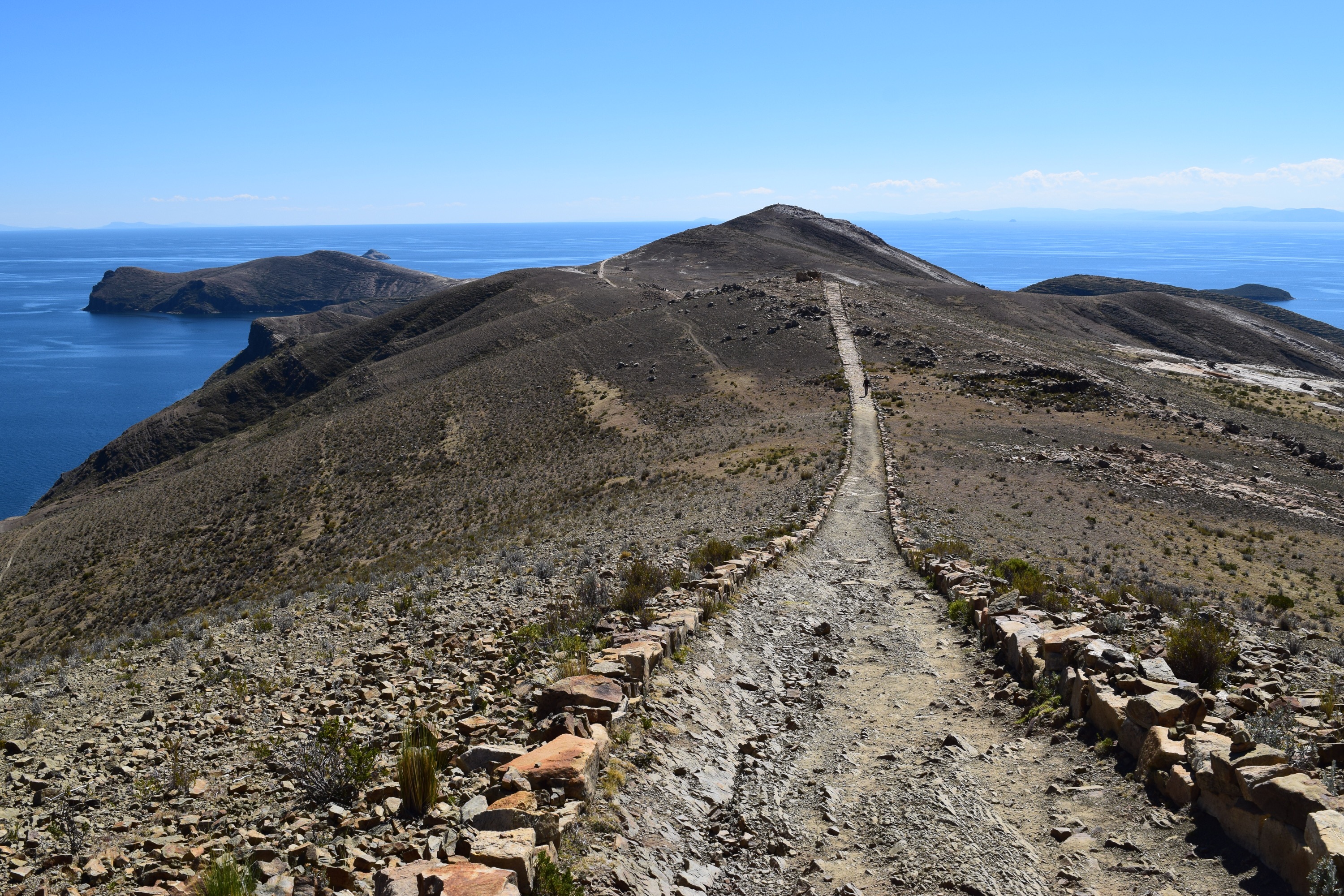
From there, continue uphill toward the second checkpoint, where there is a 15 Bs fee to walk across the center portion of the island. This is the most beautiful section of the hike, so don’t skip out because of the fees to cross. There’s nothing in particular to see in this part of the island, other than the breathtaking (literally) landscape and deep blue colors of Lake Titicaca. There are two killer hills in this section, so make sure to bring a lot of water and some snacks as there’s only one place to buy stuff and it’s way overpriced. You’ll have to show your ticket a couple of times on this part, but don’t have to pay again until reaching Yumani.  


Stacked stones in the middle of Isla del Sol
  
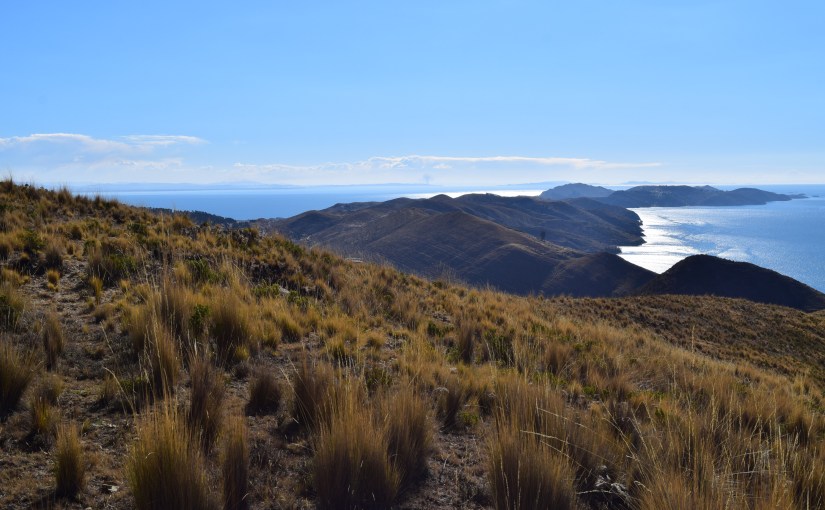
Hiking trail across Isla del Sol
 
At the end of the hike, you reach the village of Yumani, which is where the boats that return to Copacabana are docked. This is the largest of the villages on the island and it has the most options for hostels/hotels and restaurants. I personally don’t think that it’s necessary to stay on the island overnight, while others say to spend at least two nights, so it’s a personal preference. I would definitely recommend starting the hike at the north end, as Yumani has a very tall and long set of stairs which take forever to go down, so climbing up that at the beginning of the hike would be awful. Boats return to Copa in the late afternoon, and usually arrive between 5:30 and 6 PM. The roundtrip boat ticket should cost no more than 40 Bs ($5.81).  


Village of Yumani at the south end of Isla del Sol
 
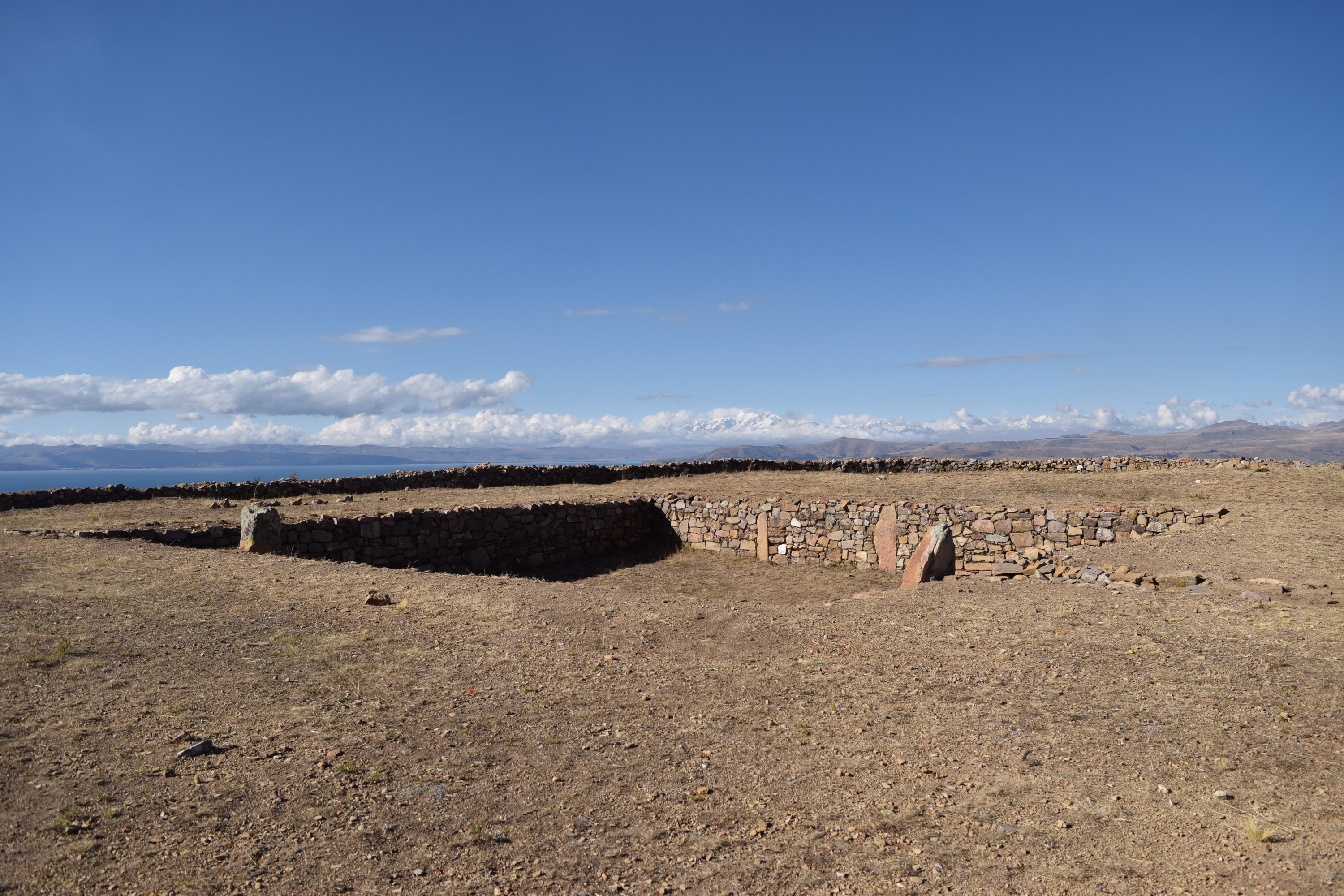
Isla de la Luna is also accessible from Copacabana, though at less regular times due to the few people that visit. We went to the island on a private boat with a resident of the island, as we were invited to their house to have lunch. The lunch consisted of potatoes, oca, fava beans, and pork, which were cooked in a stone oven (called watia). This was the first time I had seen food cooked in a stone oven, I had only seen earth ovens prior. The flavor of the stone oven was different, and it made the food substantially less dirty than the dirt oven. After lunch we hiked over the hill to visit the Inca site located on the other side. The site had earlier been excavated and partially reconstructed by archaeologists, however, in the past two years the locals have taken it upon themselves to “restore” the site. This actually means that they built a bunch of new “Inca ruins” which are quite poorly done. Comparing photos from two years ago to this year’s visit shows the drastic changes that have occurred in that short amount of time. Even with the problematic “restoration” process which is going on there, the ruins are still interesting and worth visiting if spending a few days in Copacabana. The island really survives on tourism, and there are a few cheap guesthouse in the village for those who want to relax in a quiet place for a night or two. To reach the island, talk to one of the people in the ticket booths along the beach in Copacabana and ask for the rate for the day – there is definitely a combination ticket for sale with Isla del Sol and the Floating Islands with one of the companies. 


Stone oven cooking on Isla de la Luna
  
Inca ruins on Isla de la Luna
 

The Sacred Valley – Pisac, Ollantaytambo, and Moray

The Sacred Valley of Peru, located just outside of Cuzco, is packed with fascinating archaeological sites. Many of these sites are included in Cuzco’s multi-day ticket and are absolutely worth visiting if given a chance. Kirsten and I visited 3 of these sites, Pisac, Ollantaytambo, and Moray.
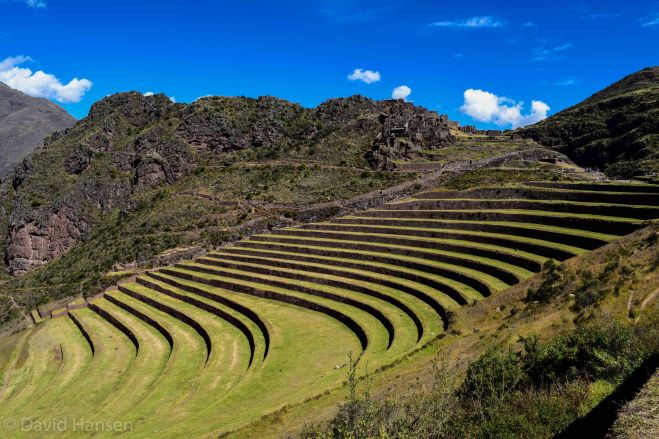
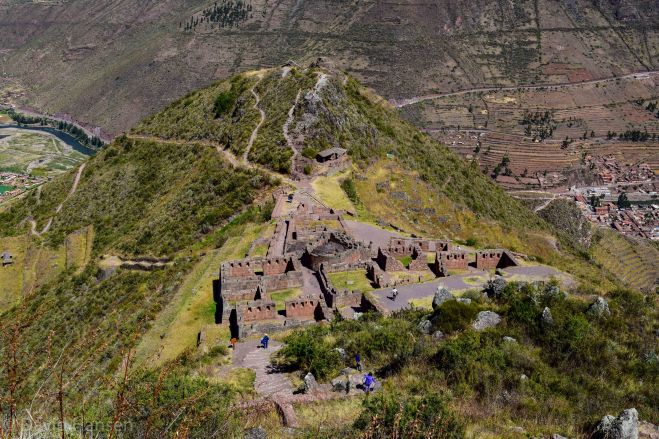
We took an early minibus on a Sunday morning to Pisac from Cuzco for about $2. Sunday is Pisac’s market day, so the city was packed with tourists when we arrived. The market is mostly tourist junk but it’s fun to wander around for a bit before going to the ruins. When we were done with the market, we took a cab to the entrance to the site. It is possible to walk to the top, but having done that on my previous visit, we opted for the cab as it took 20 minutes instead of 3+ hours of uphill walking. Pisac is a fantastic site located on top of a mountain, and it’s very well preserved. There are a series of agricultural terraces toward the entrance which descend down the mountain. The site is almost divided into two sections which are about 15 minutes walking apart. The higher portion has less impressive stonework and is on top of the mountain peak, while the second part is in a more level area and has very fine stonework. The lower section has the characteristic Inca doors and windows, as well as some ridiculous stones carved in very difficult ways. After touring the site we hiked back to the bottom, which took about an hour and a half. By the time we got to the bottom we were starving so we went to one of the tourist restaurants that was open and had lunch before heading back to Cuzco for the evening.

dsc_0687
Pisac Sunday Market
dsc_0697
Terraces at Pisac
dsc_0730
Pisac Ruins

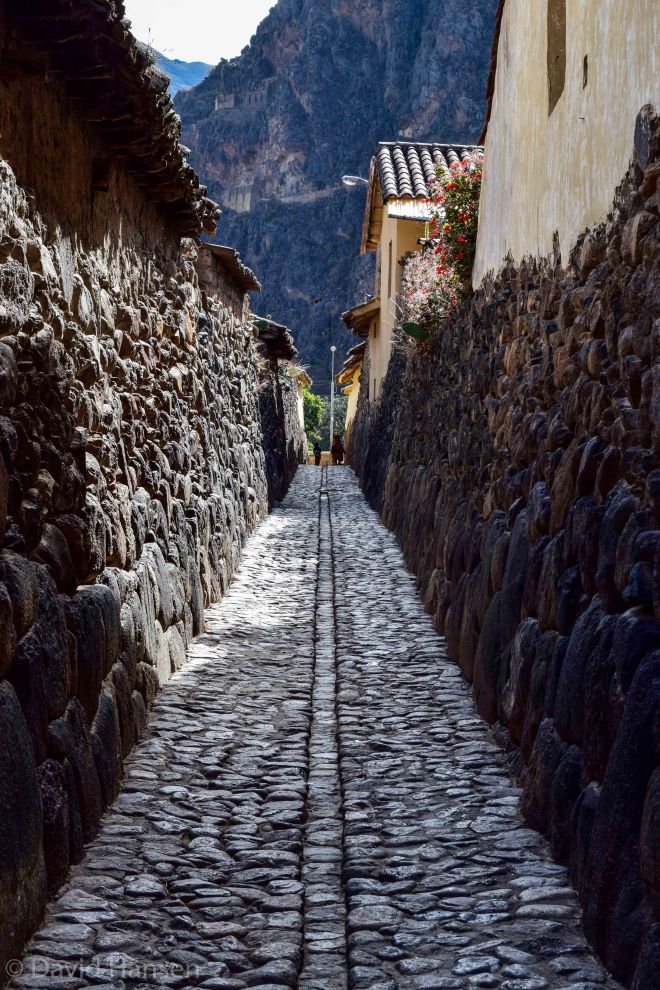
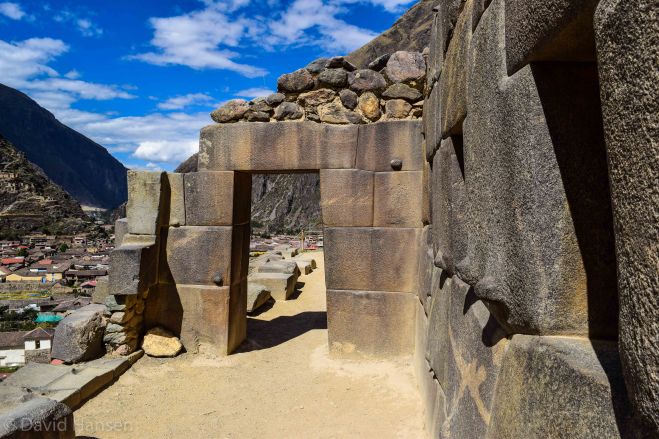
The following day we took another minibus to Ollantaytambo, where we were spending the night before our early morning train to Machu Picchu. I stayed in Ollantaytambo for four days on my previous visit, and wanted to spend a night there as I really enjoyed the laid back and historical atmosphere of the town. Ollantaytambo was the last Inca stronghold to fall to the Spanish, and most of the town is still intact like it was when the Inca were there. The main site in town is extremely impressive, and I find it comparable to Machu Picchu in terms of archaeological sites worth visiting. We grabbed lunch at Heart’s Cafe (best place in Ollantaytambo) before hiking around the ruins, and spend a few hours wandering the site. Once we finished at the official site, we hiked up the opposing mountain to visit some other Inca ruins and take some pics of the entire fortress of Ollantaytambo. We ended up taking a few wrong turns and found ourselves on top of the mountain, which took a while to climb back down. By the time we finished with the ruins it was getting late so we found dinner and went to bed early for the early train to Machu Picchu, which I wrote about in a separate post.


dsc_0859
The old city streets
dsc_0856
The main section of ruins
dsc_0800
Some of the amazing stonework on top of the ruins
dsc_0810
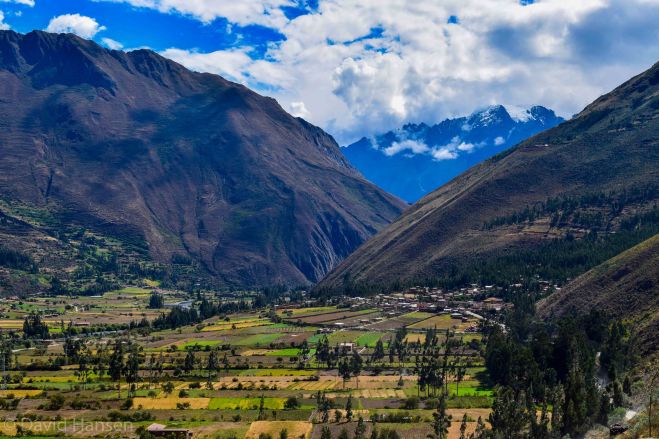
The valley surrounding Ollantaytambo

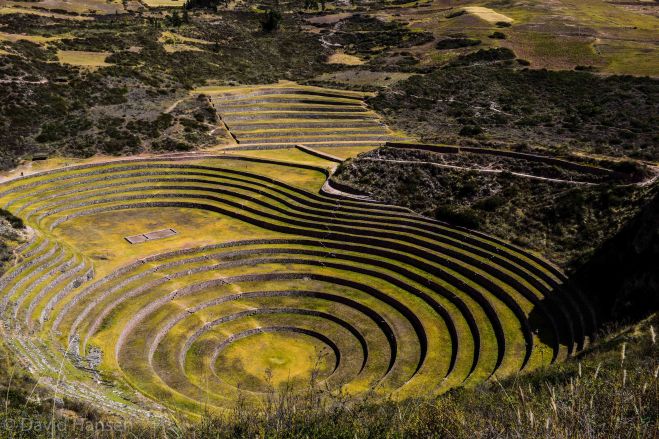
The morning we got back from Machu Picchu we booked a tour of Moray and the Maras Salineras through our hostel. I normally don’t like taking tours of sites, however it was substantially cheaper than any other method of getting there so we took it. I didn’t get a chance to visit on my previous trip to Cuzco, so this was one of the only things I didn’t repeat on this trip. Moray was an agricultural testing center for the Inca, where they could grow lowland crops as well as highland crops in the series of concentric circles. The deeper the circle the warmer the microclimate, which allowed for non-native crops to grow well in the site. There were three of these circular fields, only one of which was fairly large. The tour only stopped here for about an hour before continuing on to Salineras.

dsc_0132
The circular terraces of Moray

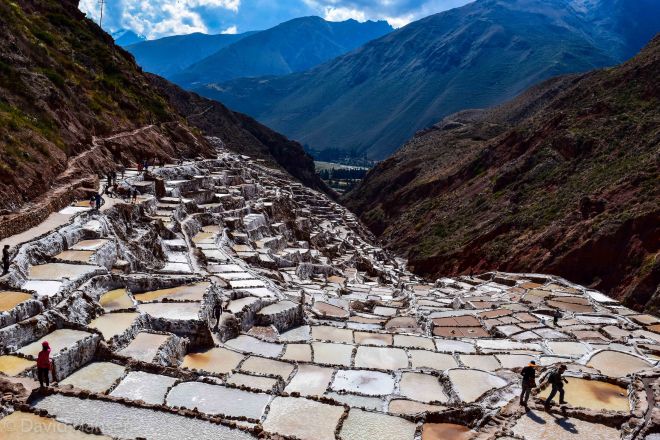
The Salineras of Maras are a series of salt pools which are created by a natural spring of salt water which runs over these shallow pools and forms a brine. The water evaporates and leaves a thick crust of salt which is then harvested and sold around the world. Different families own each of the 1500+ pools at the site, and it’s the biggest economic input in the town, both from tourism and salt exports. The area was really pretty and the different colors of salt allowed for really good photos of the salt and surrounding valley. This was definitely one of my favorite places in the Cuzco area due to how bizarre and beautiful it was.


dsc_0133
Salineras of Maras

All three sites are must-see destinations for anyone visiting Cuzco and the Sacred Valley region.

Cuzco, Peru – archaeology capital of South America

The PeruHop bus picked us up in Arequipa before dawn for the long trip to Cuzco. This particular trip had very few stops due to traffic problems in Cuzco because of the Corpus Christi festival going on that week. We had a brief stop to grab food to go for lunch, which turned out to be a terrible idea. Word of advice: don’t ever eat a “chicken sandwich” in Pukara, Peru – it’s probably not chicken and food poisoning is not a great way to start a week in Cuzco. Anyway, we made it to Cuzco around sunset and managed to run into some of our friends at our hostel, as they had also booked the same place. Once we checked in we went out for dinner with them, as well as a couple other backpackers from Switzerland, at a restaurant near the Plaza de Armas, which was absolutely delicious. We said goodbye to our friends that evening as they were doing a Machu Picchu trek early the next morning and then heading back to Scotland. That night also turned out to be terrible, as the chicken sandwich from lunch came back with a vengeance and left me attached to the toilet for the whole night. The next day we did very little due to my recovery. Since we spent so much time in Cuzco, it makes little sense to do a day by day post, so I’m going to put it more of a list to save space.  

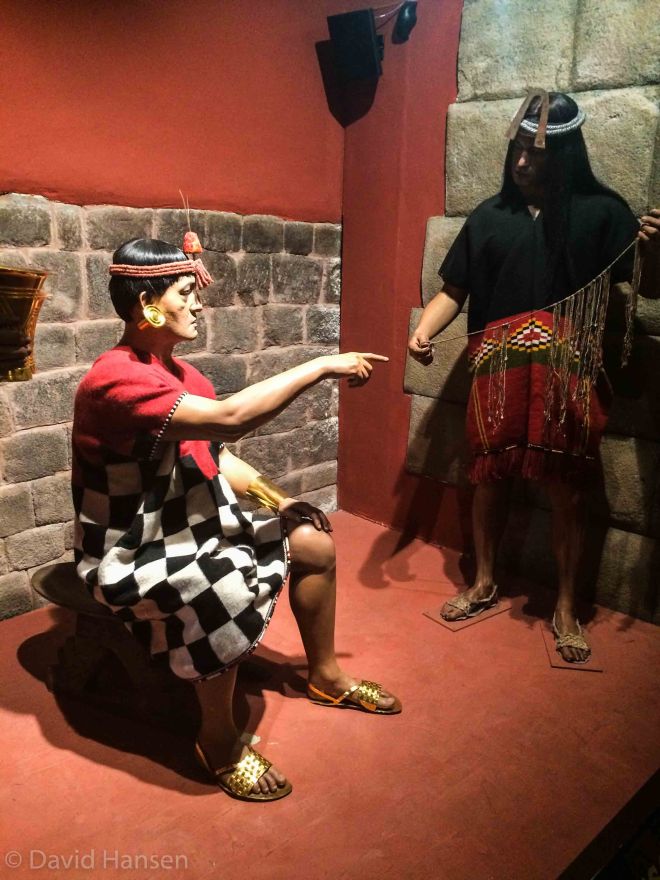
  • Casa Concha, the Machu Picchu museum put together with the Yale collection excavated by Hiram Bingham after his “discovery” of the site. The best part of this museum is the life-size figure of my archaeology advisor from uni dressed as the Inca ruler, complete with a skirt and gold gauges.img_0149
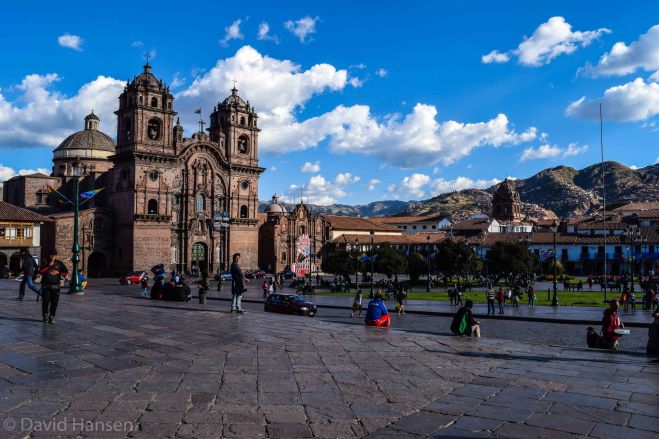
  • Plaza de Armas, the main square in Cuzco with a large fountain and two cathedralsdsc_0442
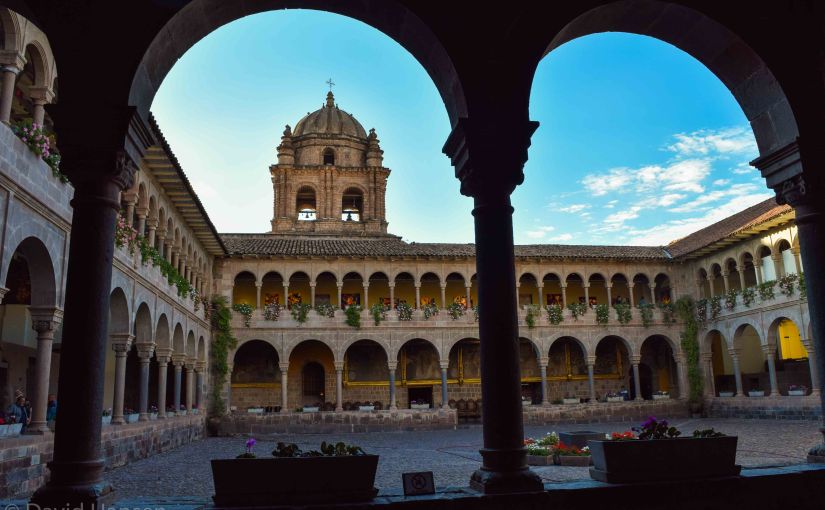
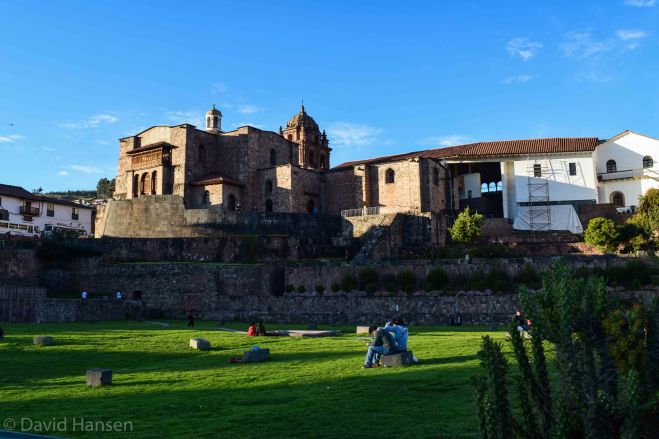
  • Qoricancha, the former Inca center which was converted into monastery by the Spanish after their conquest. The museum shows how the Inca stones were put together with metal and smooth grooves.   

    dsc_0498
    Qoricancha
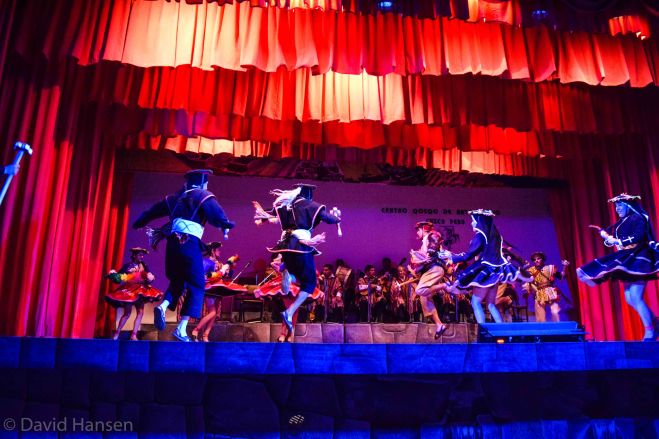
  • Centro Qosqo de Arte Nativo, a nightly dance performance which highlights different dances from around Cuzco. Kirsten got pulled from the crowd and had to dance on stage at the end of the show, which was fantastic.  This is part of a city ticket which gives you access to most of the major archaeological sites and museums in the city.  I can’t remember the cost, however, students get half off with an ISIC card.  There are various lengths available from one day to one week.  I highly recommend buying this ticket if you are staying in Cuzco for a few days because if you visit just a few of the sites included you will save a ton of money on admission fees.

    dsc_0518
    Dancers at Centro Qosqo
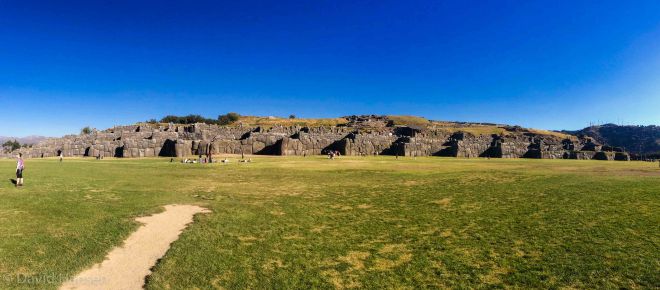
  • Sacsayhuaman, a large archaeological site located on top of a hill overlooking Cuzco. The stones are monstrous and the site is huge. While technically included in the Sacred Valley sites, its a short walk from downtown so I’m including it here.  However, you can easily book a tour which combines this with a few other regional sites. It is also included in the city ticket.img_0177
  • Monumento Patchakuteq, a large monument and museum dedicated to the Inca ruler Patchakuteq.  This is included in the city ticket.

    dsc_0046
    View from the top of the monument
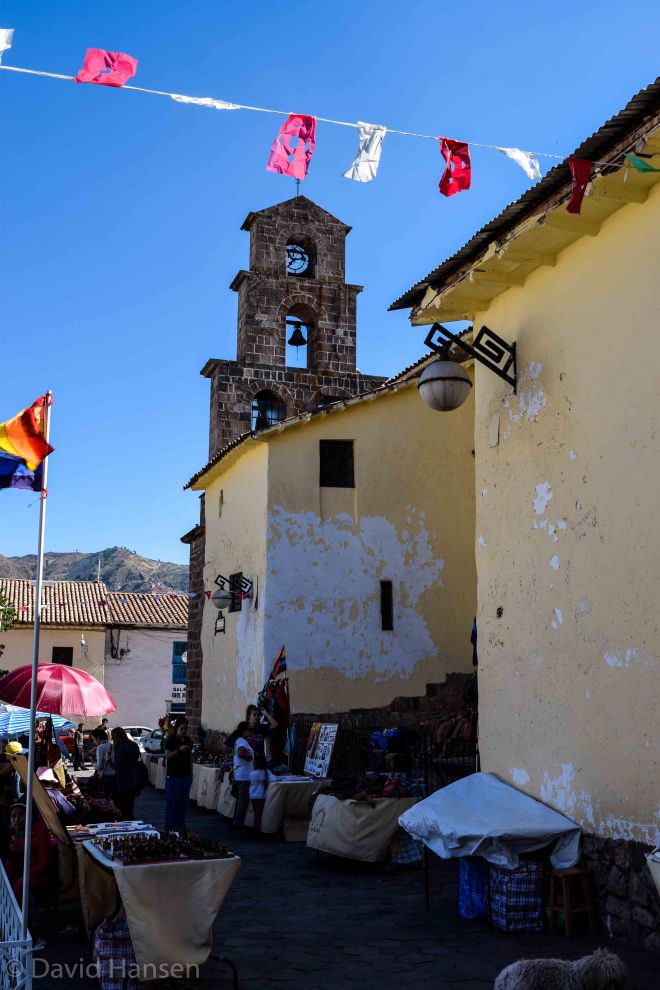
  • Various churches around the city, there’s a combo ticket that allows entry into 5 churches and a religious art museum

    dsc_0581
    One of the churches to visit.
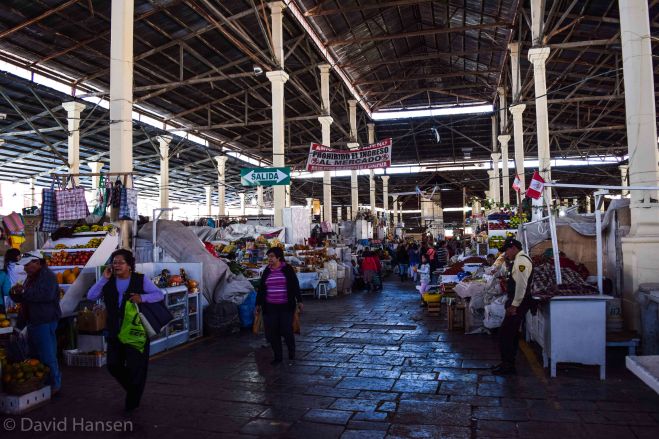
  • San Pedro Market, we bought a lot of fresh fruit juices and a meal here because the prices are crazy cheap. There are also a lot of souvenirs available for fairly cheap here as well. Make sure to check out the innards market in the back corner, it’s bizarre!

    dsc_0550
    San Pedro Market
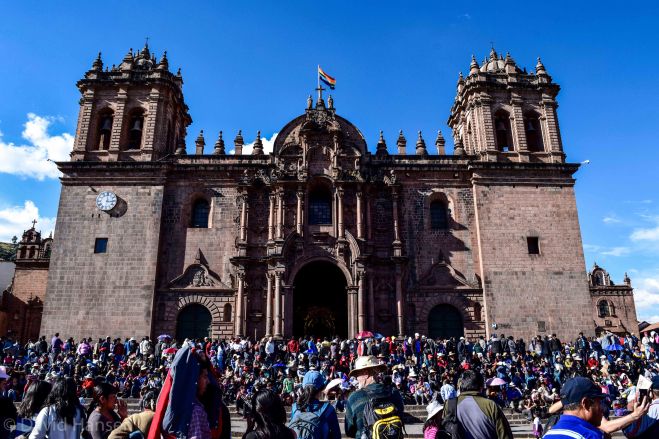
  • We were in the city for Corpus Christi, so the streets were always packed and at one point one square filled with stalls selling meals of guinea pig

    dsc_0183
    A ton of people in the Plaza de Armas for Corpus Christi festivities
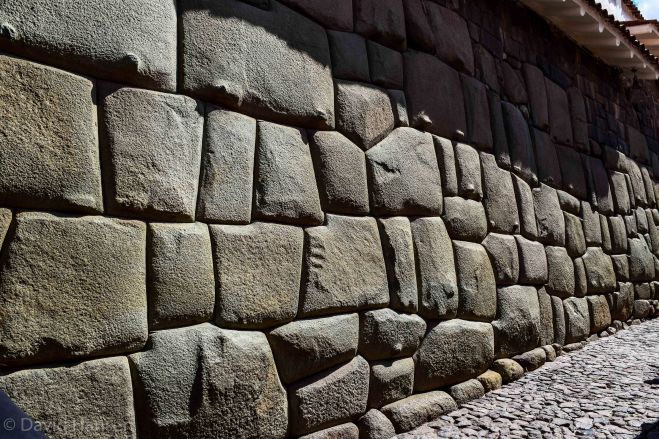
  • 12 angled stone, this rock in one of the Inca walls demonstrates the ridiculous nature of Inca stonework and has become a popular tourist stop for photos. It was insanely crowded when we stumbled upon it and it took like 5 minutes for me to get a photo without people in front of it.

    dsc_0434
    Inca stonework that is not the 12 angled stone
  • We also visited a lot of archaeological sites in the Sacred Valley which are on the Cuzco tourist ticket, but those are written about in another post. Cuzco is a really great city to visit – very walkable and safe. This was my second visit and it was still just as great as the first time.