Tiwanaku – Bolivia’s most famous archaeological site

The archaeological site of Tiwanaku is located about an hour and a half outside of La Paz, Bolivia. The city was the center of the Tiwanaku state, which existed during the Middle Horizon (500-1100 CE). At its height, between 20,000-30,000 people lived in the valley, and the temples were visited by populations from around the region who were under the control of the Tiwanaku ruler. A vast majority of the population of Tiwanaku had artificially modified skulls – think Indiana Jones and the Crystal Skull, but real. The culture likely collapsed due to a severe drought in the already desolate region which caused great food shortages and led to the migration of people out of the valley.
Today the site is home to two museums and two separate archaeological sites, Tiwanaku and Puma Punku. The museums are fairly small and pretty run down, though they are in better condition that they were when I visited two years ago. The Lithic Museum contains many stone pieces which were brought inside to prevent further damage from the weather, including a large stone monolith called Bennett which was displayed along El Prado in La Paz before being returned to the site. The second museum describes the history of the region (for the most part), and includes pottery and artifacts which range from the Preceramic Period to the Inka. The only truly unique thing in the museum is a local Aymara mummy which is housed in a wicker basket like container.  
The archaeological sites themselves also leave much to be desired. Many of the earliest excavations were no better than looting, and the artifacts and stones have almost entirely been moved out of place. Also, due to a long history of bureaucratic nightmares with the Bolivian government, few archaeologists have ever excavated at the site for more than a season, so much of the research has been fragmentary at best. Now, local people conduct “excavations” at the site and further disrupt any possible means of understanding what happened at the site at its height.  
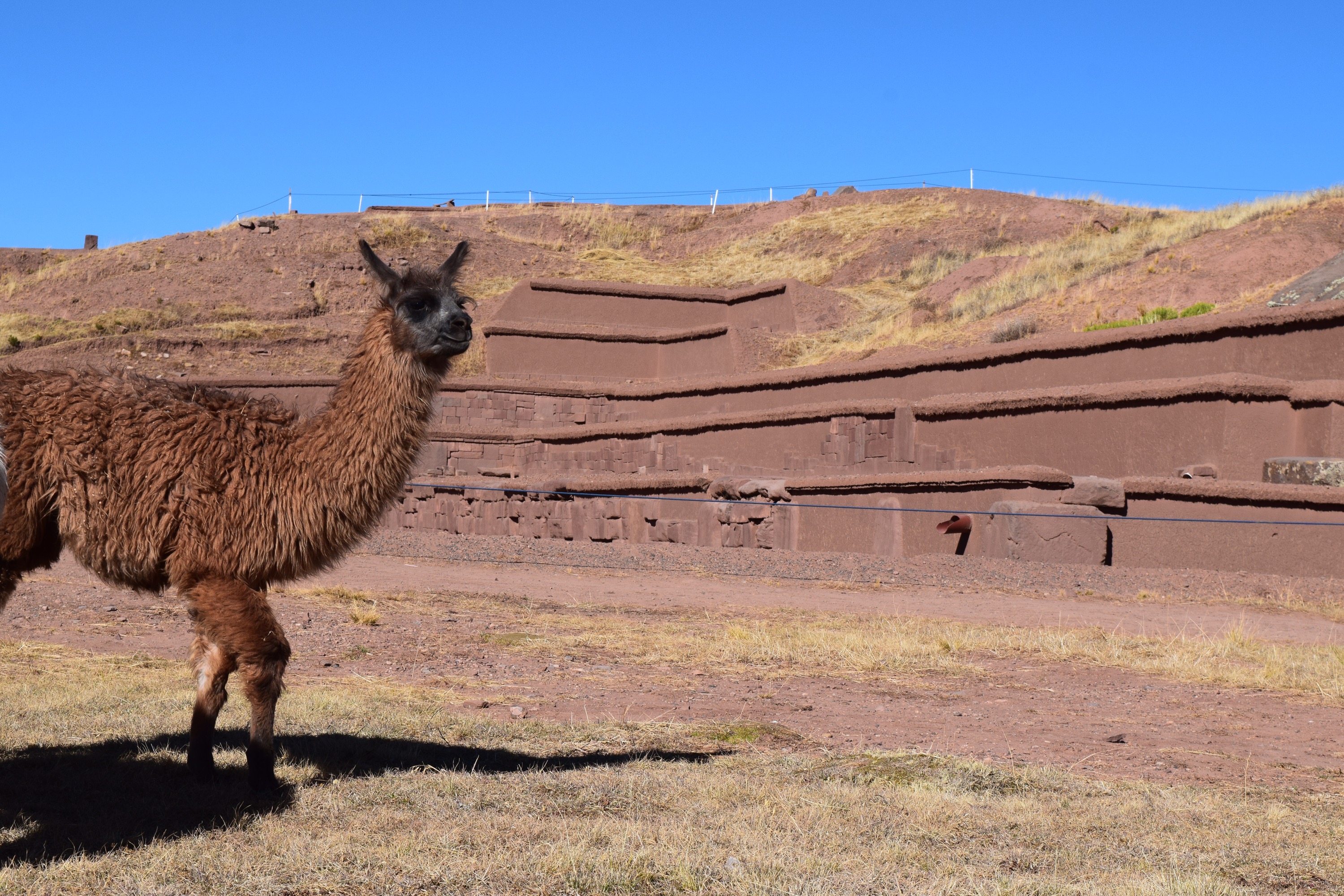
 

Llama chilling in front of Akapana
 
Tiwanaku itself is made up of a couple of different parts, primarily the Akapana pyramid and the Kalasasaya temple. The Akapana pyramid has been heavily reconstructed, but not with the original blocks, which are laying to the side. Most of the structure is still under a mound of dirt, so only bits and pieces are visible. The most important part of the site is the Kalasasaya temple and sunken temple located just in front of it. The sunken temple follows a long history of similar temples which can be found on the Copacabana peninsula. Inside this temple, however, are stone faces which jut out of the walls and two stone monoliths. The Kalasasaya temple, which is a raised platform just behind the sunken court, includes two monoliths, Ponce and Fraile, as well as Puerto del Sol. While these pieces are currently in this court, no one actually knows where they were originally located due to the lack of documentation by the first archaeologists at the site.  


Sunken temple in front of Kalasasaya
  
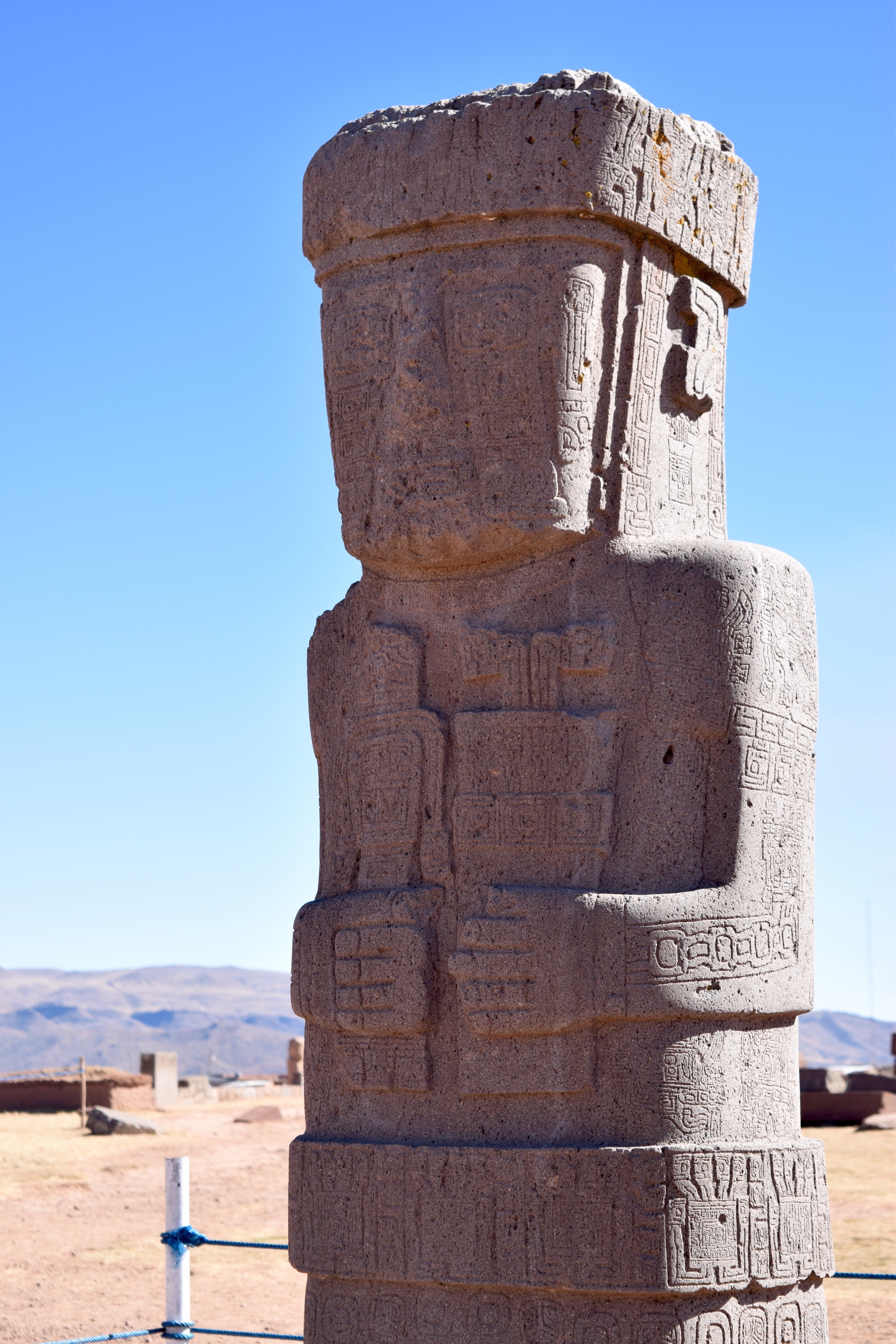
Monolith Ponce
 
The second site at the Tiwanaku complex is Puma Punku, which has been featured on Ancient Aliens for being built by aliens (news flash: it wasn’t). This site is characterized by large H shaped stone blocks which look perfectly straight, though in reality they aren’t (they’re still impressive though). Unfortunately, this site is even more damaged than the main Tiwanaku site, and even less information is known about it. However, the most impressive stonework in the area is located at this part of the site. Overall, the entire Tiwanaku complex is fairly underwhelming when compared to any archaeological sites in Peru, however, it is definitely still worth visiting when in Bolivia, as it was the center of one of South America’s largest civilizations over a thousand years ago.  

H blocks at Puma Punku

Isla del Sol and Isla de la Luna

Isla del Sol and Isla de la Luna (also known as Coati) are two islands located in Lake Titicaca, not far from Copacabana. Isla del Sol is the most popular with backpackers as it has great trails for day hikes, however both islands are great to visit. Isla del Sol is the larger of the two, at about 8 kilometers long. Isla de la Luna is much smaller, and only consists of one village and an Inca ruin on the other side of the large hill that splits the island in two.  
Kirsten and I visited Isla del Sol on Aymara New Year in hopes of seeing the festival which we had heard would be going on that day. Unfortunately we did not make it on time, as it had apparently started at 5 AM and the boats don’t leave Copa until 8:30 AM. However, it was still a lovely day for a hike, so we began at the north end of the island and began the 4 hour hike to the village of Yumani at the south end. There’s a small museum at the town on the north end, which includes a couple sets of (commingled) human remains. You have to buy a 5 Bs ticket here to continue along the trail toward the Inca ruins. Once you leave the museum, it’s about a 45 minute hike to the Inca ruins located at the far north of the island. These ruins are pretty pathetic compared to those in Peru, but they still make for nice photos.  


Inca ruins on Isla del Sol
 
From there, continue uphill toward the second checkpoint, where there is a 15 Bs fee to walk across the center portion of the island. This is the most beautiful section of the hike, so don’t skip out because of the fees to cross. There’s nothing in particular to see in this part of the island, other than the breathtaking (literally) landscape and deep blue colors of Lake Titicaca. There are two killer hills in this section, so make sure to bring a lot of water and some snacks as there’s only one place to buy stuff and it’s way overpriced. You’ll have to show your ticket a couple of times on this part, but don’t have to pay again until reaching Yumani.  


Stacked stones in the middle of Isla del Sol
  
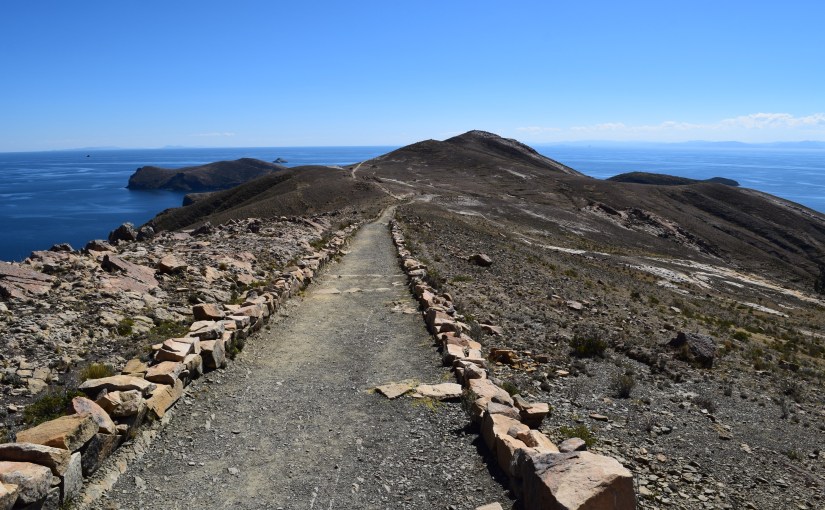
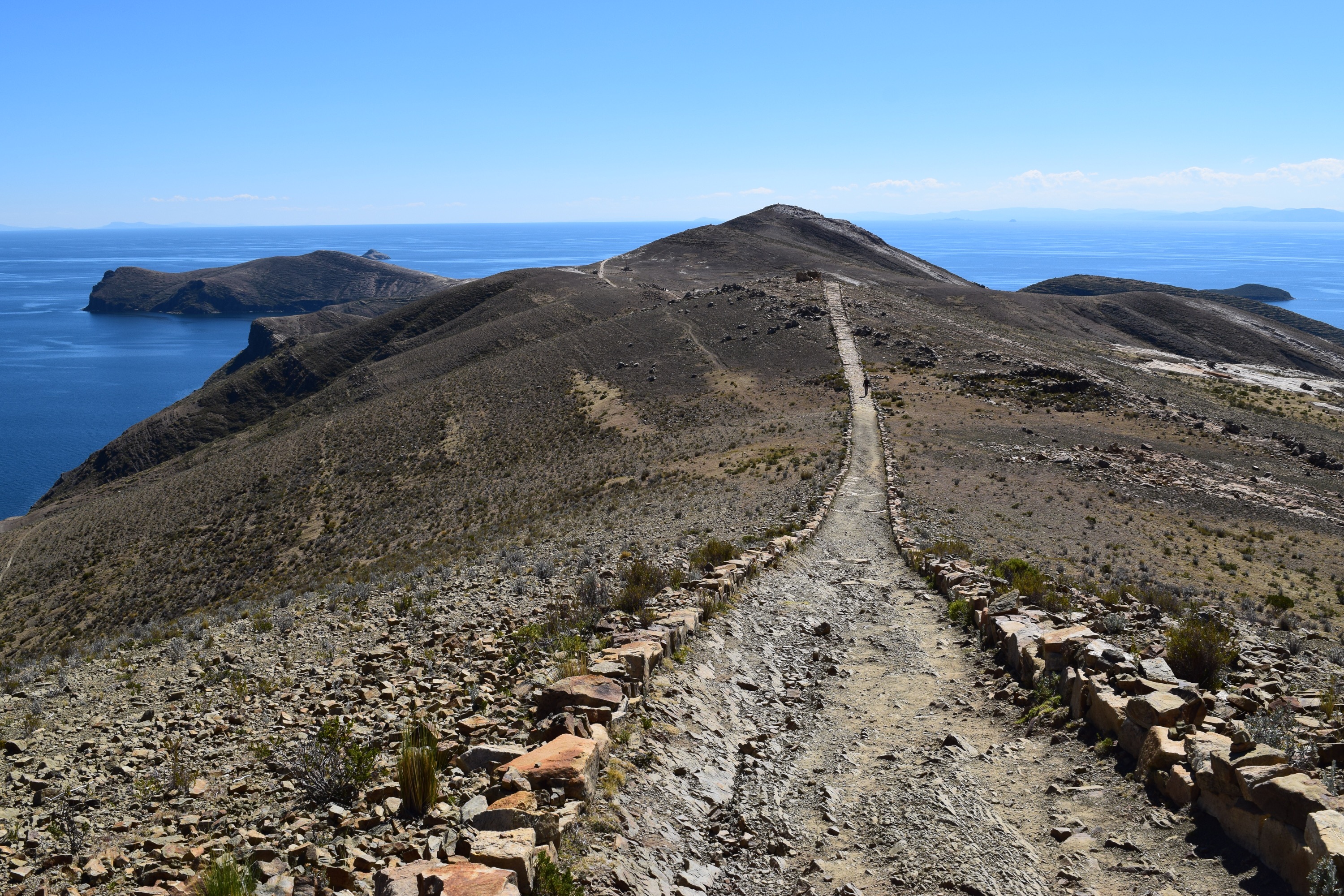
Hiking trail across Isla del Sol
 
At the end of the hike, you reach the village of Yumani, which is where the boats that return to Copacabana are docked. This is the largest of the villages on the island and it has the most options for hostels/hotels and restaurants. I personally don’t think that it’s necessary to stay on the island overnight, while others say to spend at least two nights, so it’s a personal preference. I would definitely recommend starting the hike at the north end, as Yumani has a very tall and long set of stairs which take forever to go down, so climbing up that at the beginning of the hike would be awful. Boats return to Copa in the late afternoon, and usually arrive between 5:30 and 6 PM. The roundtrip boat ticket should cost no more than 40 Bs ($5.81).  


Village of Yumani at the south end of Isla del Sol
 
Isla de la Luna is also accessible from Copacabana, though at less regular times due to the few people that visit. We went to the island on a private boat with a resident of the island, as we were invited to their house to have lunch. The lunch consisted of potatoes, oca, fava beans, and pork, which were cooked in a stone oven (called watia). This was the first time I had seen food cooked in a stone oven, I had only seen earth ovens prior. The flavor of the stone oven was different, and it made the food substantially less dirty than the dirt oven. After lunch we hiked over the hill to visit the Inca site located on the other side. The site had earlier been excavated and partially reconstructed by archaeologists, however, in the past two years the locals have taken it upon themselves to “restore” the site. This actually means that they built a bunch of new “Inca ruins” which are quite poorly done. Comparing photos from two years ago to this year’s visit shows the drastic changes that have occurred in that short amount of time. Even with the problematic “restoration” process which is going on there, the ruins are still interesting and worth visiting if spending a few days in Copacabana. The island really survives on tourism, and there are a few cheap guesthouse in the village for those who want to relax in a quiet place for a night or two. To reach the island, talk to one of the people in the ticket booths along the beach in Copacabana and ask for the rate for the day – there is definitely a combination ticket for sale with Isla del Sol and the Floating Islands with one of the companies. 


Stone oven cooking on Isla de la Luna
  
Inca ruins on Isla de la Luna