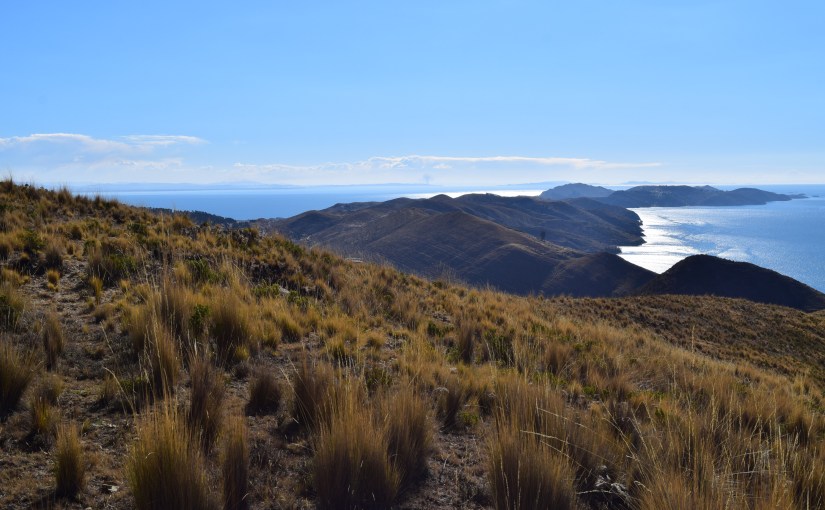
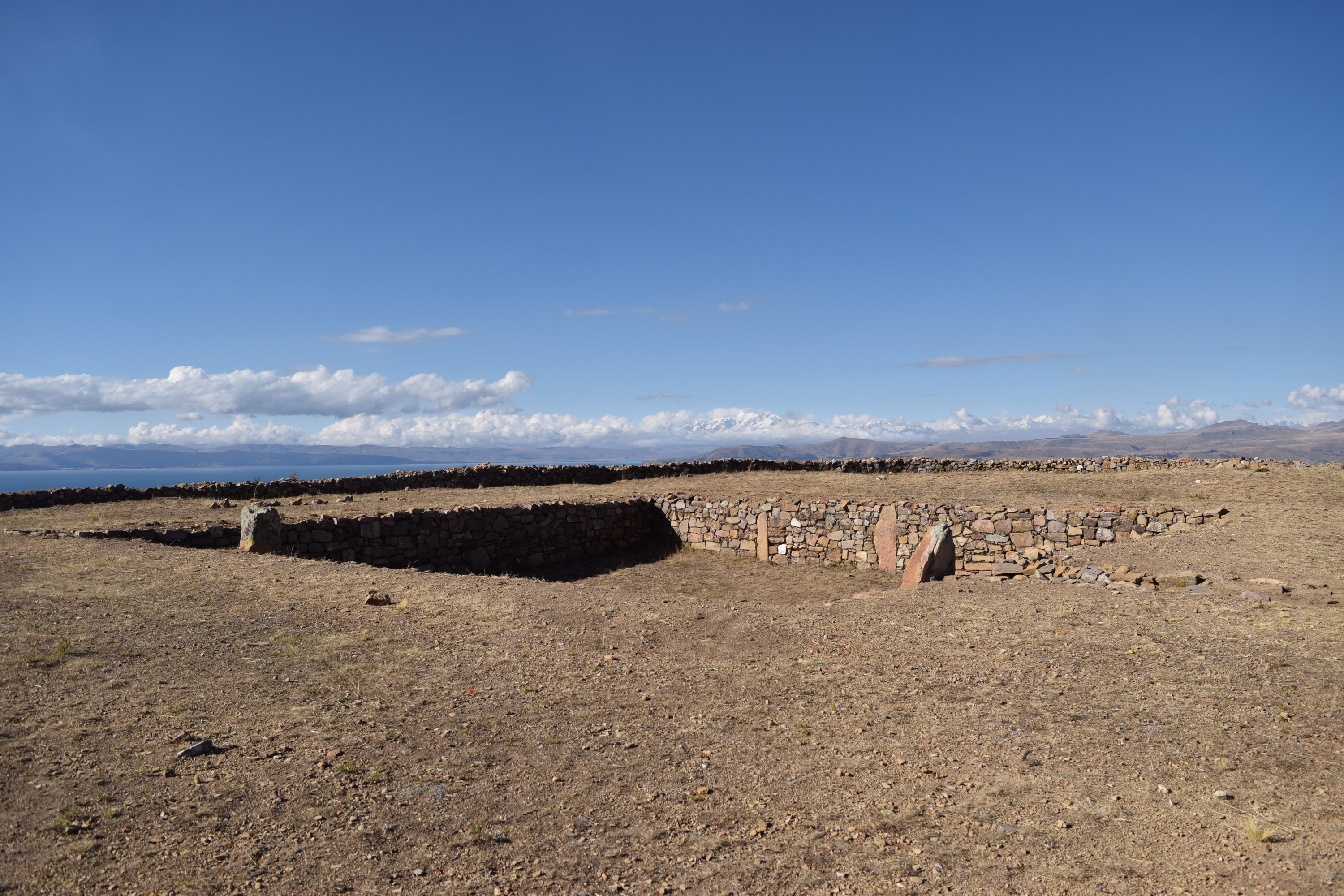
I’ve spent two summers in Copacabana as part of an archaeological field school offered through my anthropology department. Because of this, I’ve had the opportunity to visit most of the archaeological sites along the Copacabana Peninsula in Bolivia. This area has been populated since the Preceramic period (5000-1500 BCE), and it houses quite a few sites which are still considered sacred to the local population. There are a number of sunken temples in the area which are associated with a pre-Tiwanaku tradition known as the Yaya-Mama. These temples are located in various parts of the peninsula, generally on top of hills outside of modern villages. Three of these sites have been partially excavated, but the fourth, located in the village of Chi’si, has been fully excavated and restored to its original form during the early 1990s (the project was funded by National Geographic and an article can be found in the March 1992 edition in Spanish). This temple is roughy a thousand years older than Tiwanaku, and is definitely a predecessor to the sunken temple found in front of the Kalasasaya temple at that site. Research conducted on the remains found at the site have indicated artificial cranial modification and trepanation occurred at the site for over a thousand years (see this article in Forbes). This site is open for visitors, and a museum should be open sometime in the near future with the items from the excavations. For anyone visiting the area who is really into archaeology, it’s a worthwhile visit, especially once the museum is ready for visitors.
The archaeological site of Tiwanaku is located about an hour and a half outside of La Paz, Bolivia. The city was the center of the Tiwanaku state, which existed during the Middle Horizon (500-1100 CE). At its height, between 20,000-30,000 people lived in the valley, and the temples were visited by populations from around the region who were under the control of the Tiwanaku ruler. A vast majority of the population of Tiwanaku had artificially modified skulls – think Indiana Jones and the Crystal Skull, but real. The culture likely collapsed due to a severe drought in the already desolate region which caused great food shortages and led to the migration of people out of the valley.
Today the site is home to two museums and two separate archaeological sites, Tiwanaku and Puma Punku. The museums are fairly small and pretty run down, though they are in better condition that they were when I visited two years ago. The Lithic Museum contains many stone pieces which were brought inside to prevent further damage from the weather, including a large stone monolith called Bennett which was displayed along El Prado in La Paz before being returned to the site. The second museum describes the history of the region (for the most part), and includes pottery and artifacts which range from the Preceramic Period to the Inka. The only truly unique thing in the museum is a local Aymara mummy which is housed in a wicker basket like container.
The archaeological sites themselves also leave much to be desired. Many of the earliest excavations were no better than looting, and the artifacts and stones have almost entirely been moved out of place. Also, due to a long history of bureaucratic nightmares with the Bolivian government, few archaeologists have ever excavated at the site for more than a season, so much of the research has been fragmentary at best. Now, local people conduct “excavations” at the site and further disrupt any possible means of understanding what happened at the site at its height.
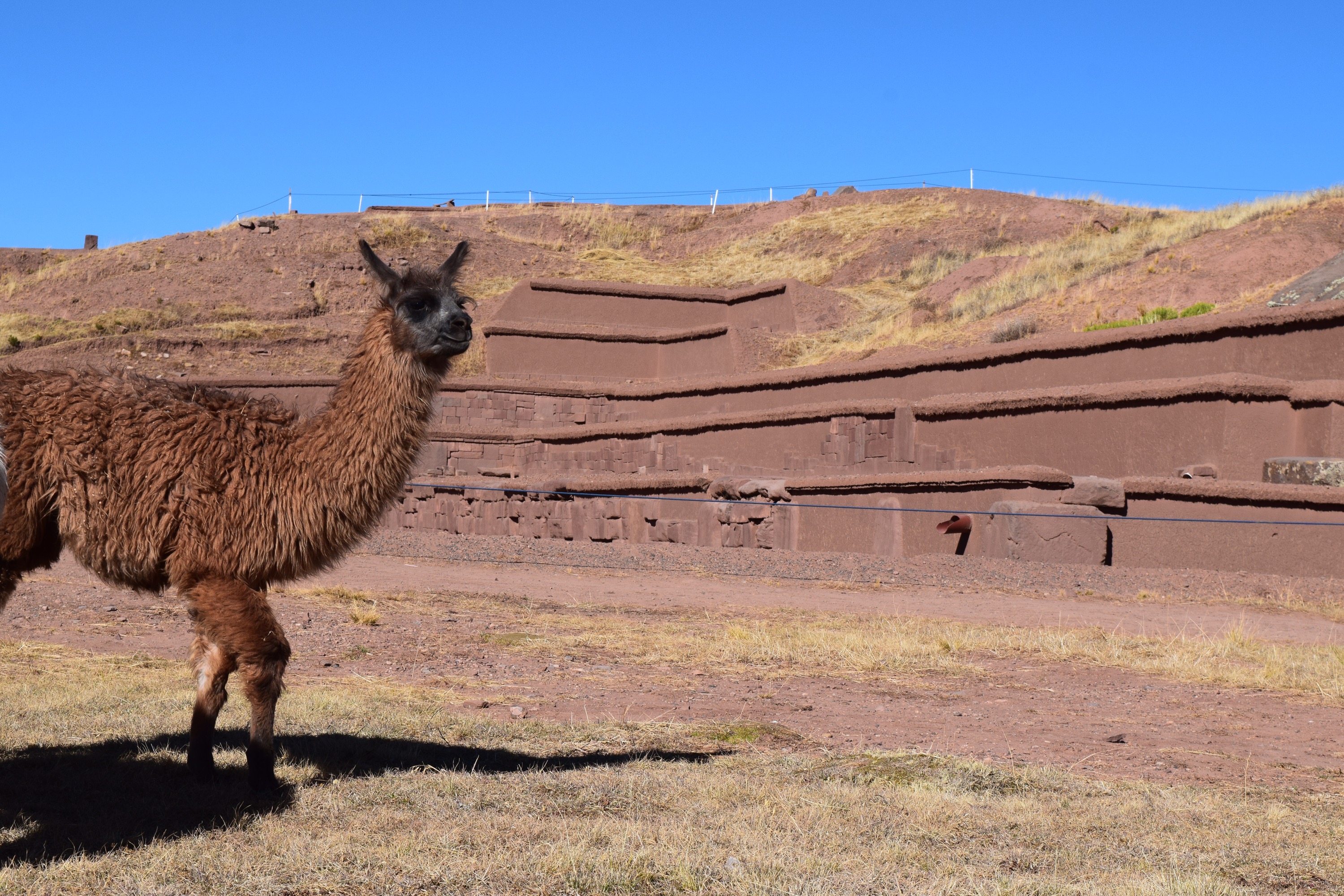
Llama chilling in front of Akapana
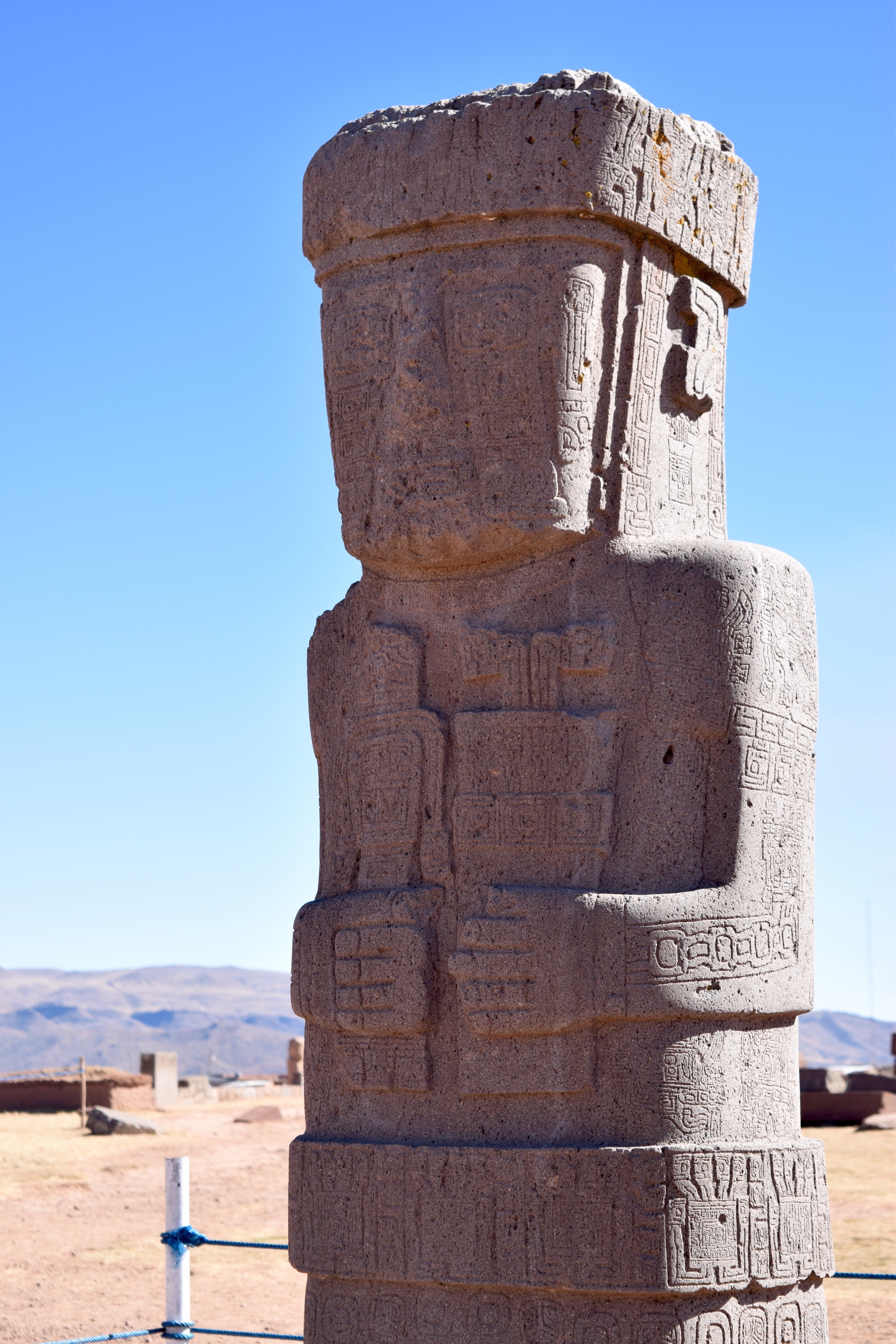
Tiwanaku itself is made up of a couple of different parts, primarily the Akapana pyramid and the Kalasasaya temple. The Akapana pyramid has been heavily reconstructed, but not with the original blocks, which are laying to the side. Most of the structure is still under a mound of dirt, so only bits and pieces are visible. The most important part of the site is the Kalasasaya temple and sunken temple located just in front of it. The sunken temple follows a long history of similar temples which can be found on the Copacabana peninsula. Inside this temple, however, are stone faces which jut out of the walls and two stone monoliths. The Kalasasaya temple, which is a raised platform just behind the sunken court, includes two monoliths, Ponce and Fraile, as well as Puerto del Sol. While these pieces are currently in this court, no one actually knows where they were originally located due to the lack of documentation by the first archaeologists at the site.
Sunken temple in front of KalasasayaMonolith Ponce
The second site at the Tiwanaku complex is Puma Punku, which has been featured on Ancient Aliens for being built by aliens (news flash: it wasn’t). This site is characterized by large H shaped stone blocks which look perfectly straight, though in reality they aren’t (they’re still impressive though). Unfortunately, this site is even more damaged than the main Tiwanaku site, and even less information is known about it. However, the most impressive stonework in the area is located at this part of the site. Overall, the entire Tiwanaku complex is fairly underwhelming when compared to any archaeological sites in Peru, however, it is definitely still worth visiting when in Bolivia, as it was the center of one of South America’s largest civilizations over a thousand years ago.
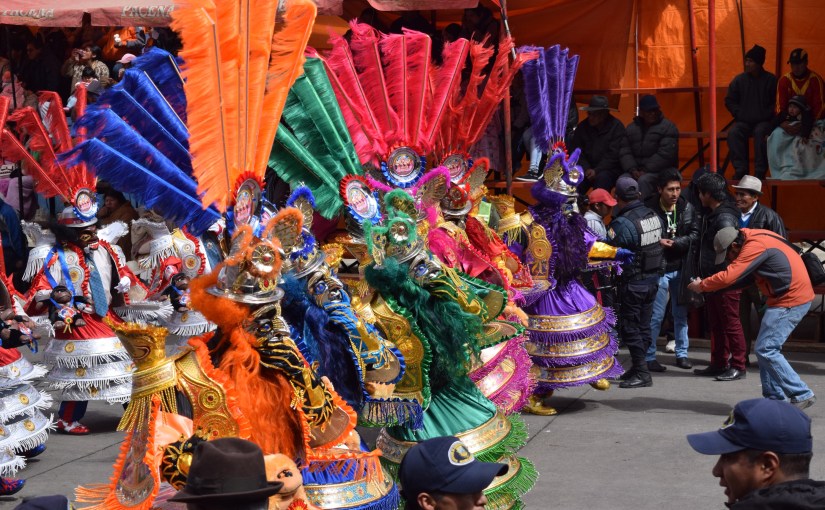
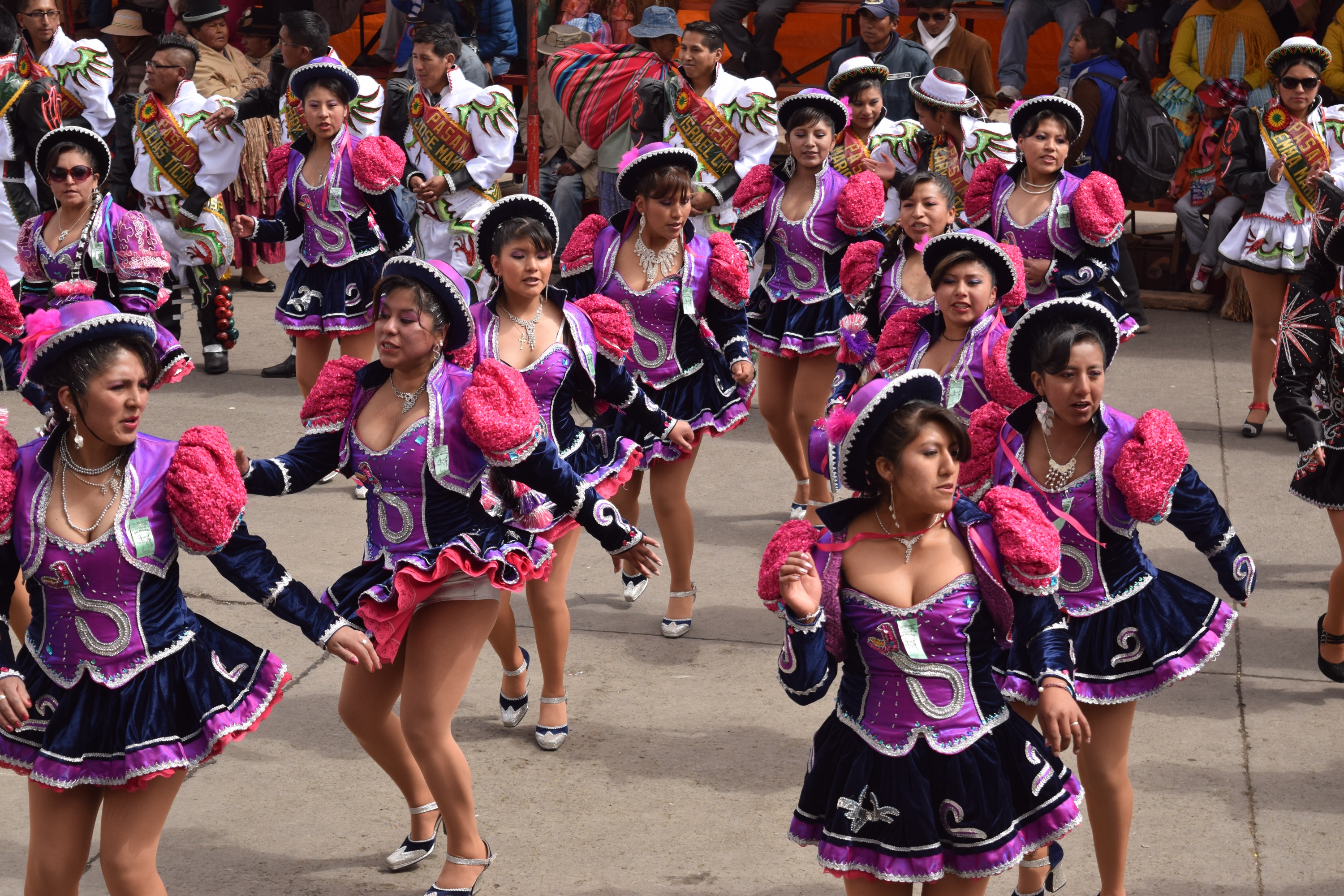
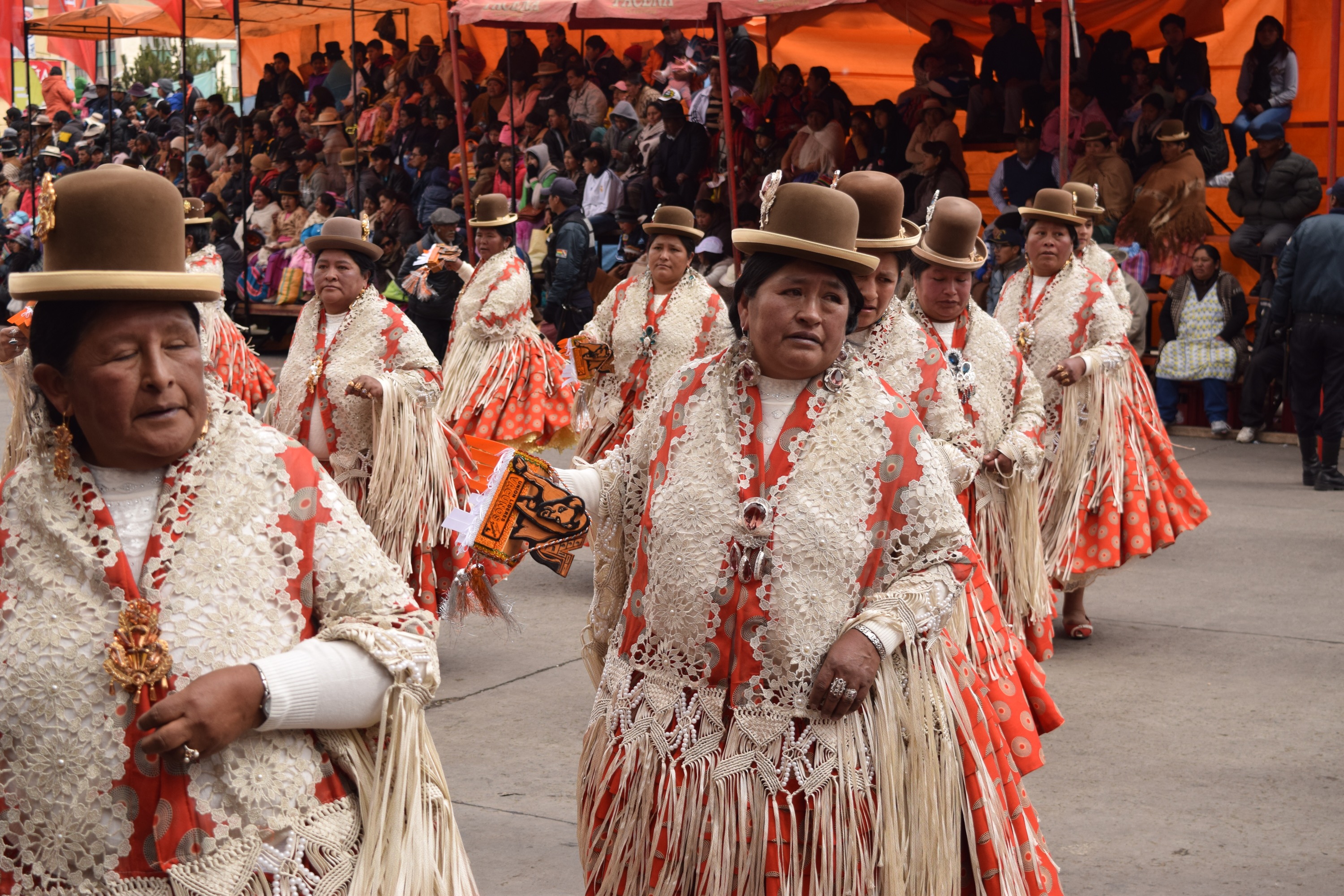
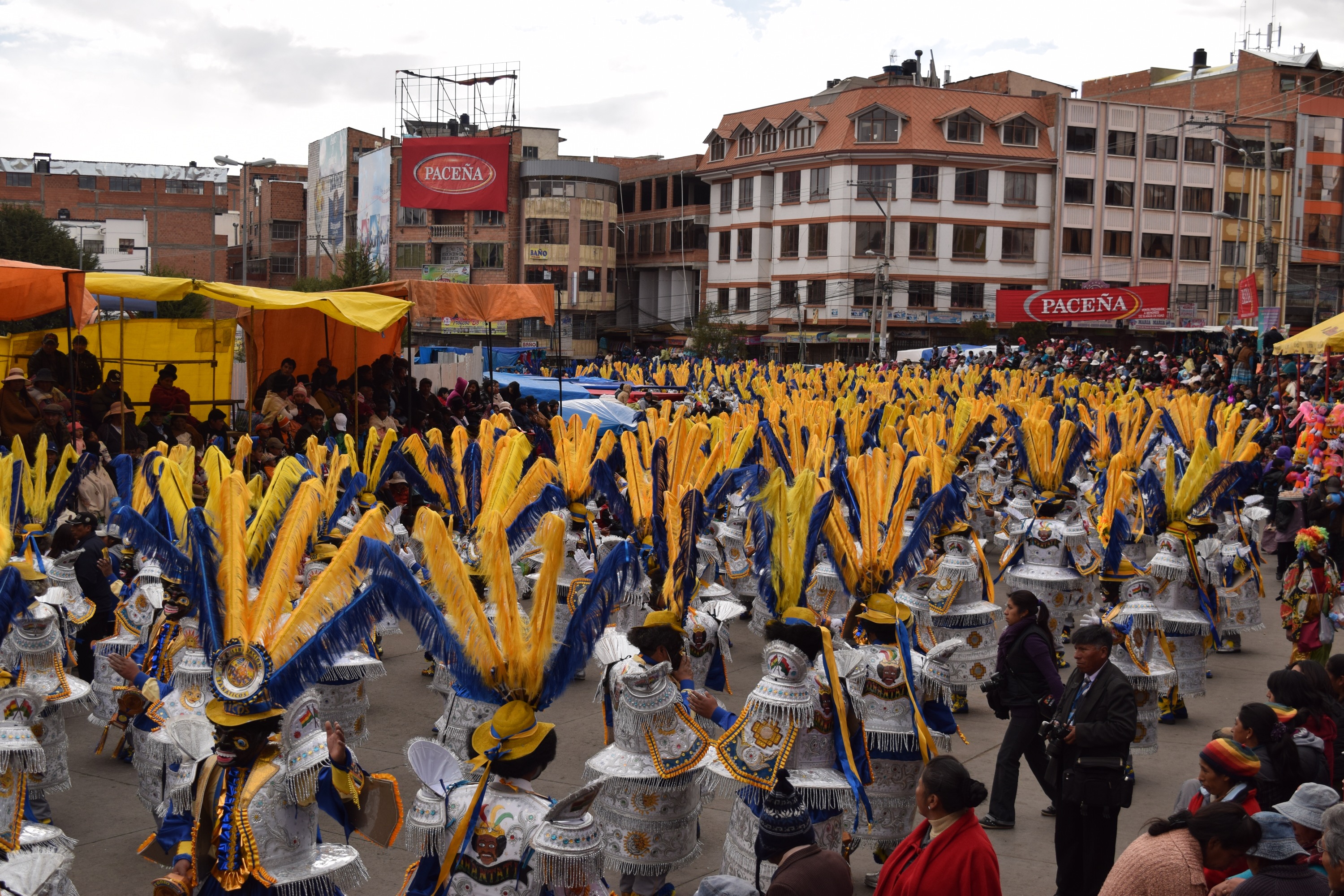
Chacaltaya is a giant multi-day dance festival which occurs in El Alto, Bolivia, the sprawling expanse of city just outside of La Paz. Thousands of Bolivians participate in the dances, which are sponsored by a series of wealthy locals each year. The dancers practice the dances for weeks before the official day, and the bands play new songs written especially for that year’s festival.
We arrived at the festival around 10 AM and rented some top row seats for a good view of the dances. A majority of the dances performed were Morenada, which is a Bolivian dance which imitates the African slaves in chain-gang which were brought by the Spanish during the colonial period. Each group of performers were huge, many with a couple hundred dancers and a large band which marched in between two large groups of dancers so they could all hear the music. Most of the musicians weren’t especially great, and had serious problems keeping a steady beat/tempo. There were occasionally non-Morenada dances, but they were few and far between. The crowds got progressively larger as the day went on, and the bench seating (similar to bleachers at a sporting event) got more crowded and uncomfortable as the day went on. If we weren’t there with other people I would have left soon after the bleachers filled due to the crowding, but we stayed for a few more hours.
The festival is absolutely worth seeing if you’re in La Paz at the time, but probably not for an entire day like we were since a majority of the dances are the same. We saw very few other tourists visiting the festival, which is a shame since it’s a true Bolivian experience in a very accessible location for visitors to La Paz. I’d recommend staying for at least 1-2 hours if you want to see the gist of what’s happening, but no more than half a day is really necessary.




 bioarchnomad